Field Notes
The Seed Method's Extremely Serious Fresh Start
The molecule announced in 2012 as 100,000 times stronger than aspirin never reached a human trial, and is now being claimed as a treatment for seeds.

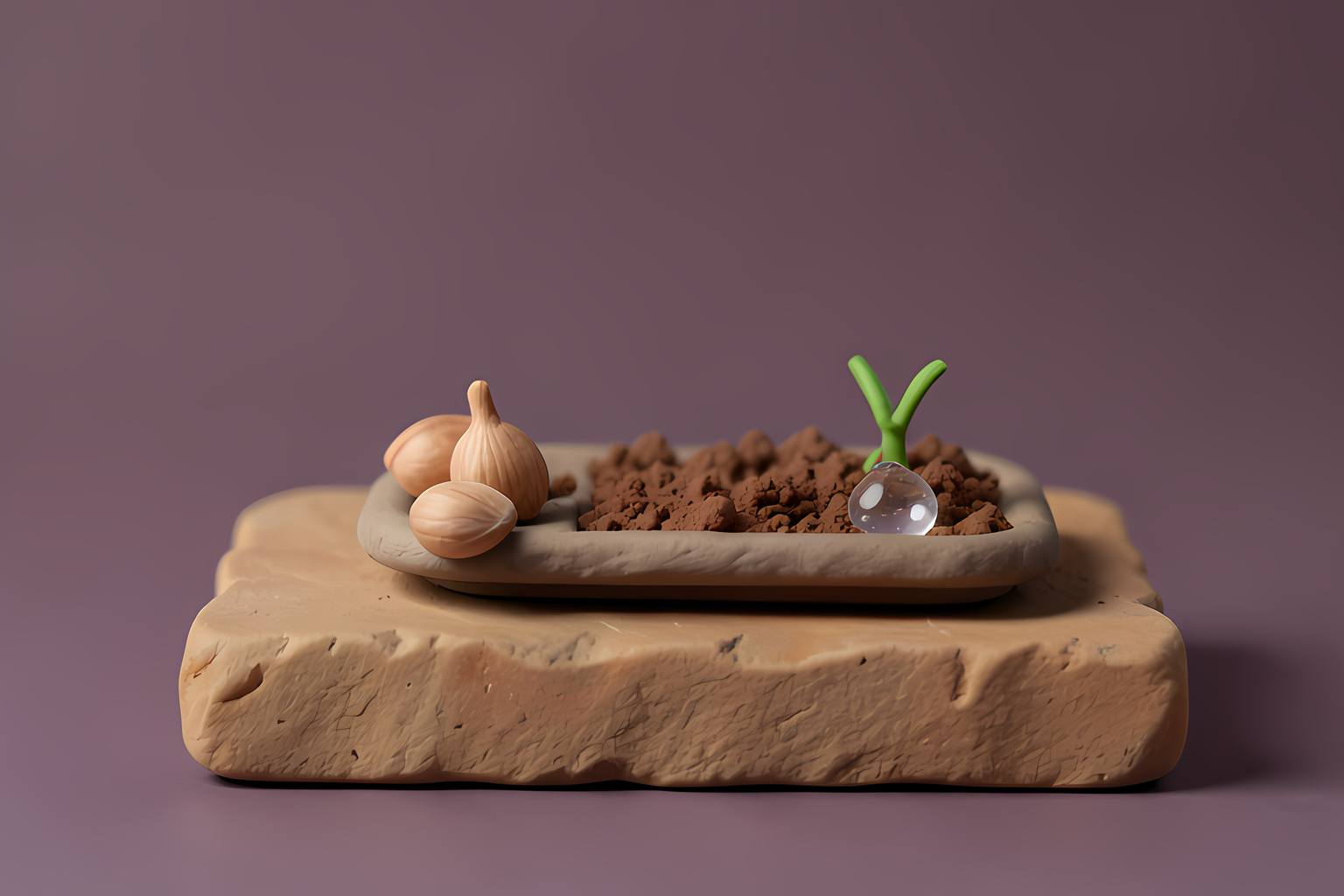
What changes in this design
A reader might otherwise think of a seed as simply waiting to sprout before any attention is given. This is the simple expectation the method shifts away from.
Instead, the seed receives a water-based mixture before sprouting begins. The stated goal is support for growth and for coping with hard growing conditions; the mixture's other contents are not stated.
It draws attention to the seed's earliest stage rather than a later stage of growth. That helps readers understand the focus without assuming exactly which difficult conditions are involved or how much support results.
One number from a March 2012 press release
In March 2012 the City College of New York announced a molecule its own chemists had built, and the number attached to it was hard to ignore. NOSH-aspirin, the release said, was roughly 100,000 times more potent than aspirin against colon cancer cells at 24 hours, and about 250,000 times at 72 hours. In animals it reduced tumours by 85 percent.
The chemistry paper behind those claims is specific. In HT-29 colon cancer cells, the compound the authors call NOSH-1 had an IC50 of 48 plus or minus 3 nanomolar at 24 hours, against more than 5,000,000 nanomolar for plain aspirin. Across eleven cancer lines it stayed between 48 and 280 nanomolar. Khosrow Kashfi, who led the work at CUNY's medical school, described the road ahead as toxicity testing and then clinical trials, and said that any working therapy for humans was years away.
Fourteen years later, a field of alfalfa
He was right about the timeline, at least. I went looking for that trial and could not find one. Searching now surfaces preclinical work and nothing in humans. What I did find was a 2020 paper in which the same molecule gets sprayed on plants.
Kashfi is a co-author on it, with Vasileios Fotopoulos, a plant physiologist. They applied NOSH and NOSH-aspirin at 100 micromolar as a single foliar spray to alfalfa, in 30 percent methanol, then withheld water for six days. The treated plants held their turgor and their green, produced less MDA and hydrogen peroxide, and kept photosynthetic efficiency and stomatal conductance closer to normal. One line stuck with me: the authors recommend NOSH over sodium hydrosulfide partly because it avoids the rotten-egg smell, thanks to its patented formulation. Field trials on cereals, with yield and biomass as endpoints, were described as being planned.
A seed claim on a patent that runs to 2035
Which brings me to the filing. US20260231848A1 published on 13 August 2026 and is pending. The applicant is the Research Foundation of the City University of New York, and Fotopoulos and Chrystallia Antoniou are among the inventors. It covers treating seeds, before germination, with a compound carrying a nitric-oxide-releasing group and a hydrogen-sulfide-releasing group bonded together, optionally onto an aspirin-derived core, in a polar solvent. Priority date 16 February 2023.
This is not a first move. A 2014 application from Kashfi and Fotopoulos, co-assigned to the same foundation and a Cypriot technical university, already claimed both foliar spraying and seed coating, and it granted in the United States, Europe, Canada, Australia, China, Spain and Israel. The US grant issued in September 2018, is listed as active, and runs to February 2035. It specifies NOSH-1 at 10 to 300 micromolar. So the seed route was already covered. The new filing is a narrower claim with a fresh clock on it.
Salt on a tenth of the planet
The problem it aims at is not in doubt. The FAO's first global assessment of salt-affected soils in fifty years, published in November 2024, put 1,381 million hectares, 10.7 percent of global land, in that category, with another billion hectares at risk. Salinity can cut yields of crops like rice and beans by as much as 70 percent.
The benefit side is where I get careful. A Belgian team pooled 1,087 paired observations from 180 open-field biostimulant studies, deliberately throwing out pot and greenhouse work. The average add-on yield gain was 17.9 percent. Seed treatment specifically returned 17.0 percent, level with foliar and well behind soil application at 28.8 percent. Non-commercial preparations beat marketed ones by about 7 percentage points, which led the authors to call the published average an overestimate for commercial products.
There's also shelf life. A 2015 rice study found primed seed kept its advantage for roughly 15 days at 25 degrees C, then fell behind untreated controls. After 210 days it had lost more than 90 percent of its germination. Only freezing preserved the effect. Commercial seed lives in warehouses.
What would have to be true
I don't read any of this as cynical. Moving a compound from oncology to agronomy is sensible when the chemistry works and has nowhere else to go, and the alfalfa result is real data.
But three things would have to hold before a seed coating is a product rather than a claim. Field results on staple crops, with yield measured, not leaf chemistry after six dry days indoors. A formulation that survives an ordinary seed supply chain. And a regulator's decision: EPA put out draft guidance in March 2019 on when a biostimulant counts as a plant regulator under pesticide law, covering products sold to reduce abiotic stress, and reporting indicates it was never finalised. A synthetic aspirin derivative that releases two signalling gases, sold on exactly that claim, sits in that unresolved space.
Sources
Reporting for this piece drew on the published filing and the references below.
- US20260231848A1 - A method of treating seeds and seeds produced thereby
- WO2015123273A1 - Method of priming plants against abiotic stress factors and promoting growth
- US10071981B2 - Method of priming plants against abiotic stress factors
- NOSH-Aspirin: A Novel Nitric Oxide-Hydrogen Sulfide-Releasing Hybrid (ACS Medicinal Chemistry Letters, 2012)
- Could a NOSH-aspirin-a-day keep cancer away? (City College of New York, ScienceDaily)
- Exploring the Potential of NOSH-Releasing Synthetic Compounds as Novel Priming Agents against Drought Stress in Medicago sativa (Biomolecules, 2020)
- A Meta-Analysis of Biostimulant Yield Effectiveness in Field Trials (Frontiers in Plant Science, 2022)
- Benefits of rice seed priming are offset permanently by prolonged storage and the storage conditions (Scientific Reports, 2015)
- FAO launches first major global assessment of salt-affected soils in 50 years
- EPA Releases for Public Comment Draft Guidance for Plant Regulators, Including Plant Biostimulants
- Seeds of Change: exploring the transformative effects of seed priming in sustainable agriculture (Physiologia Plantarum, 2025)
The record, briefly. US20260231848A1, “A Method of Treating Seeds and Seeds Produced Thereby” The abstract describes treating pre-germination seeds with an aqueous composition intended to support growth and stress tolerance.
Identity details. The saved title-page transcription needs review, so names are not repeated here. Check the official published title page.
More angles on this
- Seeds Are Being Asked to Land With IntentionAnother reading from the same A01C classification family, planting; sowing; fertilising.
- A Seed Meter With a Tiny Sense of TheaterAnother reading from the same A01C classification family, planting; sowing; fertilising.
- CPC A01C: Planting; sowing; fertilisingThe official classification family this record was filed into, published in the USPTO Cooperative Patent Classification scheme.
- CPC C07C: Acyclic or carbocyclic compoundsThe official classification family this record was filed into, published in the USPTO Cooperative Patent Classification scheme.
- The Leveling Bar Has a Very Firm Opinion About LevelAnother reading from the neighbouring A01B classification family, soil working in agriculture or forestry.
Read around this one:Public patent recordUSPTO published figurePatent issue-date index