Field Notes
A Baked Product's Specified Sugar Relationship
A new pastry filing revives an old sucrose-lactose formula while the wider food race is aimed at making sweetness mean less sugar.

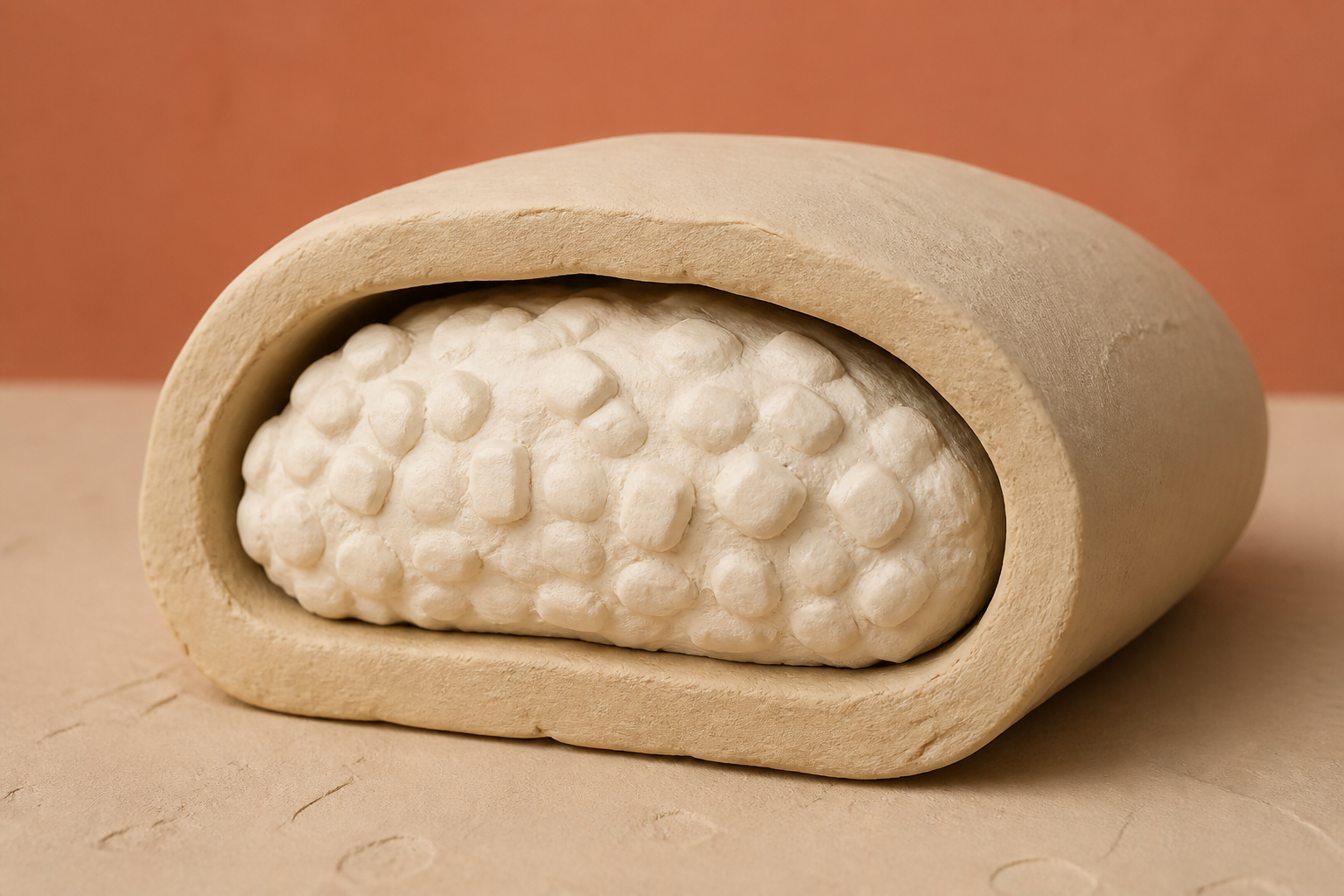
What changes in this design
Without the stated numbers, a reader would know only that a filled baked item has an outer casing and a filling; the relationship between its two sugars and their total share would be unknown.
Here, the filling includes sucrose and lactose in a ratio from 5:1 to 10:1, with those two sugars together accounting for 45% to 75% by weight of the filling.
The figures are worth noticing because they supply exact boundaries for the two sugars in the filling. What effect this balance has on taste, texture, or anything else is not stated.
Fifteen grams
Fifteen grams is the number I kept returning to. StatPearls describes that as a typical single-dose lactose tolerance, while estimating that 65 to 70 percent of people worldwide are lactose intolerant. Symptoms can arrive 30 minutes to two hours after a lactose-containing food. That does not tell me what any one pastry will do. US20260256151A1 gives no serving size, and its ratio cannot tell me the grams of lactose in a finished portion.
The filing came first for me because its title, Baked Products, makes it sound unremarkable. It describes a farinaceous casing around a filling whose sucrose-to-lactose ratio is from 5:1 to 10:1, with those two sugars together making up 45 to 75 percent by weight of the filling.
A 1985 cookie
That formula is not, to me, a sugar-cutting breakthrough. It sets a ratio; it does not say the mixture replaces sugar with a lower-calorie ingredient. At the low end, the sucrose-and-lactose pair is 45 percent of the filling; at the high end, it is 75 percent. Lactose is a smaller part of that pair, but it remains there deliberately. A new proportion is not automatically a new nutritional direction.
FDA sets a Daily Value of 50 grams for added sugars and ties it to dietary guidance to keep them below 10 percent of calories. Its rule covers free mono- and disaccharides added during processing. Lactose naturally present in milk is treated differently, but purified lactose that a manufacturer adds to a filling would count as added sugar under that definition. The filing does not identify the lactose source, so I cannot decide the label from it alone.
The older trail made the new filing feel less novel. A Nabisco patent with 1985 priority, later filed in 1988, described a farinaceous casing using lactose with dextrose and sucrose. It put 15 to 30 percent lactose in the casing, seeking Maillard browning and a crumb that could be both firm and tender. The practical appeal is clear to me without guessing at a business plan. Whey permeate is used in baking for browning and water-holding, too.
Then I found a 1994-published bakery-custard filing, with 1992 priority, that specified a sucrose-to-lactose weight ratio of at least 3.0. Its total carbohydrates were 10 to 20 percent by weight, compared with 45 to 75 percent for the combined sugars in Baked Products. The measures are not identical, and patent boundaries matter. Still, the pattern is hard to miss: an old sweetener pairing, now pressed into a narrower ratio and a much denser filling.
Milk on the label
That history brings an awkward detail into view. The filing calls for lactose, not necessarily whey permeate, so I cannot assume a particular dairy ingredient or label. Yet product guidance for whey permeate says the ingredient must be labeled "dairy product solids" in the United States and carry a milk-allergen warning. It asks buyers to reckon with a dairy input even when the product first reads as a pastry.
Health claims from a ratio alone make me wary. There is no portion size here, no confirmed lactose source, and no nutrition panel. But those absences are why I will not let the word lactose soften the central fact: the specified sugar pair can make up most of the filling. For readers who avoid milk or manage lactose, an ingredient list and serving size would matter far more than a patent's tidy ratio.
Where this leaves things
Elsewhere, the technical work is more direct. A reduced-sugar chocolate approach using soluble corn fiber cut sucrose, lactose, and glucose by 10 to 50 percent while preserving sweetness; it reached shelves as reduced-sugar Cadbury Dairy Milk in the United Kingdom and India in 2019. A patent analysis points to allulose, fermentation-derived stevia, and fiber blends. They pursue the question this filing sidesteps: how do we make a sweet filling with less sugar?
That is why I see Baked Products as evidence of continuity, not a new answer to an old dietary problem. A patent can be technically narrow and still tell a broad story. Here, it selects a familiar bakery pairing and gives it a narrower ratio. What the ratio leaves untouched interested me more than the ratio itself: the filling's stated sugar load, the conditional label burden, and the people for whom lactose is not a neutral ingredient.
Sources
Reporting for this piece drew on the published filing and the references below.
- Baked Products - US20260256151A1
- Bakery Custard - WO1994004037A1
- Shelf-Stable Multi-Textured Cookies - US4961942A
- Lactose Intolerance - StatPearls
- Added Sugars on the Nutrition Facts Label
- 21 CFR 101.9 - Nutrition labeling of food
- Mondelez patents soluble corn fiber for reduced sugar chocolate
- Reinventing Sweetness: Sugar Alternatives Patent Landscape
- Whey Permeate
The record, briefly. US20260256151A1, “Baked Products” A baked product comprises a farinaceous casing enclosing a filling with sucrose and lactose at a 5:1 to 10:1 sucrose-to-lactose ratio, totaling 45 to 75 wt. % of the filling.
Identity details. The saved title-page transcription needs review, so names are not repeated here. Check the official published title page.
More angles on this
- Oat Flour's Next Pair of HandsAnother reading from the same A21D classification family, treatment of flour or dough for baking, e.g. by addition of materials; baking; bakery products.
- Confectionery, Seen Through the Eyes of a Tiny MuseumAnother reading from the same A23G classification family, cocoa.
- CPC A21D: Treatment of flour or dough for baking, e.g. by addition of materials; baking; bakery productsThe official classification family this record was filed into, published in the USPTO Cooperative Patent Classification scheme.
- CPC A23G: CocoaThe official classification family this record was filed into, published in the USPTO Cooperative Patent Classification scheme.
- The Potato Product Makes Its Entrance in SlicesAnother reading from the neighbouring A23B classification family, preservation of foods, foodstuffs or non-alcoholic beverages; chemical ripening of fruit or vegetables.
Read around this one:Public patent recordUSPTO published figure