Field Notes
A Different Route for the Same Dose
Key detail plus Arrangement carry the practical point: Provides a compound of formula I. It keeps the central design choice visible.

First, the setting
Skin problems can be more than a passing irritation. When patches stay red, sore, itchy, or flaky, getting dressed, sleeping, working, and being around other people may feel harder. People seek care because comfort, confidence, and everyday routines all depend on skin feeling manageable.
In a clinic or at home, someone may spread a prescribed cream or ointment over an affected patch of skin, then wash their hands and continue with the day. A caregiver might help with a hard-to-reach area. The tube, jar, or dressing becomes part of a quiet routine around bathing, clothing, and appointments.
What changes in this design
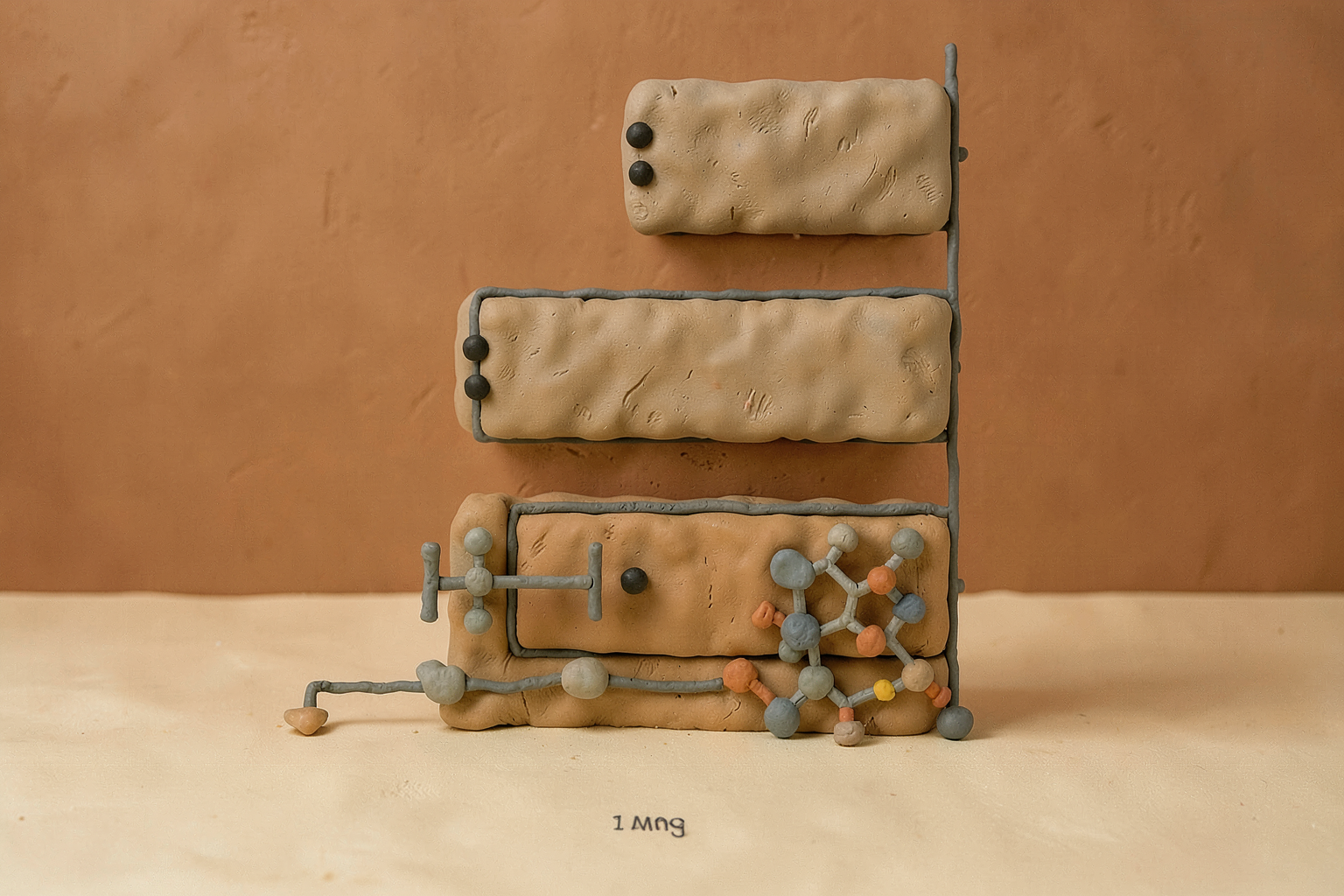
One route included in the comparison is injection: the compound is put into the body with a shot. That gives readers a straightforward alternative to the skin-applied ointment.
This record focuses on a propafenone ointment applied to the skin for psoriasis. At the same dose, topical use was reported to work better than injection, and the propafenone ointment did better than flecainide ointments.
The comparison shows that the route of use mattered in the reported results, even when the dose was the same. What was measured and why the skin route performed better are not stated.
The Skin Route Question
In ordinary objects and human routines, the cause is a chosen route, the effect is a changed response, and the next choice is whether that route belongs inside the design. US20260263391A1, titled Compound And Use Thereof and published on September 10, 2026, gives that sequence a useful turn. The turn matters to you even before its chemistry arrives, because routines teach by repetition: a container, a direction, and an expected outcome can seem like one indivisible object. The patent describes propafenone in a setting where a familiar intuition may be too broad: when the same medicine is involved, it is easy to presume that the route is merely the envelope around the important thing. Yet the published record asks you to notice the envelope, because the ordinary container-and-routine story may be concealing the choice that actually deserves comparison.
That invitation leads to a small picture before it reaches specialist language. An injection takes medicine into the body by needle, while topical application means application on the skin; an ointment is a preparation applied on that surface. The visual distinction is deliberately plain: one route begins with the needle and the other with the skin. The patent states that, at the same dosage, topical application worked better than injection. Nothing in that contrast requires a grand theory to be worth noticing. This should not become a universal rule, because the comparison is bounded to what the filing describes. Even so, it makes the routine look less like a conveyor belt and more like a stage manager checking which entrance belongs to which actor.
Once that practical fork is visible, the terminology stops looking like a gate and starts looking like the labels around a defined item. The published patent describes a compound of formula I, a stated chemical structure, along with related forms: a pharmaceutically acceptable salt, stereoisomer, isotope derivative, solvate, prodrug, metal chelate, crystal form, or metabolite. In everyday terms, those names mark, respectively, a paired form, a differently arranged version, a form distinguished by a version of an atom, a solvent-associated form, a precursor form, a metal-bound form, a solid arrangement, and a form produced as a body processes a substance. The list is not scenery. It tells you that several possible forms are in view, while the ensuing practical test remains much narrower. Their presence sets the boundaries of what the filing presents; the sharp comparison that follows concerns propafenone and its route of application.
One Dose, Different Route
With that vocabulary in place, the sequence can move to mechanism, but only in a modest design sense. That tightness is what made me look twice: the same-dosage contrast brings the route forward without asking you to invent a biological account. What I think is worth your attention is a mechanism of attention, not an assertion about biology: hold the stated amount level, alter the path, and inspect the defined response. The filing places topical application ahead of injection at that same dosage. The contrast arrives less like a brass band and more like a stage manager moving one marked route beside another. Its stated purpose then stays clear without enlargement: the compound, especially propafenone, is described for treating or preventing psoriasis.
Propafenone Ointment, Defined Contrast
Because that purpose has now been stated, the second comparison matters without becoming a parade. The filing says that a propafenone ointment outperformed flecainide ointments. Here an ointment means a preparation applied to the skin, so the contrast holds the presentation type in view while changing the named substance. The practical test walks in order. First, the route comparison asks what changed when the dosage was the same. Next, the ointment comparison asks what changed when the topical format stayed in place but propafenone was set against flecainide ointments. The ointment comparison is less like a contest with confetti and more like a librarian returning two labels to their proper shelves. It does not settle every question about treatment; it replaces one broad shrug with a defined response inside this published record.
That bounded contrast leaves a consequence you can use elsewhere. When an ordinary routine gives you a container, a route, and a repeated result, first ask which input has been held steady; then ask which path has actually changed. Those are two concrete habits for a form, a service counter, a software screen, or any everyday system: compare the same input across routes, and compare like presentations when a named component changes. The transfer is a systems observation, not a way to stretch the patent beyond its stated comparison. Topical application, meaning application on the skin, has the air of a quiet committee asking the same dose to take a different seat. The memorable lesson is modest but durable: sometimes the small correction is not what enters a routine, but where it is allowed to arrive.
The record, briefly. US20260263391A1, “Compound And Use Thereof” Provides a compound of formula I, or its pharmaceutically acceptable salt, stereoisomer, isotope derivative, solvate, prodrug, metal chelate, crystal form or metabolite, and its medical use. The compound, especially propafenone, can treat or prevent psoriasis. At the same dosage, topical application worked better than injection, and a propafenone ointment outperformed flecainide ointments.
More angles on this
- When a Delivery Composition Learns to WaitAnother reading from the same A61K classification family, preparations for medical, dental or toiletry purposes.
- Bioactive Phytochemicals: a gourd-family extract that must pass a test before it gets a jarAnother reading from the same A61K classification family, preparations for medical, dental or toiletry purposes.
- CPC A61K: Preparations for medical, dental or toiletry purposesThe official classification family this record was filed into, published in the USPTO Cooperative Patent Classification scheme.
- CPC C07C: Acyclic or carbocyclic compoundsThe official classification family this record was filed into, published in the USPTO Cooperative Patent Classification scheme.
- The Small Rearrangement Behind a Skin-Tone ScanAnother reading from the neighbouring A61B classification family, diagnosis; surgery; identification.
Read around this one:Public patent recordUSPTO published figure