Objects
When a Delivery Composition Learns to Wait
Delivering Materials and Key detail form one stated connection: Compositions for delivering materials, formed as a suspension in which an internal phase.

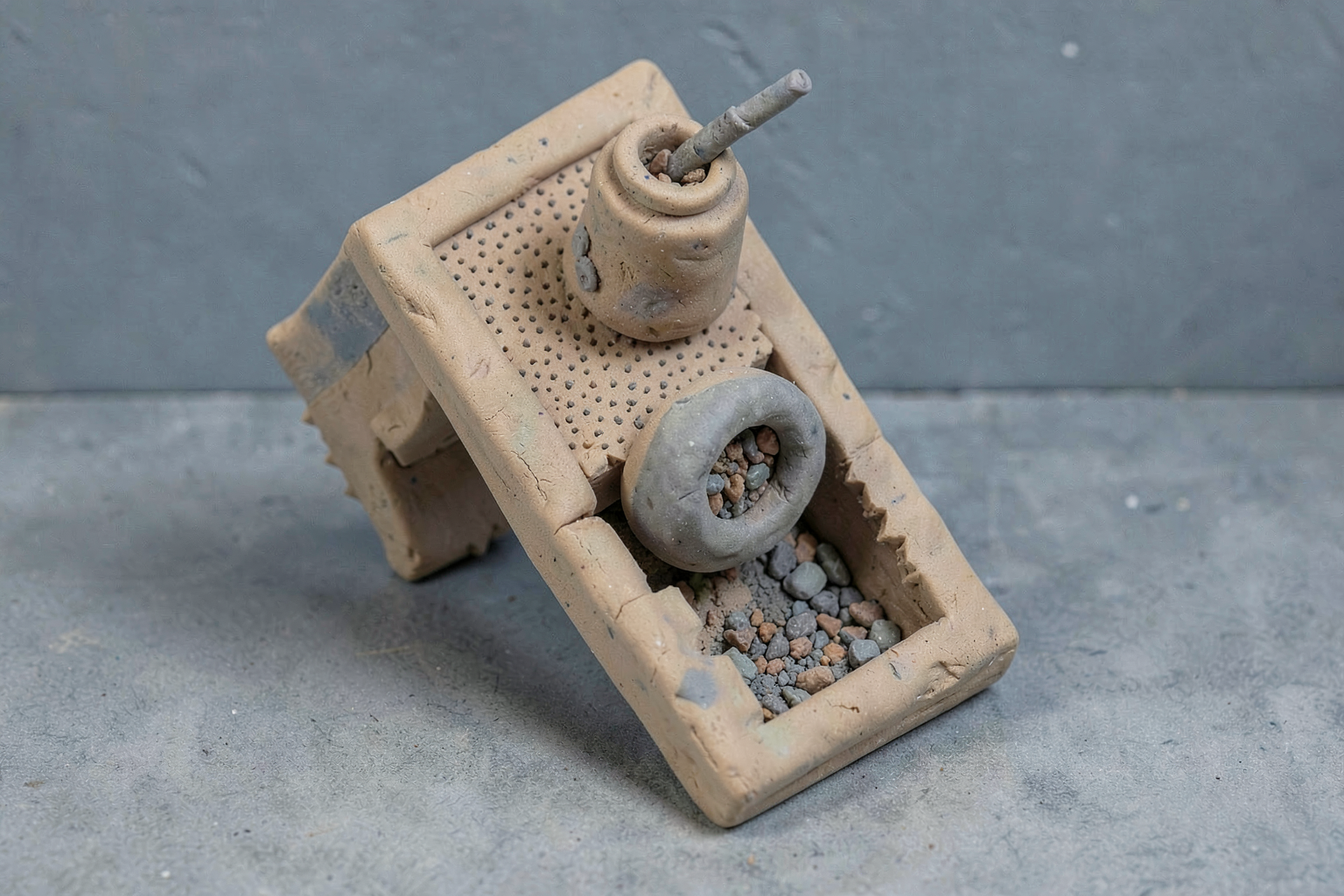
First, the setting
People use products that carry flavors, scents, or other ingredients into the mouth or air. Those ingredients do not always behave the same way when mixed together, stored, carried, or exposed to moisture. Makers spend time arranging them so the experience feels manageable and predictable.
At a checkout counter, in a bag, or beside a hand-washed sink, a person might handle a strip, pouch, spray, or sealed package. Material sits inside another material, then meets saliva, air, or moisture. Nearby, the user notices flavor, scent, texture, or vapor.
What changes in this design
Without an enclosing outer phase, a reader might picture a substance simply mixed into a product and available as soon as it meets its surroundings.
This record describes an internal phase, which can attract water, substantially enclosed by an external phase, which can repel water. Differences in osmotic pressure can control release from that suspended structure.
It helps explain why the composition may be used with varied products, from oral strips to aerosol delivery devices. The record does not state how much material is released or how long release takes.
Inner Phases and Outer Layers
Why would you want an oral strip, a spray, or even a package to hold a material back before it lets it go? That practical question is the condition that gives US20260263444A1, published September 10, 2026, its shape. The filing describes compositions for delivering materials where timing is not left as an afterthought: a material is held in a suspension and arranged so an inner part is substantially enclosed by an outer part. You can picture it before reaching for vocabulary: something to be delivered sits inside a surrounding layer, and the surrounding layer is part of how release may be controlled. I noticed the design attention shift from what is being delivered to how its path is staged. That shift matters because the published record points toward several formats, including oral strips, spray delivery systems, smokeless tobacco products, aerosol delivery devices, cigarettes, and packaging, yet keeps the central question recognizably small: what surrounds the material, and what does that arrangement allow it to do?
Pressure at the Phase Boundary
With that picture in view, the terms become less forbidding. A suspension is an arrangement in which one material is distributed through another rather than forming one uniform substance. Here, the filing describes an internal phase, meaning the inner portion, substantially encapsulated by an external phase, meaning the surrounding portion. Substantially encapsulated means the outer phase largely encloses the inner one, without requiring you to imagine a perfect sealed bead. The internal phase can be hydrophilic, a term for tending to associate with water, while the external phase can be hydrophobic, a term for tending to avoid water. The arrangement is less like a single mixed drink and more like a small container that keeps its appointment. That is not mere terminology housekeeping: the pairing of inner and outer, and their possible water-related character, creates the alignment the next step relies on.
Because that alignment is the point, the mechanism deserves a practical translation. The filing says release can be controlled by osmotic pressure differentials. Osmotic pressure is pressure related to differences in dissolved material across a boundary that permits fluid movement; a differential is simply a difference between conditions. In this arrangement, the publication ties those differences to control of release, making the boundary between phases part of the delivery logic rather than decorative wrapping. Osmotic pressure has the air of a patient stage manager, moving the release along by differences in pressure rather than by a grand gesture. No rate, result, or hierarchy over other arrangements is supplied here, and none needs to be assumed. What is worth holding onto is narrower: the material, its surrounding phase, and the pressure difference are presented as parts that need to line up.
Carriers Across Delivery Formats
Once those parts line up, the contrast with an ordinary one-piece delivery thought becomes visible. Before this picture, you might focus only on the material and the format, asking whether it belongs in a strip, spray, aerosol device, cigarette, smokeless tobacco product, or package. After the picture, the question gains an intervening layer: what internal phase is being carried, what external phase surrounds it, and how might their relationship support controlled release through osmotic pressure differentials? The carrier enters here as a separate practical idea, because the suspension may be combined with one. The carrier arrives as if it were a quiet label-maker, giving the suspension a place in a larger format without rewriting what the phases are doing. This is the source-bounded distinction worth watching: the published record describes not just a material placed into a format, but a phased arrangement that can be combined with a carrier and used across named formats.
That before-and-after view leads to two transferable observations for you. First, when a system needs timing, the useful question is often not only what it contains but which boundary is assigned to manage the timing. The filing offers an everyday design prompt: draw the inner element, draw the outer element, then ask what job each is actually being asked to do. Second, a carrier and a core arrangement should not be mentally collapsed into one object just because they appear together in a finished format. The patent describes the suspension as something that may be combined with a carrier, which makes the relationship worth separating on paper before treating it as a single product idea. We should resist importing a fuller story than that. The application gives a framework for attention, not evidence here of any particular outcome in any one of its listed formats.
From that restraint comes the small experiment I would leave with you. Take any everyday situation where something must be delivered over time, and sketch two circles: an inner material and a surrounding layer. Then write one sentence for the carrier or format beside them, keeping it distinct from the phase arrangement. Finally, ask whether a difference across the boundary could be the part that governs release, rather than assuming the material alone does all the work. The exercise will not establish what any composition does, and it should not be mistaken for a test. It can, however, make the filing's quiet alignment visible: contents, enclosure, pressure difference, carrier, and format each have a place. The next time a familiar delivery form seems simple, try that small sketch first and see whether the design question has acquired one more useful boundary.
The record, briefly. US20260263444A1, “Multi-Phase Delivery Compositions And Products Incorporating Such Compositions” Compositions for delivering materials, formed as a suspension in which an internal phase, which can be hydrophilic, is substantially encapsulated by an external phase, which can be hydrophobic, so release can be controlled by osmotic pressure differentials. The suspension may be combined with a carrier and used in oral strips, spray delivery systems, smokeless tobacco products, aerosol delivery devices, cigarettes, and packaging.
More angles on this
- Bioactive Phytochemicals: a gourd-family extract that must pass a test before it gets a jarAnother reading from the same A61K classification family, preparations for medical, dental or toiletry purposes.
- More Than Half, Not All: How One Filing Sets the Mirror-Image Mix for S-Beta-HydroxybutyrateAnother reading from the same A61K classification family, preparations for medical, dental or toiletry purposes.
- CPC A61K: Preparations for medical, dental or toiletry purposesThe official classification family this record was filed into, published in the USPTO Cooperative Patent Classification scheme.
- CPC A23L: Foods, foodstuffs or non-alcoholic beverages, not otherwise provided for; preparation or treatment thereofThe official classification family this record was filed into, published in the USPTO Cooperative Patent Classification scheme.
- A Wearable Heater That Waits for Two Switches Before It Warms Your SkinAnother reading from the neighbouring A61B classification family, diagnosis; surgery; identification.
Read around this one:Public patent recordUSPTO published figure