Machines
A Wearable Heater That Waits for Two Switches Before It Warms Your Skin
Follow Device alongside Circuit: A wearable-device temperature safety system includes a power source. It keeps the central design choice visible.

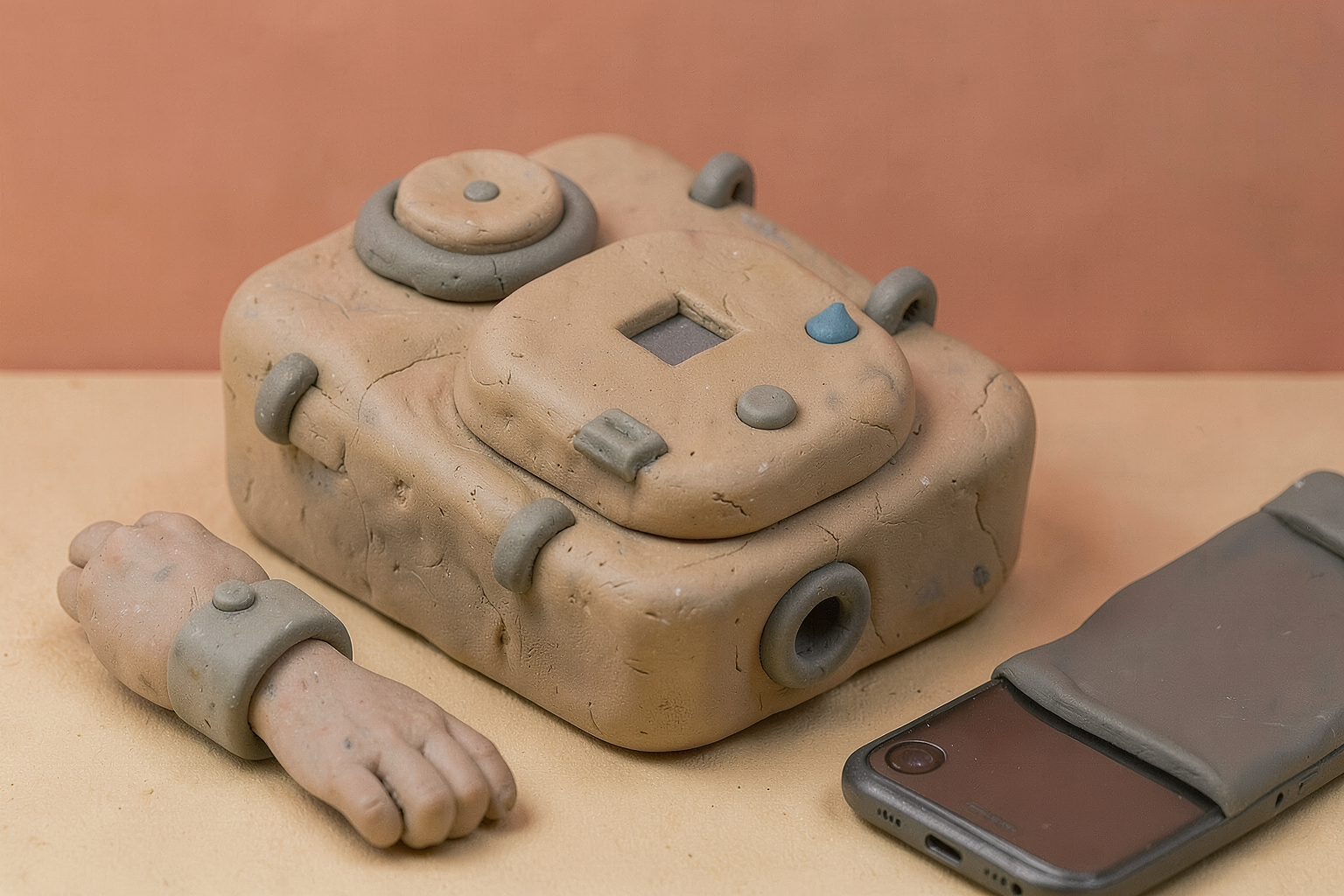
First, the setting
People warm their bodies all the time: heated gloves on a winter commute, a warm wrap on a sore back, a heated vest under a coat. Warmth on the skin feels soothing, but too much for too long can burn, especially for someone who is asleep or has poor feeling in their hands or feet. So anyone who builds things that warm the body cares about keeping the heat gentle.
Picture someone on a cold walk with a thin heated band around their wrist, or a warm pad strapped over a stiff shoulder. A small battery pack sits in a pocket and feeds a flexible heating panel resting against the skin. A tiny sensor nearby keeps track of how warm the skin is getting. The wearer feels a steady warmth, and if it starts to run too hot, the warmth fades away.
What changes in this design
Most people would assume a heated wearable works like a lamp. One switch gets flipped on, power flows to the heating element, and it keeps warming until someone flips that single switch off.
Here, power has to get past two separate gates. The device's control system, the electronics that make its decisions, operates one switch. The other switch sits in the hardware circuit itself. Warmth comes only when both are on. Meanwhile, a sensor measures the temperature at the surface of the skin where the heat lands.
Anything warm worn against skin raises an obvious worry about it getting too hot. This record shows one way a maker might approach that worry: put two separate switches between the power supply and the heater, and take a reading at the skin itself.
Why a warm wearable asks permission twice
What would you want a heated glove or a warm wrap to check before it starts getting hotter against your arm? Things you wear earn your trust through routine. You put them on, they do their job, and you stop thinking about them. That is exactly why the moment a heater decides to turn on deserves more attention than it usually gets. Wearables are routine objects in the most literal sense, worn for hours and mostly ignored. The patent published as US20260262949A1 on September 10, 2026, under the title Temperature Safety Systems And Methods, is about that moment. The filing describes a wearable device built from a few named parts, and each is worth defining in plain words. A power source is whatever supplies the energy. A heating source is the part that turns that energy into warmth. Then there are two switches, which are simply gates that either let power through or hold it back. The first switch belongs to a control system, meaning the decision-making logic that runs the device. The second sits in a hardware circuit, meaning a physical arrangement of components rather than a set of instructions. What made me look twice is that the filing does not treat either gate as the final word.
Two switches, one sensor, one patch of skin
So picture the arrangement as a hallway with two doors in a row. Power starts at one end, the heating source waits at the other, and electricity reaches it only when both doors are open at the same time, because the filing says the heating source receives power when both switches activate. The second switch has the air of a stage manager who will not raise the curtain until the lighting cue and the sound cue both say go. That is a simple picture, but it changes who gets to say yes. Neither switch alone is described as enough to send warmth to the wearer, so starting the heat becomes an agreement rather than a single command.
That agreement then needs something to report back, and this is where the temperature sensor comes in. Put plainly, a temperature sensor is a part that turns how warm something is into a reading the device can use. The filing describes a sensor that measures the temperature of the skin surface receiving the heat. That is a narrower and more personal target than the temperature of the heating source or the air inside a pocket. The sensor sits there like a librarian with a clipboard, noting what the skin is actually receiving rather than what anyone intended to send. Read together, the parts form a small loop of permission and evidence: the switches decide whether power may flow, and the sensor reports what the warmth is doing where it lands. I could not work out from the filing alone exactly how that reading feeds back into either switch, and I would rather not guess. The published patent does not need to be read as promising any particular result for that loop. What stands out is simply where it chooses to look.
What a single-switch heater would look like instead
Now set that beside the ordinary version of the same task. Before, in the plain arrangement most people would imagine, a heater has one path from battery to element and one switch that opens or closes it, so whatever controls that switch carries the whole decision. A heater with one switch behaves less like a committee and more like a single person with a key, which is efficient right up until that person is having an off day. After, in the arrangement this filing describes, the same request to heat has to pass through a control-system gate and a separate hardware-circuit gate, and the measurement it watches is taken at the skin rather than somewhere more convenient. The difference you can see is not a claim about performance, since the filing as published makes none. It is a difference in how many separate things must agree before warmth arrives, and in where the device looks once it does.
I think the distinction is worth keeping because it travels well beyond wearables. The first observation you can carry elsewhere is that pairing a decision made by logic with a decision made by physical circuitry gives a system two different kinds of judgment, so a slip in one kind does not automatically become the outcome. The second is that the most useful signal is often the one taken where the effect is felt, not where the action starts, and a temperature reading at the skin is a tidy example of choosing the receiving end over the sending end. A third, smaller one follows from both. When a system turns uncertainty into action, it helps to be able to say exactly which signal made the call.
For a small experiment, take one device in your own routine that warms, cools, or switches on by itself, such as a kettle, a space heater, or a heated seat. The next time you use it, ask two questions about it. How many separate things have to agree before it starts? And where is it looking to decide whether the job is going well? You may not find the answers printed anywhere, and that is fine. The point is to notice whether the device listens to the place where you actually feel the result, or only to itself.
The record, briefly. US20260262949A1, “Temperature Safety Systems And Methods” A wearable-device temperature safety system includes a power source, heating source, first control-system switch, and second hardware-circuit switch. The heating source receives power when both switches activate, and a temperature sensor measures skin-surface temperature receiving heat.
More angles on this
- When a Marker Gives Depth a ReferenceAnother reading from the same A61B classification family, diagnosis; surgery; identification.
- Targeting the X-Ray Opening Where Recognition Takes OverAnother reading from the same A61B classification family, diagnosis; surgery; identification.
- CPC A61B: Diagnosis; surgery; identificationThe official classification family this record was filed into, published in the USPTO Cooperative Patent Classification scheme.
- CPC G01K: Measuring temperature; measuring quantity of heat; thermally-sensitive elements not otherwise provided forThe official classification family this record was filed into, published in the USPTO Cooperative Patent Classification scheme.
- The Small Surface Change Inside ExerciseAnother reading from the neighbouring A61F classification family, filters implantable into blood vessels.
Read around this one:Public patent recordUSPTO published figure