Machines
The Small Surface Change Inside Exercise
Elastomer Materials plus Key detail carry the practical point: Apparatuses incorporating compressible rubber, resin.
First, the setting
Exercise often happens on firm, predictable surfaces: a gym floor, a sidewalk, or a playing field. People move differently when a surface gives under a foot or hand, and coaches and participants pay attention to balance, body awareness, comfort, and how movement feels during training.
At a workout, someone may step onto a soft, flexible layer built into a shoe, mat, or piece of training gear. Their foot settles and shifts as they squat, stretch, walk, or balance. A trainer nearby may watch their posture while the equipment contacts the floor or another surface.
What changes in this design
Without this added material, a reader might expect the person to meet the exercise surface through the usual product surface. The record does not explain ordinary designs of footwear, apparel, or equipment.
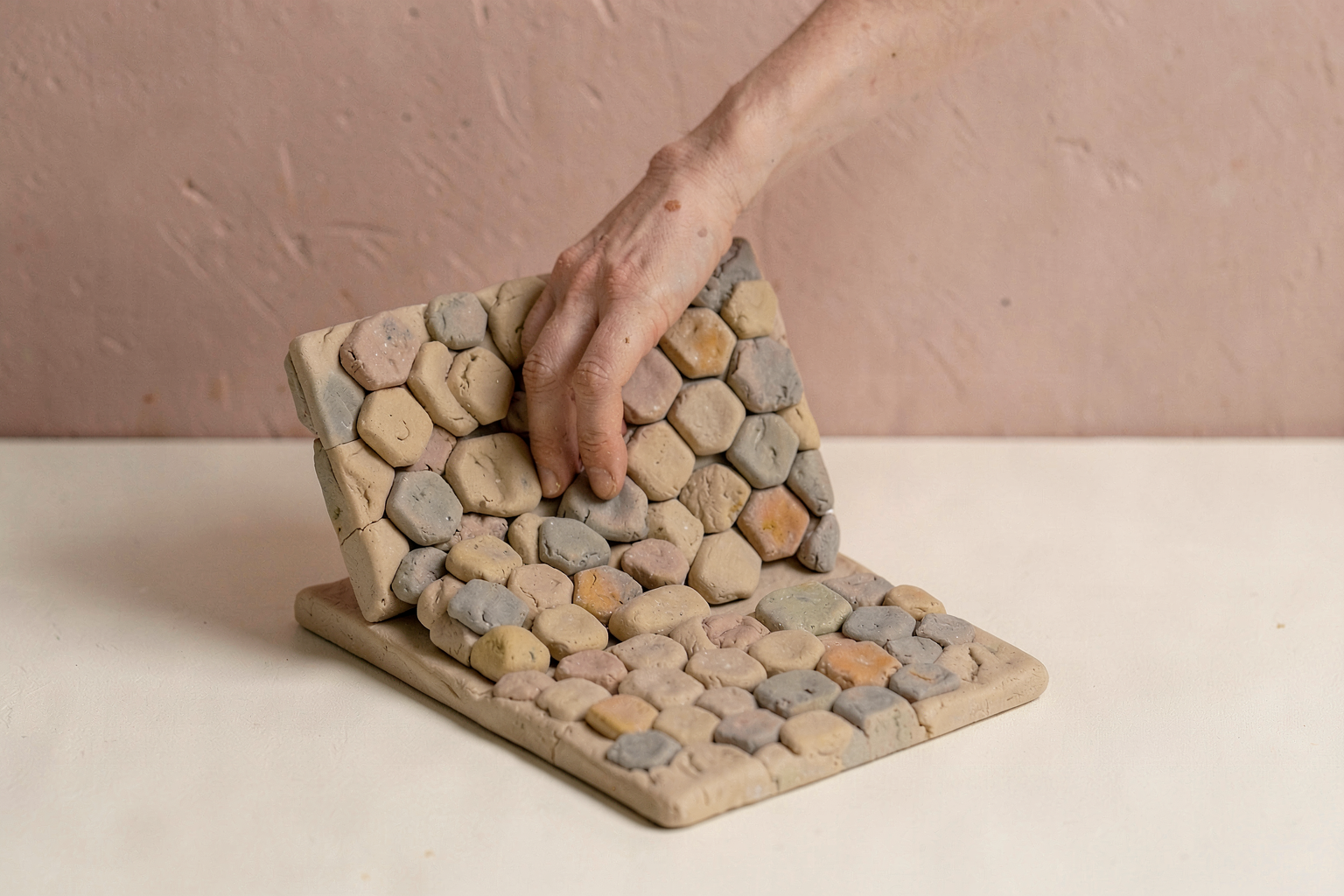
Here, compressible rubber, resin, or rubber-like material is incorporated into athletic footwear, apparel, fitness equipment, or similar products and placed between the user and a surface during exercise.
That placement is linked to balance, use of other muscles, and feedback about body position. It is worth knowing because the contact point changes during exercise; how much change results and how it is measured are not stated.
Footing That Stops Being Background
A yielding layer under your foot changes balance, brings other muscles into the movement, and presents the next choice: do you treat altered footing as background or as part of the exercise? The movement is ordinary until the surface relationship becomes something you have to answer, not merely stand upon. That concrete moment is where US20260262762A1, published September 10, 2026, made me look twice. Ordinary exercise gear is easy to imagine as a quiet intermediary, intended to stay out of attention while a familiar movement repeats. The published record moves attention to another place. It describes compressible rubber, resin, or elastomer materials incorporated into athletic footwear, apparel, fitness equipment, or similar products, positioned between a user and a surface during exercise. The surface has the air of a quiet stage manager, shifting the cue without taking the stage.
That contrast matters because the ordinary assumption is not merely that a shoe, garment, or piece of fitness equipment accompanies movement; it is that the contact point stays settled enough to ignore. Here, the broad product types remain familiar: athletic footwear, apparel, fitness equipment, or similar products. What changes is the small layer at the meeting point between you and the surface. Rather than announcing itself with a wholly separate routine, the described arrangement makes an old routine notice its own footing. This is the small correction hidden inside a routine, changing the question from what the object is to what response its contact point asks for. Your footing becomes less like a fixed instruction and more like a librarian sliding a bookmark into the page.
From that picture, the terms deserve to be slowed down. Compressible means able to yield under pressure rather than remain rigid. An elastomer is a material with rubber-like elastic behavior. The filing names compressible rubber, resin, or elastomer materials, then places those materials within the larger setting of exercise products. It also describes their position between user and surface as requiring balance and bringing other muscles into use. Proprioceptive feedback means bodily awareness of position and movement. The important plain-language distinction is between simply having a surface and receiving information through a changed relationship to it. Nothing in that distinction needs an extravagant story; it makes the contact point part of what you attend to.
A Defined Surface Response
Once those terms are in view, the mechanism can be walked through in order. First, a compressible material is positioned between user and surface. Next, the filing describes balance as required by that arrangement. Then it describes other muscles coming into use and proprioceptive feedback being provided. The sequence matters because it frames a defined response in place of a guess: the contact point is there to call for balance, not merely to receive weight without notice. The material does not need a dramatic role in the story; its role in the described arrangement is to make the surface relationship consequential during exercise. The design feels as if a restrained committee has asked balance to bring its notes. What made me look twice was the decision to place the correction exactly where routine tends to stop looking.
Lessons Beyond the Contact Point
That ordered mechanism points toward the purpose conveyed by the title, Apparatuses And Materials For Enhancing The Effects Of Exercise. The useful editorial distinction is narrow: a familiar product can insert a defined response where a person might otherwise rely on a guess. The practical test is correspondingly small. When you encounter a routine system, ask what its contact point quietly assumes will stay stable, then ask what feedback becomes available if that assumption is carefully altered. One transferable observation is that a correction can live in an interface rather than in the headline feature. Another is that feedback becomes more useful when it arrives at the moment a decision is being made.
Following that test, you can carry the lesson beyond exercise without carrying more than the published record supports. A routine often looks finished because its smallest handoff has disappeared from view, whether that handoff is foot to surface, hand to handle, or person to tool. First, attention at a boundary can matter as much as attention on the visible object. Second, a modest material or spacing decision can define a response instead of leaving one assumed. I think that is the bounded consequence worth keeping: look for the quiet contact point that turns an automatic response into information, then judge the system by the response it has defined rather than by the guess it has inherited.
The record, briefly. US20260262762A1, “Apparatuses And Materials For Enhancing The Effects Of Exercise” Apparatuses incorporating compressible rubber, resin, or elastomer materials into athletic footwear, apparel, fitness equipment, or similar products are described. Positioned between a user and a surface during exercise, the materials require balance, use other muscles, and provide proprioceptive feedback.
More angles on this
- A Nursing Cover With Named Openings, and the Moment Coverage Changes HandsAnother reading from the same A41D classification family, outerwear; protective garments; accessories.
- Seeing the Elastic Pattern Before You Decide What It MeansAnother reading from the same A61F classification family, filters implantable into blood vessels.
- CPC A41D: Outerwear; protective garments; accessoriesThe official classification family this record was filed into, published in the USPTO Cooperative Patent Classification scheme.
- CPC A61F: Filters implantable into blood vesselsThe official classification family this record was filed into, published in the USPTO Cooperative Patent Classification scheme.
- When the Side Panel Takes the QuestionAnother reading from the neighbouring A41C classification family, corsets; brassieres.
Read around this one:Public patent recordUSPTO published figure