Groundwork
Ruts Have Filed a Formal Complaint
The equipment industry is patenting instruments to watch soil damage it created and cannot undo, and the fix that works is stalled at a quarter of growers.

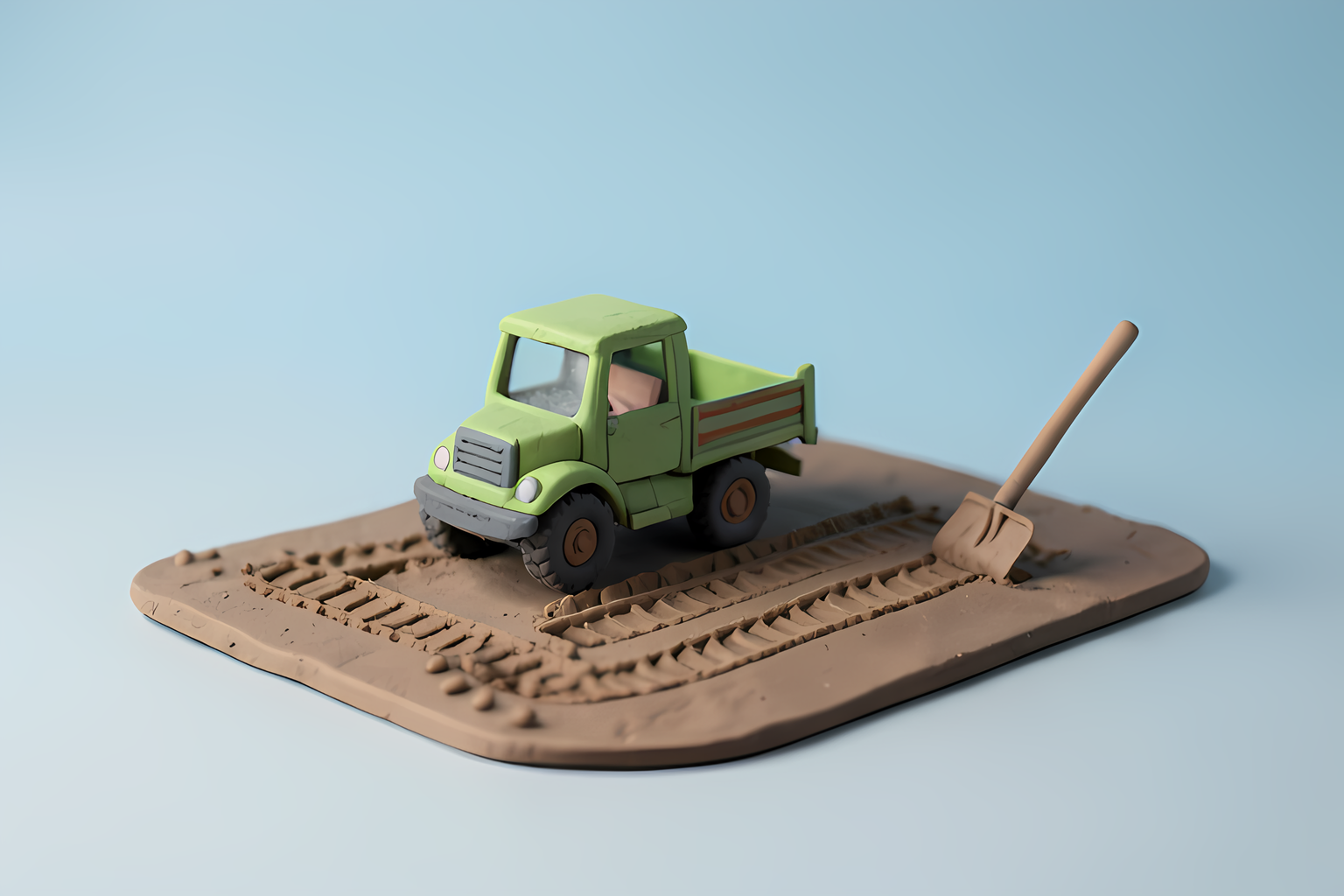
What changes in this design
A reader might otherwise think of the machine's location as just a point on its own, without connecting it to a particular groove or track in the ground.
Information about the groove or track is considered together with the work machine's position relative to it. Those two inputs are used to generate a response aimed at reducing or avoiding the related problem.
The response is linked to both the ground feature and the machine's relationship to it. The particular response is not identified.
Four thousand kilograms, then thirty-six thousand
A fully laden combine harvester weighed about 4,000 kilograms in 1958. By 2020 the figure was around 36,000. I keep coming back to that pair of numbers, from a much-cited study by Keller and Or, because the front axle went the same way: a wheel load of 1,500 kilograms became 12,500. The machines got better at nearly everything except being light.
Their conclusion is blunt. Roughly 20 percent of the world's arable land now sits at high risk of chronic subsoil compaction, most of it in Europe, the Americas and Australia. That compaction is hard to reverse for years or decades. Current weight trends, they say, are not sustainable, and their answer is redesigning the machines, not driving them more carefully.
The wet harvest of 2019
A single wet autumn shows what that means. Aaron Lee M. Daigh and colleagues studied land deep-rutted during the 2019 harvest in North Dakota and Minnesota, and projected a median 21 percent yield reduction over the following two years. For every 10 percent of the region's corn and soybean acres affected, they put the minimum cost at US$587 million.
Then there's the fact that reframes everything else. Extension agronomists in Minnesota report that 70 to 90 percent of total plow-layer compaction happens on the first trip across a field. Axle loads over 10 tons push damage below the tillage layer. Recovery takes two to seven years, and residual compaction can still cut yields twelve years on. The standard remedy is weak: deep tillage can shatter a hard pan, but it has never been shown to lift yields for long.
Sixteen cameras and a rut
So, the filing. Deere & Company applied on 13 February 2025, and the document published on 13 August 2026 as Rut Detection and Mitigation for Work Machines. The mechanism is compact: take rut data, work out where the machine sits relative to the rut, generate a mitigation action. Its classification pairs a control-systems code with one for agricultural working methods, so this is a field problem, not a roadbuilding one.
The problem it names is genuine. Existing systems struggle to tell one terrain irregularity from another, and to fuse sensor readings with weather and field history. Five weeks before the filing, the same company showed an autonomous tractor carrying sixteen cameras in pods for a 360-degree view of the field, justified mostly by labour: about 2.4 million farm jobs to fill each year. This application rides on that hardware. A large Japanese electronics company already holds a granted US patent on the same detect-then-mitigate structure for road ruts, with priority in 2021 and a grant in June 2025, claiming steering, braking or speed reduction as the response.
Compaction becomes something the law watches
Two dates outside the patent system matter here. The European Parliament adopted the Soil Monitoring Directive on 23 October 2025, and it took force in December, making compaction of both topsoil and subsoil something member states must monitor. About a third of EU soils are already counted as degraded. Rut and compaction data stop being an agronomic annoyance at that point and start being evidence.
The other is 8 July 2026, five weeks before this application published, when the same manufacturer settled an FTC and five-state antitrust case over repair. For ten years it must give farmers and independent shops the diagnostic resources its own dealers get. The split is hard to miss. The software prised open reads faults; the software still being patented reads the ground. And the lead inventor, the company's most prolific with more than 230 US patents, had left in June 2024, eight months before this was filed.
The harder half of the problem
There is a fix that works, and it isn't perception. Controlled traffic farming confines wheels to permanent lanes: 9 to 12 percent of a paddock trafficked, against roughly 45 percent in a season of random traffic. Australian figures put grain yields 2 to 16 percent higher depending on soil, and fuel use down about 35 percent from running on firm tracks.
A 2019 survey of 80 Western Australian grain growers found only about a quarter actively practising some form of it, with another 24 percent planning to. That gap is where I would put the effort. I don't think this filing is cynical. A machine that knows where the ruts are beats one that doesn't, and if compaction is now monitored by law, somebody has to measure it. But detection arrives after the pass that did most of the harm, and the tool for undoing that harm is the one nobody has proven works. It is an instrument aimed at a wound the industry made by getting heavier. The lighter machine and the fixed lane are what close it.
Sources
Reporting for this piece drew on the published filing and the references below.
- US20260231846A1 - Rut detection and mitigation for work machines
- Headers nearing the weight of biggest dinosaurs and that's a problem: study
- Soil compaction - University of Minnesota Extension
- Big wheel ruts, big economic losses
- Controlled Traffic Farming - Soil Quality Knowledge Base
- European Parliament adopts first-ever Soil Monitoring Law
- FTC, States Secure Settlement with Deere & Company, Advancing Farmers' Right to Repair
- John Deere Reveals New Autonomous Machines & Technology at CES 2025
- US12340514B2 - Rut detection for road infrastructure
- Noel Anderson, Ph.D. - IEEE-USA IWRC speaker profile
The record, briefly. US20260231846A1, “Rut Detection and Mitigation for Work Machines” The abstract describes using rut data and the machine's position relative to a rut to generate a mitigation action.
More angles on this
- The Leveling Bar Has a Very Firm Opinion About LevelAnother reading from the same A01B classification family, soil working in agriculture or forestry.
- A Work Vehicle, Taking Its Job Quite PersonallyAnother reading from the same A01B classification family, soil working in agriculture or forestry.
- CPC G05B: Control or regulating systems in generalThe official classification family this record was filed into, published in the USPTO Cooperative Patent Classification scheme.
- CPC A01B: Soil working in agriculture or forestry; parts, details, or accessories of agricultural machines or implements, in generalThe official classification family this record was filed into, published in the USPTO Cooperative Patent Classification scheme.
- When a Cart Needs to Know Which Vehicle It Is MeetingAnother reading from the neighbouring G05D classification family, systems for controlling or regulating non-electric variables.
Read around this one:Public patent recordUSPTO published figurePatent issue-date index