Objects
The Parallel-Sidewall Condition Inside a Floor Nozzle
Assembly and Projecting Members form one stated connection: A floor nozzle assembly distributes firefighting suppressant through passageways formed by a body and deflector.

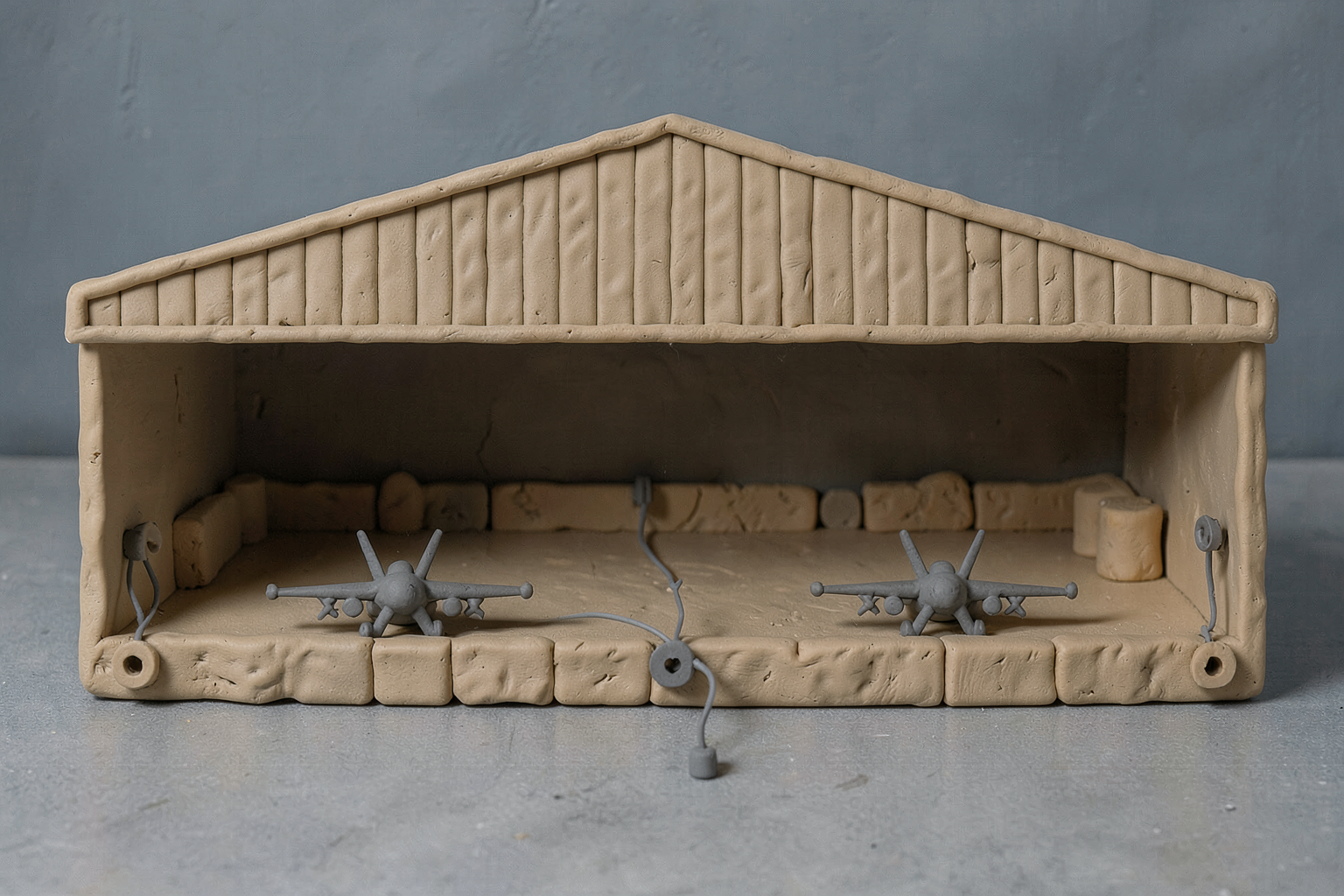
First, the setting
Homes, workplaces, and public buildings need ways to manage fire when smoke, heat, and confusion make ordinary movement difficult. Fire protection is built around helping people leave dangerous spaces and giving responders tools to work around rooms, equipment, storage areas, and other physical obstacles.
In a building during an emergency, a responder may work close to the floor while water or another fire-suppressing material moves through fixed piping and outward from low-mounted openings. People nearby might see wet flooring, hear rushing liquid, and follow directions away from the affected area.
What changes in this design
Without the internal details, someone might picture a floor fire-protection nozzle as simply providing an opening for suppressant to pass through.
This nozzle uses a body and deflector to make its channels. Outward-extending parts and curved edges also shape them, and each channel has side walls that are both flat and parallel.
Those details give a reader a closer look at where the suppressant travels inside the nozzle. The flat, parallel channel walls are a central feature of the construction shown here.
Parallel Sidewalls as a Condition
Because a body and a deflector form passageways, firefighting suppressant is described as being distributed through them; the next choice is to notice what gives those passageways their shape. The published record dated September 10, 2026, US20260263852A1, carries the title Fire Protection Floor Nozzles, Systems And Methods For Floor Nozzle Spray Systems. In that compact picture, one named part meets another, routes take shape, and suppressant has a described way through. You might first see only a nozzle arrangement for a floor spray system. What made me look twice was the decision to identify small projecting members and curved edges as the features that define the routes, rather than leave the geometry as an unnamed middle. The projecting members stand in the picture as if they have been asked to hold their places until the next cue.
To make that picture usable, I call the detail the parallel-sidewall condition, an editorial label rather than a term attributed to the filing. The condition says the passageways are not merely spaces between parts, but routes with parallel planar sidewalls. A passageway means a route through which the suppressant is described as being distributed; planar means flat rather than rounded; and parallel means two flat sidewalls run alongside one another without converging in the description. The body is one of the parts that helps form the routes, while the deflector is the other named part that helps form them. Curved edges and projecting members are the features the filing says define the passageways. That vocabulary matters because it narrows your attention from the whole nozzle to the condition carried by the walls of each passageway.
Once that condition has a name, the comparison gets cleaner. A broad account of a floor-nozzle spray system could say only that an assembly distributes suppressant through a nozzle. The published record chooses a defined response instead: it identifies passageways formed by a body and deflector, identifies projecting members and curved edges as features that define them, and then states that the sidewalls are planar and parallel. That contrast replaces a guess about an unpictured geometry with an arrangement you can track in words. The parallel sidewalls arrive with the quiet discipline of a stage manager marking where the route may run. Notice what this does not establish: nothing here ranks the arrangement against another one or supplies a particular result beyond the stated distribution.
Passageways Between Body and Deflector
With the contrast set, the mechanism can be walked in order rather than admired from a distance. First, the body and deflector form the described passageways in the floor nozzle assembly. Next, the projecting members and curved edges define those passageways, supplying the particular geometric features the patent identifies. Finally, the passageway sidewalls are planar and parallel, which means the named walls are flat and run alongside each other. The sequence is deliberately small: parts, boundaries, then wall condition. It does not authorize an imagined account of unlisted channels, pressures, spray patterns, or outcomes. The curved edges have the air of a librarian guiding every detail back to its proper shelf.
Design Lessons at the Edge
Because the mechanism stays bounded, its stated purpose can stay bounded too: the assembly distributes firefighting suppressant through the passageways. That is enough to explain why the geometry deserves attention. The passageways are not incidental detail in the description; they are the named routes through which distribution is described. Yet the available fact does not say how much suppressant moves, how it behaves after leaving the assembly, or how this arrangement compares with another configuration. The small architectural decision is less like an open-plan hallway and more like a labeled corridor, and that restraint is what makes the purpose legible. You are not being asked to infer a grander promise from a quiet structural choice.
That restraint brings the lesson outside this published record without pretending it travels farther than it does. First, when a design looks ordinary from the outside, look for the minor condition that turns a general function into a legible arrangement; here it is the paired flat sidewalls running parallel. Second, test an explanation by asking whether every named feature keeps its place in a plain sequence: body and deflector form passageways; projecting members and curved edges define them; the assembly distributes suppressant through those passageways. If an account must smuggle in an unstated behavior to sound impressive, it has left what the filing actually describes. The consequence you can use elsewhere is simple: name the small condition, follow its connections, and let the evidence stop where it stops.
The record, briefly. US20260263852A1, “Fire Protection Floor Nozzles, Systems And Methods For Floor Nozzle Spray Systems” A floor nozzle assembly distributes firefighting suppressant through passageways formed by a body and deflector, with projecting members and curved edges defining passageways having parallel planar sidewalls.
More angles on this
- The Fuse That Gets Told When to Blow: A Fire Prevention Filing for Electronic Control UnitsAnother reading from the same A62C classification family, fire-fighting.
- When a Battery Sheet Refuses to Stay GenericAnother reading from the same A62C classification family, fire-fighting.
- CPC A62C: Fire-fightingThe official classification family this record was filed into, published in the USPTO Cooperative Patent Classification scheme.
- A Fire-Fighting Mix That Leaves Its Choices in ViewAnother reading from the neighbouring A62D classification family, chemical means for extinguishing fires or for combating or protecting against harmful chemical agents.
- The Small Condition Beneath a Cycling System's Big SwitchAnother reading from the wider A63B classification family, apparatus for physical training, gymnastics, swimming, climbing, or fencing; ball games; training equipment.
Read around this one:Public patent recordUSPTO published figure