Machines
The Small Condition Beneath a Cycling System's Big Switch
Start with System and Sensor: A cycling exercise system has a main body releasably connected to an auxiliary body for bicycle use.

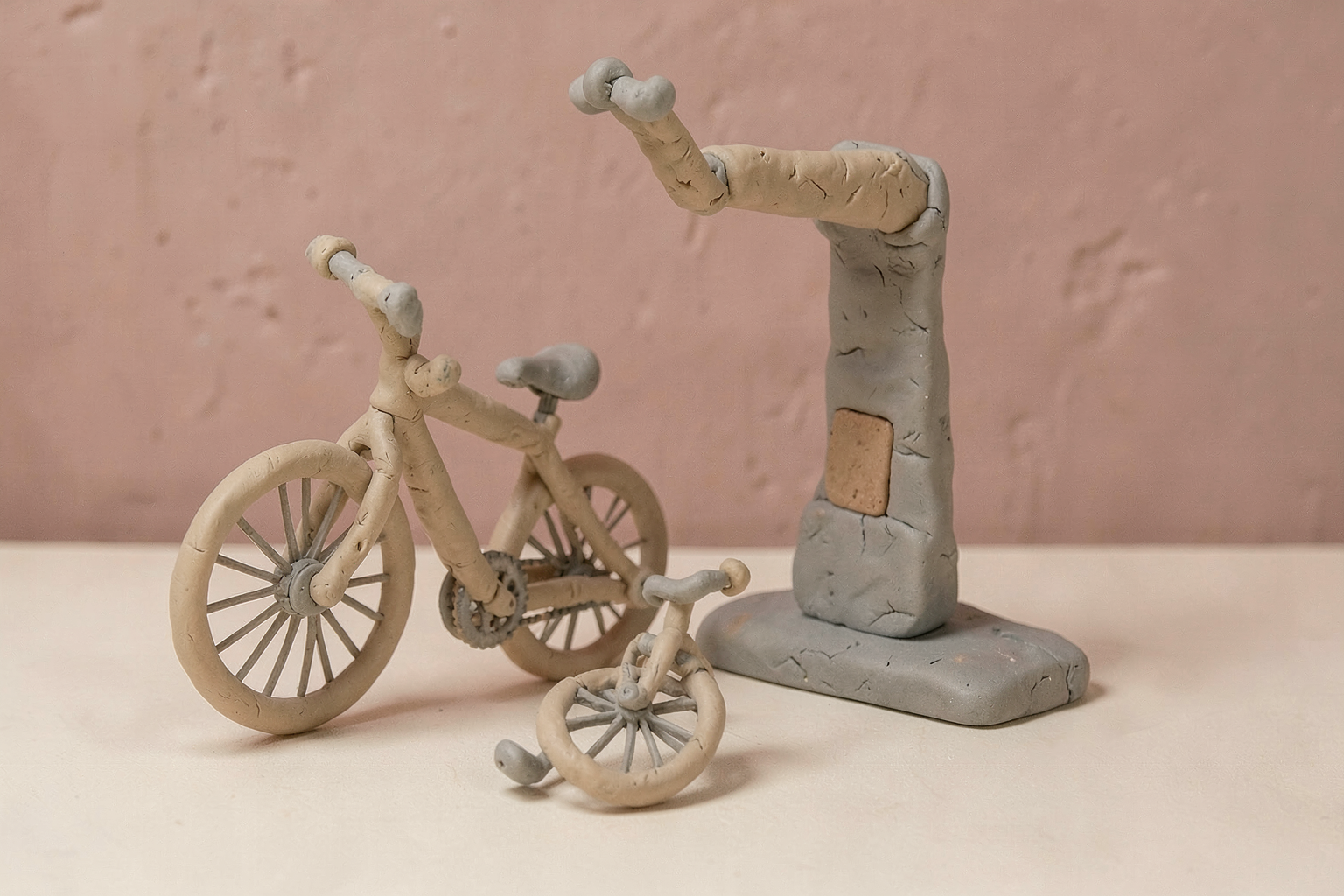
First, the setting
Many people ride bicycles for transportation, recreation, and exercise. When weather, traffic, limited daylight, or a busy schedule makes an outdoor ride awkward, they may still want a familiar way to pedal and pay attention to effort. This is why homes, fitness rooms, and training spaces make room for cycling equipment.
In a living room, gym, or sheltered training area, a rider holds the handlebars and turns the pedals while a bicycle or exercise unit stays in place. A nearby display can show information gathered during the session, such as how hard the rider is working, while another person may watch or adjust the setup.
What changes in this design
A reader might expect bicycle use and exercise-bike use to involve different equipment. Information about a rider could also be absent or handled separately from the cycling equipment.
Here, one main unit can connect to and disconnect from either an auxiliary part for bicycle use or an electronic station for exercise-bike use. Sensors detect body-related or performance readings, and the station provides at least one reading to the user.
This links two cycling contexts to one main unit and includes a way for the rider to receive some detected information. Which body-related or performance readings it measures is not stated.
The Connection Condition
You might assume a cycling exercise system must choose a side: it belongs either with a bicycle or with an exercise bike. That is the obvious headline. The more useful question is what has to remain connected, in both language and arrangement, when the setting changes. A category answers quickly. A connection asks you to slow down. In US20260263890A1, Sports Equipment For The Exercise Of Cycling, published September 10, 2026, the filing describes a central piece that attaches to an auxiliary body for bicycle use and to an electronic station for exercise-bike use. The filing calls that central piece the main body and says each connection is releasable. It gives you a shared center and two use-specific partners, rather than an invitation to make the setting the whole story. A binary label fits neatly on a shelf. This arrangement does not quite stay there.
That refusal to stay on the shelf points to the minor condition worth naming: the releasable connection. Releasably connected means attached in a way that can be disconnected; it is a relationship, not a decorative adjective. An auxiliary body is the filing's name for the companion in bicycle use, while electronic station is its name for the companion in exercise-bike use. I looked twice because that relationship does quiet organizing work: the main body joins one named counterpart in one use and another in the other. The arrangement is less like two separate machines taking turns and more like one orderly stage manager changing the set. You do not need a larger story to notice the change, but you do need to keep the condition in view. It is easy to overlook precisely because the words themselves are so restrained.
Once that condition is visible, the comparison becomes modest but specific. An ordinary account may divide bicycle use from exercise-bike use into two tidy categories and move on. That broad version tells you the settings. It leaves the connection point blurry. The filing instead places the distinction where the main body meets a different named counterpart for the stated use. This is not a declaration that the two settings become identical. It is a revision in where you look: from which category wins to which component joins the main body. The system has the air of a restrained committee that permits a change of venue only after the right companion is present. That small revision is worth your attention because it keeps a familiar shorthand from smearing two arrangements into one vague option.
Partners and the Parameter
That focus on the connection point carries into the mechanism the filing describes. Sensors detect biometric or performance parameters. A sensor is a component that detects a condition or measure; biometric and performance parameters here identify body-related or activity-related measures without naming a particular one. The electronic station provides at least one parameter to the user. These are separate named roles, and the wording gives them a deliberately limited scale. The station is less like a silent piece of furniture and more like a courteous librarian returning one marked card to you. No grand outcome needs to be placed between detection and provision for the arrangement to be worth noticing.
With that mechanism held at its stated scale, the purpose also becomes easier to keep honest. The main body is paired with an auxiliary body for bicycle use and with an electronic station for exercise-bike use, while the station provides at least one parameter to the user. I think the transferable interest lies in two concrete habits of description. First, when one object changes setting, the handoff condition should be explicit rather than buried inside a broad category. Second, when parameters are detected, the reader benefits from knowing which named part provides at least one of them to the user. Those are modest observations, but modest is not the same as trivial. A changed setting can matter operationally without requiring a dramatic story about what it achieves.
A Smaller Design Default
Those two observations lead to a bounded lesson. You can treat a removable connection as a condition that deserves to be stated, and a provided parameter as a specific handoff to a user, without pretending this filing settles anything beyond its described arrangement. What made me look twice was how readily both details disappear under the old default of treating every new setting as a separate thing. The point is not that bicycle use and exercise-bike use collapse into one category; the patent names different partners for them. The point is that a shared main body makes the boundary worth inspecting before the label is applied. Even the most patient label-maker would ask what is connected before printing two labels. Stop letting the old default turn a condition into background.
The record, briefly. US20260263890A1, “Sports Equipment For The Exercise Of Cycling” A cycling exercise system has a main body releasably connected to an auxiliary body for bicycle use, and to an electronic station for exercise-bike use; sensors detect biometric or performance parameters and the station provides at least one parameter to the user.
More angles on this
- When a Treadmill Hands Control to the RailAnother reading from the same A63B classification family, apparatus for physical training, gymnastics, swimming, climbing, or fencing; ball games; training equipment.
- The Restless Padding Problem and the Ring of TensionAnother reading from the same A63B classification family, apparatus for physical training, gymnastics, swimming, climbing, or fencing; ball games; training equipment.
- CPC A63B: Apparatus for physical training, gymnastics, swimming, climbing, or fencing; ball games; training equipmentThe official classification family this record was filed into, published in the USPTO Cooperative Patent Classification scheme.
- Inside toolAnother reading from the neighbouring A63H classification family, toys, e.g. tops, dolls, hoops or building blocks.
- The Fuse That Gets Told When to Blow: A Fire Prevention Filing for Electronic Control UnitsAnother reading from the wider A62C classification family, fire-fighting.
Read around this one:Public patent recordUSPTO published figure