Field Notes
The Restless Padding Problem and the Ring of Tension
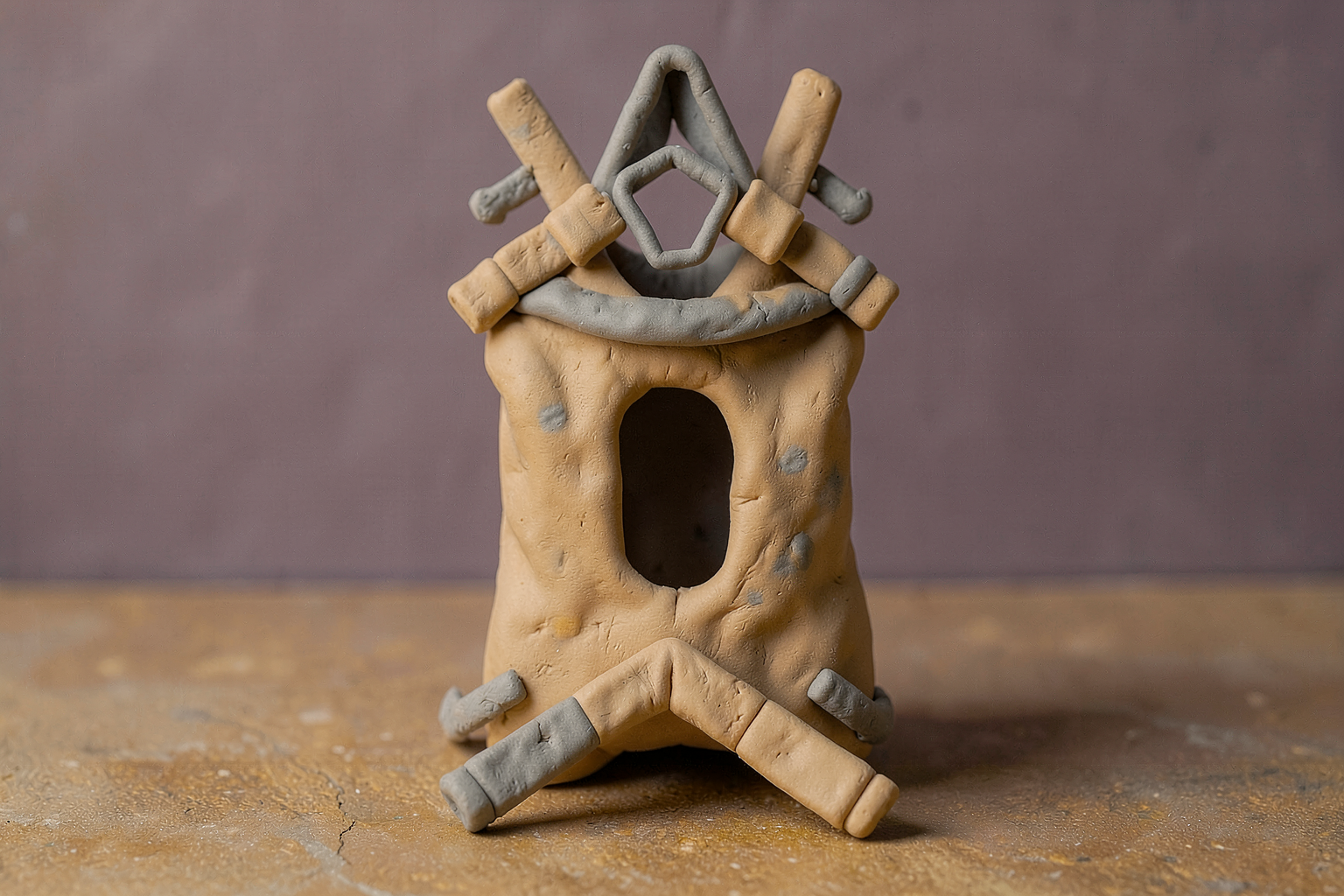
Least One Strap is a flexible band that goes partly or all the way around the player’s body to hold the protective garment in place.

First, the setting
Sports participants often wear protective clothing that needs to stay close to the body while they run, bend, reach, and collide. Gear that shifts can be distracting and uncomfortable, so players and equipment makers pay attention to how garments fasten, adjust, and move with the wearer.
In a locker room or beside a playing field, a player pulls on a padded garment and brings straps around their torso. A teammate or coach may check the fit as the player lifts their arms, bends, and moves. The garment sits beneath or alongside other sports equipment during activity.
What changes in this design
A reader might expect protective sports clothing to use straps or other fasteners to stay on the wearer during activity.
This record describes one or more straps that wrap partly or fully around the player’s body and can be released and secured again. It also allows for a movable opening that can contract.
The straps and the adjustable opening are the main features to notice. They show that the garment is intended to be secured around the body while still including an opening that can become smaller.
When Protective Padding Begins Wandering Out Of Place
You can picture the scene during a fast game: a player takes a hard turn, and the thick chest protection shifts an inch to the left, exposing the collarbone and bunching up beneath the chin. I suspect anyone who has strapped on sports padding knows the quiet frustration of watching a chest plate crawl toward the neck. The published record for patent application US20260262763A1, titled Strapping System For Sports Equipment and published on September 10, 2026, focuses on this persistent nuisance, which deserves its own designation as migratory armor drift. In athletic settings, a wearable protective sports garment refers to a padded tunic or shell built to buffer impacts against a player's body. The problem is that human torsos twist and expand with every breath, while protective foam behaves like an uncooperative plank. To prevent that drift, this filing describes a strapping system, which is a coordinated assembly of bands and latches that anchors the garment directly to the torso. Rather than relying on static laces, this configuration introduces at least one strap designed to partially or fully encircle the body while providing reversible securing, meaning the player can lock the harness down and release it repeatedly without damaging the fasteners. The cinch acts less like a vice and more like an anxious stage-manager making sure nobody walks onstage undone.
The direct consequence of an unanchored shell is the sudden disappearance of impact protection right when a collision occurs. Once a protective pad slides out of alignment, the athlete is left with heavy foam guarding empty air while vulnerable ribs absorb the force. Looking closely at how traditional athletic gear attempts to solve this displacement reveals a flaw in basic clamping strategies. Conventional designs often treat the human torso like a rigid cylinder, applying uniform pressure from the sides and hoping friction alone will keep heavy padding from sliding during play. In contrast, the filing establishes a more responsive relationship between the human frame and protective gear, allowing the strapping path to trace the natural curvature of the torso. Fastening a garment this way has the air of a clipboard inspector verifying that every corner of the torso has signed the register. By encircling the torso partially or completely, the strap harnesses body geometry to hold the garment securely in place without requiring suffocating tension.
Encircling Straps Across A Movable Torso Aperture
What turns this strapping arrangement into a genuine mechanical puzzle is the presence of an integrated cut-out opening that is both movable and contractible. In the context of this wearable protective sports garment, a cut-out opening is a deliberate window formed within the garment structure, designed to change its dimensions rather than remaining a static gap. As the encircling strap pulls taut around the player's body, this opening can contract, narrowing its aperture to cinch the surrounding protective material neatly against body contours. A cut-out opening that contracts on demand behaves as if an over-diligent librarian had decided a loose collar is an uncatalogued emergency. Because the opening is movable, it shifts dynamically with the athlete instead of resisting the body's natural flex. The strap reversibly secures the whole assembly, enabling quick sideline adjustments whenever the player needs to loosen tension or remove the gear. Tightening the exterior band simultaneously gathers the contractible cut-out opening, securing the garment snugly without creating pinching pressure points across the player's ribs.
Designing Reversible Fasteners That Tolerate Sudden Shifting
I could not immediately work out why a designer would engineer a movable cut-out opening until the geometry of human bending came into focus. When an athlete crouches or twists, the surface area of the torso changes constantly, expanding in one zone while folding in another. A continuous sheet of rigid protective material cannot adapt to those rapid changes; it either buckles outward or forces straps to slide out of position. By combining an encircling strap with an aperture that can contract, the strapping system creates a localized relief zone that absorbs mechanical distortion. The purpose of this dual mechanism is to maintain continuous protective coverage while preserving the freedom of movement required during athletic activity. The reversible securing feature ensures that the player can re-engage or tweak the fit instantly, accommodating different layers or shifting comfort needs throughout play.
This arrangement highlights two practical observations that extend well beyond athletic gear into general hardware and systems design. First, when securing a rigid payload to an irregular, dynamic object, circumferential tension works best when paired with local aperture relief rather than uniform clamping force. Trying to stabilize a moving assembly by simply tightening perimeter bands introduces distortion, whereas allowing an internal void to contract accommodates the shifting volume underneath. Second, building reversibility into high-stress mechanical attachments acts as a crucial safety valve against fatigue. Fasteners that resist adjustment often fail under sudden shock loads, while a strapping system engineered for reversible securing permits controlled tension adjustments that prolong the working life of the entire assembly.
I leave the published record with a renewed appreciation for closures that know when to yield. In any discipline where flexible materials must interface with unpredictable forces, the instinct is often to clamp harder, adding heavier buckles until the assembly becomes unusable. This patent application demonstrates that a smarter path lies in coordinating an encircling strap with a movable, contractible cut-out opening, creating a system that adapts to movement rather than fighting it. You can see the elegance of that compromise whenever an athlete pulls the strap tight, watching the cut-out opening close down smoothly across the garment to lock the padding securely against the body.
The record, briefly. US20260262763A1, “Strapping System For Sports Equipment” A strapping system for a wearable protective sports garment includes at least one strap that partially or fully encircles a player's body and reversibly secures the garment, which may have a movable contractible cut-out opening.
More angles on this
- The Small Surface Change Inside ExerciseAnother reading from the same A41D classification family, outerwear; protective garments; accessories.
- Where Upward Assistance Enters an Exercise-Machine LiftAnother reading from the same A63B classification family, apparatus for physical training, gymnastics, swimming, climbing, or fencing; ball games; training equipment.
- CPC A41D: Outerwear; protective garments; accessoriesThe official classification family this record was filed into, published in the USPTO Cooperative Patent Classification scheme.
- CPC A63B: Apparatus for physical training, gymnastics, swimming, climbing, or fencing; ball games; training equipmentThe official classification family this record was filed into, published in the USPTO Cooperative Patent Classification scheme.
- When the Side Panel Takes the QuestionAnother reading from the neighbouring A41C classification family, corsets; brassieres.
Read around this one:Public patent recordUSPTO published figure