Machines
When a Cover Stops Being Just a Cover
Follow Aerosol Generation Device alongside Cover Member: An aerosol generation device has a control unit. It keeps the central design choice visible.

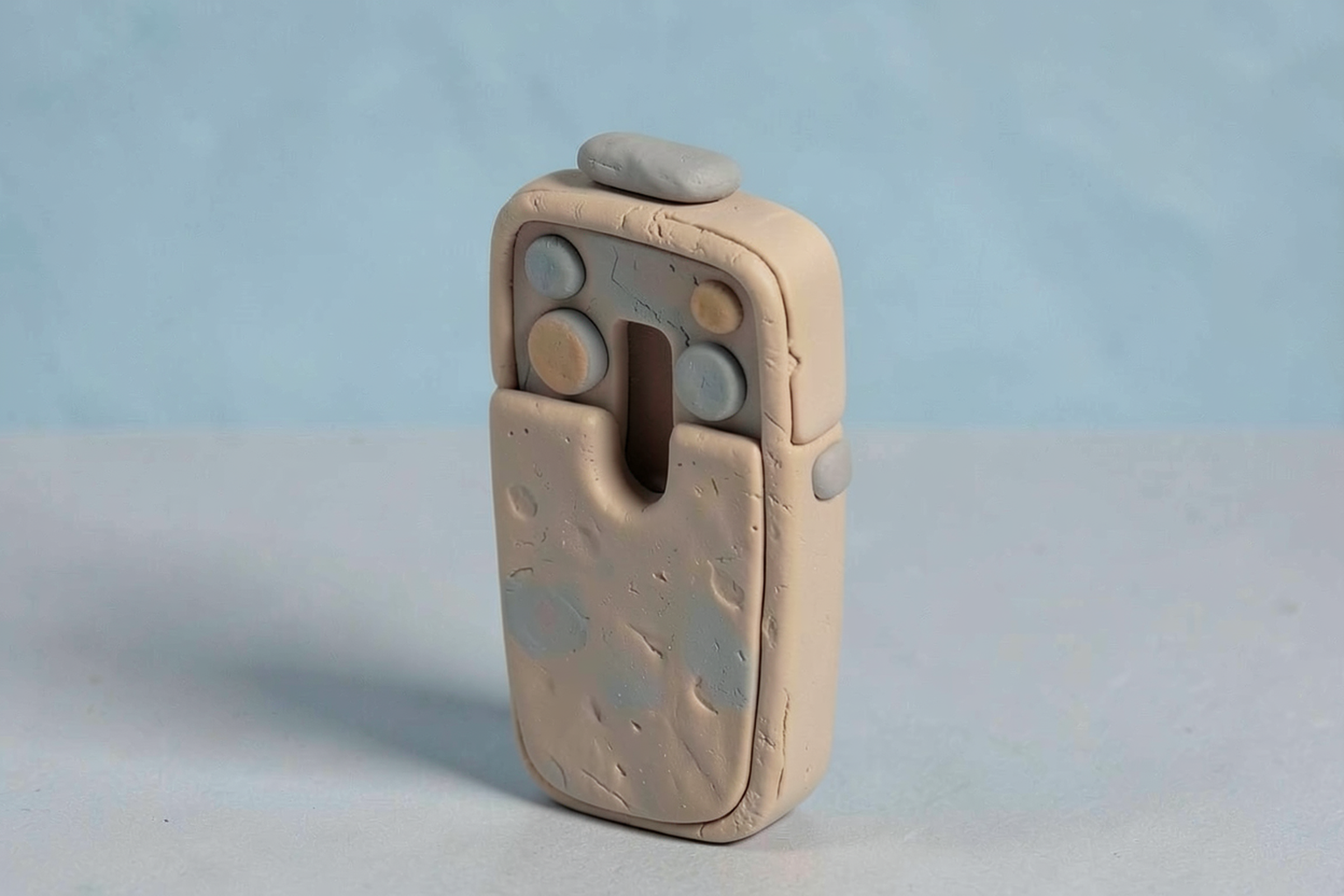
First, the setting
Many people use small handheld devices that warm a material to create an aerosol, a fine mist that can be inhaled. These devices need portable power and simple handling, so people pay attention to charging, battery placement, covers, and whether the device is ready to use away from an outlet.
A person may take a compact device from a pocket or bag, attach a cover, and hold it in one hand while using its controls. Inside, stored power moves to the heating area. Someone nearby might notice a faint aerosol in a home, outdoor space, or designated smoking area.
What changes in this design
A reader might expect the main body to rely only on its own internal battery while an outer piece simply surrounds or protects it.
Here, the attached outer piece can hold a second battery, and the control unit directs power from that battery into the device body.
This makes clear that the outer piece is part of the power setup, not merely a shell. How much power it provides and what result that produces are not stated.
A Cover With a Battery
The ordinary assumption treats a cover as the quiet outer piece: it attaches, encloses, and then gets out of the way. US20260262753A1, published September 10, 2026 as Aerosol Generation Device And Non-Transitory Computer Readable Medium, complicates that assumption. A cover sounds like a finish. This one is not merely that. The obvious headline is a second battery placed in a cover member attached to an aerosol generation device. The more useful underlying question is more exact: when an attached part carries power, where does the design leave room for judgment about sending that power onward? I look twice at that question because it turns attention away from the cover's appearance and toward the responsibility assigned around it. That is a limited question, but it meets you in a familiar place: an object can invite you to mistake a boundary for a background. Here the boundary has a battery inside it and participates in the stated power arrangement.
That difference needs clean terms before it can bear an interpretation. The filing describes an aerosol generation device with a control unit, a first battery, and a heating unit for an aerosol source. A control unit is the part identified as directing a power supply; a battery is a named source of that supply; and the heating unit is the part for the aerosol source, rather than a separate feature to speculate about. The cover member is simply the cover attached to the device body, the portion the filing calls the device body. Keeping those labels plain matters because it prevents a reader from quietly turning a control unit into an all-purpose brain or a cover into a signal about style, portability, or another unstated outcome. These are working labels, not invitations to imagine a feature set beyond what is named.
Once those terms are settled, the arrangement is easy to picture without inflating it. The device has a first battery and a heating unit for the aerosol source, alongside a cover member attached to the device body with a second battery in it. The cover has the air of a polite committee member who has arrived with a battery and a role to play. That image is lighthearted, but its boundary is firm: the stated facts concern placement and a controlled power relationship. What made me look twice was the tidy separation between where the second battery sits and where its supplied power is directed. A cover can be near the device without becoming conceptually invisible. The picture is almost diagrammatic, which is useful because its named roles do not need decorative interpretation.
Power Under a Control Unit
From that picture, the mechanism comes into focus. When the second battery is in the attached cover member, the control unit controls the supply of power from that second battery to the device body. It is a precise dependency rather than an atmospheric association. The arrangement is less like a device with an accessory and more like a small stage manager routing a defined supply to the device body. The comparison does not add a hidden sequence; it only makes the allocation named in the filing easier to notice. One component holds the second battery, the control unit has the stated control function, and the device body is the destination identified for that supply. The condition matters: the described control is tied to the situation in which the second battery is in the cover member attached to the device body. This makes the point of judgment visible without pretending that attachment alone tells the whole story.
Because the mechanism names that role, its modest purpose is also legible. The point worth carrying forward is not that the cover transforms the device; no broad conclusion follows from the limited facts here. The point is that an attached element can hold a resource while control over that resource's supply remains identified elsewhere. A battery in a cover can look as if a librarian slipped an extra chapter into the binding, yet the filing gives that chapter an operational job. For a designer or systems thinker, two observations travel well from this narrow arrangement: an attached piece's physical location can be considered separately from operational responsibility, and a named controlling role can make a power handoff inspectable rather than assumed. Those observations are about reading the arrangement clearly, not predicting what it achieves.
The Cover Assumption Revised
That modest purpose leaves a specific revision to the default picture. The cover is not just a surrounding piece once the second battery inside it is part of a power path under the control unit's stated direction. The first battery remains part of the described device, the heating unit remains for the aerosol source, and the second battery is described in a conditional power path from the attached cover to the device body. The distinction is narrow. It is still worth your attention. You can use it as a check whenever an object seems to have a passive outer part: ask what resource it holds, where that resource goes, and who is given authority over the handoff. My takeaway is intentionally bounded: US20260262753A1 makes the space for judgment visible at the link between a battery-bearing cover and the device body. Do not let the old default call every cover a shell.
The record, briefly. US20260262753A1, “Aerosol Generation Device And Non-Transitory Computer Readable Medium” An aerosol generation device has a control unit, a first battery, and a heating unit for an aerosol source; when a second battery is in a cover member attached to the device body, the control unit controls power supply from that second battery to the device body.
More angles on this
- The Cue Hidden Inside a Deterrent SoundAnother reading from the same A24F classification family, smokers' requisites; match boxes; simulated smoking devices.
- When a Setting Becomes a CheckAnother reading from the same A24F classification family, smokers' requisites; match boxes; simulated smoking devices.
- CPC A24F: Smokers' requisites; match boxes; simulated smoking devicesThe official classification family this record was filed into, published in the USPTO Cooperative Patent Classification scheme.
- CPC A61M: Devices for introducing media into, or onto, the bodyThe official classification family this record was filed into, published in the USPTO Cooperative Patent Classification scheme.
- Tobacco at the Sheet’s SurfaceAnother reading from the neighbouring A24B classification family, manufacture or preparation of tobacco for smoking or chewing; tobacco; snuff.
Read around this one:Public patent recordUSPTO published figure