Objects
Tobacco at the Sheet’s Surface
Aerosol Former Material and Tobacco Material form one stated connection: The disclosure provides an aerosol-generating sheet containing binding and/or foam-forming agents.

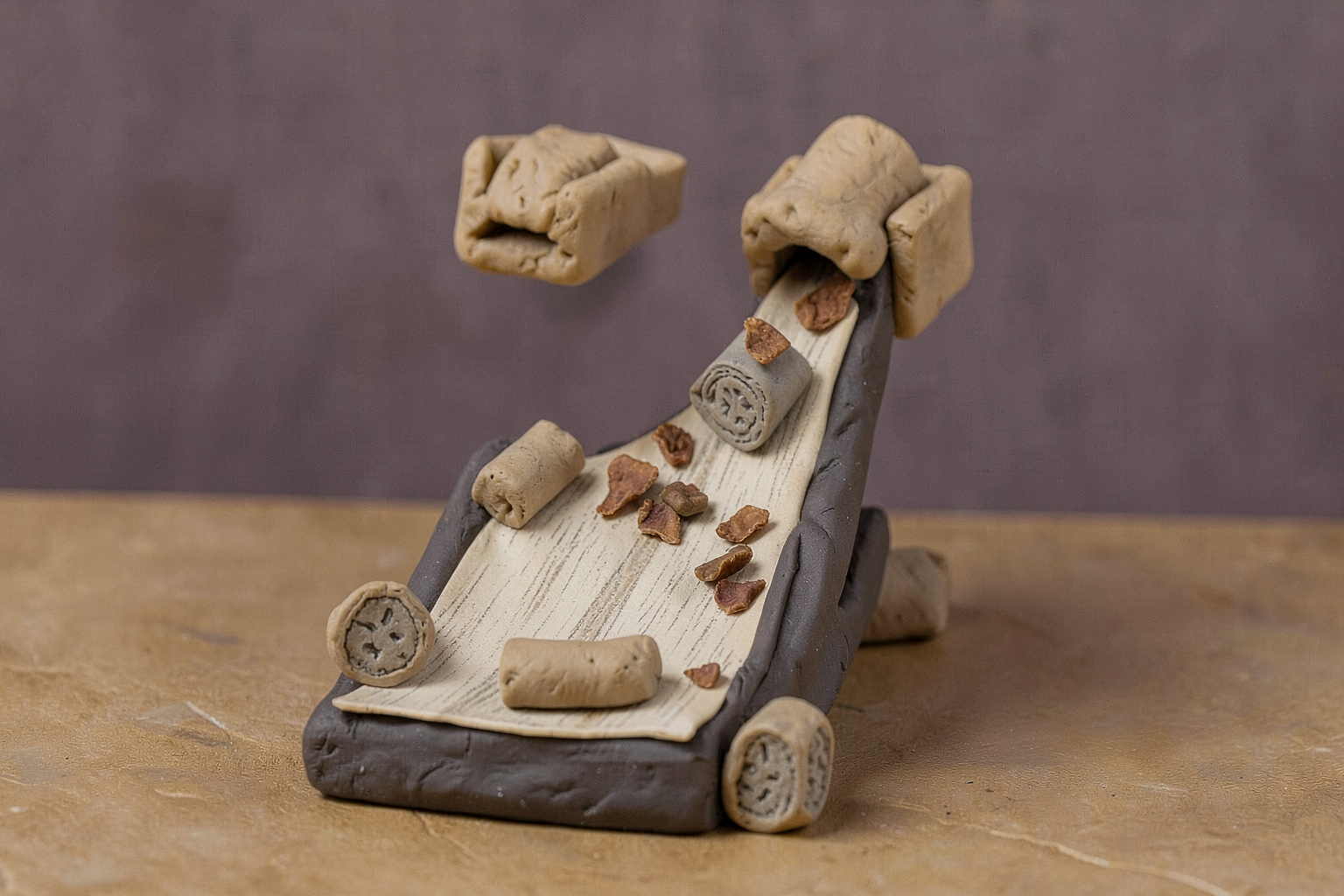
First, the setting
Tobacco use often involves a small consumable placed in a handheld device or lit for smoking. People pay attention to how tobacco is prepared because its form affects how it can be handled, stored, and used, as well as the feel of the routine around it.
In a shop, at home, or outdoors, an adult may place a tobacco-containing strip or portion into a handheld heating device. The device warms the material as it is drawn on. A nearby person may notice scent or visible aerosol in the air while the user holds, loads, and removes the consumable.
What changes in this design
A reader might picture tobacco as a loose material rather than part of a prepared sheet used in an aerosol delivery device.
This record describes a sheet containing binding and/or foam-forming agents, filler, and aerosol-forming material, with tobacco embedded in or attached to its surface.
It gives a clear picture of the consumable being discussed: not only tobacco, but tobacco combined with other materials in a sheet for an aerosol delivery device.
A Sheet With Surface Tobacco
You might assume that tobacco in an aerosol-generating sheet simply disappears into the sheet, the way an ingredient is folded into a mixture. The published record complicates that ordinary picture. It describes a tobacco-coated sheet and a consumable made from it, with an arrangement for generating an aerosol, a suspension dispersed in air. The moment worth pausing over is a design image: a sheet assembled with several materials while tobacco material is embedded in or adhered to its surface. That image supplies evidence before any larger conclusion asks for your attention. The purpose appears direct: create an aerosol-generating sheet with tobacco material positioned at the surface as described. I begin there because purpose is easier to inspect when the physical arrangement arrives first. A broad assumption about a uniform blend becomes too roomy once the surface is doing conceptual work.
That first picture needs a closer frame. The arrangement is less like a sealed packet and more like a stage with tobacco material allowed near the front. The filing permits two surface relationships: the tobacco material may be embedded in the surface, meaning held within that surface layer, or adhered to it, meaning attached to that surface. Those are small words with a large organizing effect. They tell you to look at location as part of the arrangement rather than treating all material as merely somewhere inside. No claim about a result follows from that placement in the facts provided. The more modest point is that the filing gives you a question to ask before acting: which part of a system is meant to be encountered at the boundary, and which parts are doing quieter structural work underneath?
With location established, the terms can stay ordinary. Binding agents are materials included to bind the sheet together; foam-forming agents are materials included for forming foam; filler is additional material within the sheet; and aerosol former material is material included in relation to aerosol formation. The published record also identifies tobacco material, the element placed in or on the surface. The listed materials have the air of a restrained committee with a clipboard, each assigned a place before the sheet enters the picture. That image should not be overread. The information supplied identifies a set of components, not a measurement, ranking, or promised outcome. For you, the transferable observation is concrete: when a design lists several materials, separate what is positioned for attention from what is named to bind, fill, form foam, or sit alongside the aerosol-generating arrangement. That small inventory prevents the familiar mistake of mistaking a parts list for proof.
Materials, Making, and Containment
Once the parts have been separated on the page, the mechanism can be discussed without inventing motion. The filing describes methods for preparing the sheet, as well as aerosol delivery devices containing it. A preparation method presents the arrangement as something to be made, while a device containing the sheet places the arrangement within a larger described object. That is as far as the supplied facts take us. The details available here do not establish a sequence of preparation steps, a measurement, or an observed outcome, so none belongs in the conclusion. What made me look twice was the usefulness of that boundary. First, inspect placement before assigning importance to a component. Second, inspect the stated route from material arrangement to a prepared object before treating a label as a complete explanation. These are everyday systems habits, whether you are reading a filing, judging a package, or trying to understand why a form puts one fact where you will see it before the next decision.
That boundary makes the comparison less dramatic and more useful. An ordinary mental model might place tobacco material somewhere within a sheet and leave the rest of the arrangement vague. This filing instead asks you to hold a more specific picture: a sheet with binding and/or foam-forming agents, filler, aerosol former material, and tobacco material embedded in or adhered to its surface. The contrast is as if a label-maker politely moved one useful fact from the ingredients list to the front of the folder. It is a modest revision, not a contest between systems and not a prediction of what either will do. The third transferable observation follows: location can be evidence in its own right when you need to decide what to inspect first. A component list tells you what is named; a stated surface relationship tells you where the filing directs your attention. Keeping those two kinds of evidence apart makes your next question smaller, clearer, and more honest.
Placement Before Assumption
That clearer question is the takeaway I would keep from US20260262699A1, published September 10, 2026. The published record gives you a purpose, a physical picture, named materials, preparation methods, and devices containing the sheet, in that order of attention. It does not ask the editor to decorate those facts with claims about superiority or outcomes. What feels worth your attention is the discipline of letting placement speak before assumption does: see the tobacco material at or in the surface, distinguish it from the sheet’s other named materials, then ask what evidence is actually present before making more of it. The old default treats placement as background detail. Let it answer for itself.
The record, briefly. US20260262699A1, “Tobacco-Coated Sheet And Consumable Made Therefrom” The disclosure provides an aerosol-generating sheet containing binding and/or foam-forming agents, filler, aerosol former material, and tobacco material embedded in or adhered to its surface, plus methods for preparing the sheet and aerosol delivery devices containing it.
More angles on this
- A Step, Two Hollows, and the Small Surface That Says Where a Mouthpiece StopsAnother reading from the same A24F classification family, smokers' requisites; match boxes; simulated smoking devices.
- Before Remote Modes: What Reaches the Device?Another reading from the same A24F classification family, smokers' requisites; match boxes; simulated smoking devices.
- CPC A24B: Manufacture or preparation of tobacco for smoking or chewing; tobacco; snuffThe official classification family this record was filed into, published in the USPTO Cooperative Patent Classification scheme.
- CPC A24F: Smokers' requisites; match boxes; simulated smoking devicesThe official classification family this record was filed into, published in the USPTO Cooperative Patent Classification scheme.
- A Segment That Cools And A Segment That Carries FlavourAnother reading from the neighbouring A24D classification family, cigars.
Read around this one:Public patent recordUSPTO published figure