Groundwork
Before Remote Modes: What Reaches the Device?
A seven-year-old remote-lock vape patent arrives as age-gated devices gain regulatory importance and illicit disposables overwhelm them.

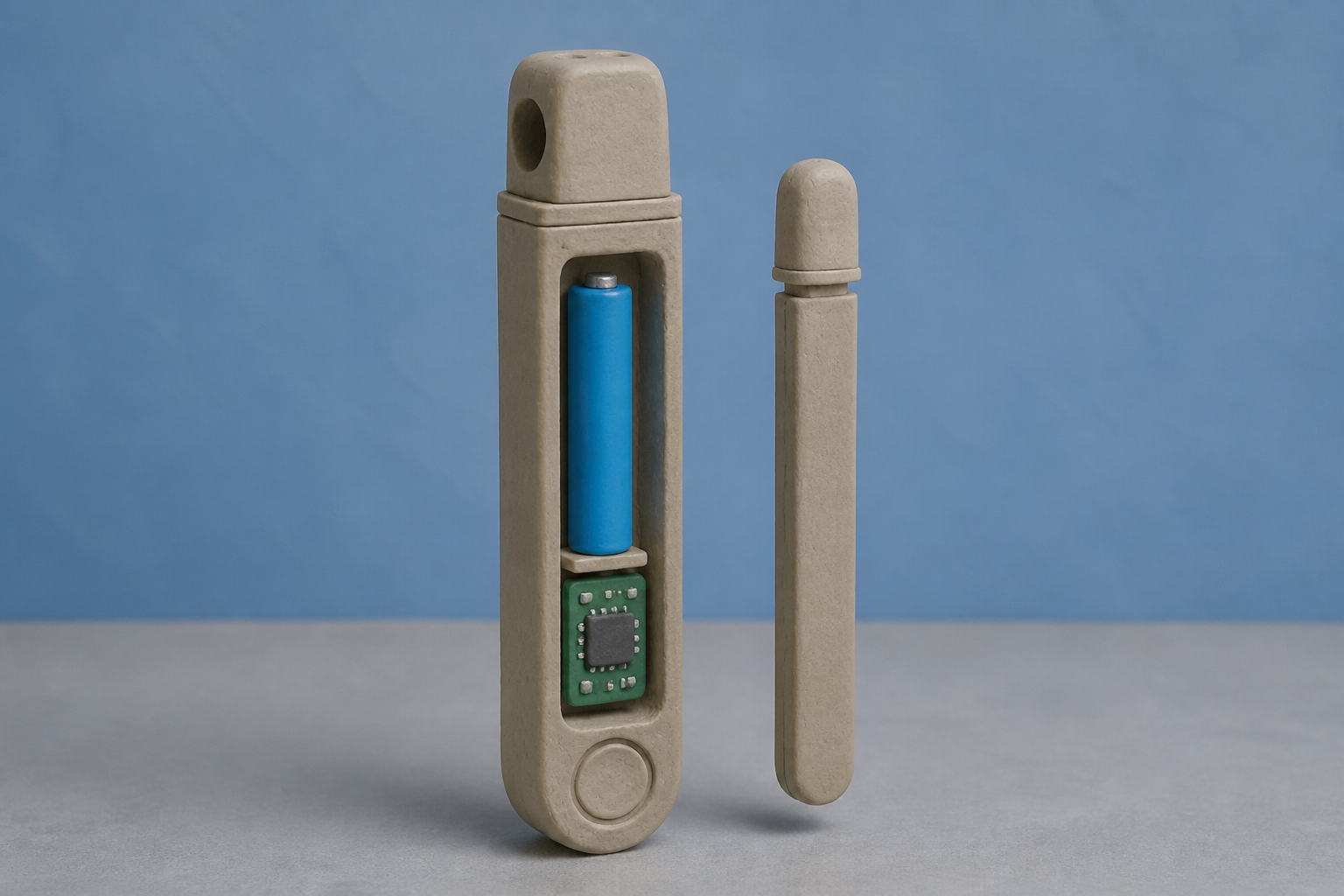
What changes in this design
Without more detail, a reader might expect a change in how the product operates to be made directly at the product. The record does not explain how such changes are normally selected.
Here, a part of the body sends a signal to the internal processor. In response, the processor switches the product from a first operating mode to a second. How that body part receives or creates the signal is not stated.
This is worth knowing because it identifies a signal as the trigger for a mode change, while leaving the two modes and their practical effects unexplained.
18 million at the border
The number I kept returning to was 18 million. In May 2026, a federal operation seized more than 18 million unauthorized vapes, valued at $175 million; none carried FDA marketing authorization. A remote lock can be clever, even useful, and still be almost irrelevant to that pile. It works only after someone has chosen a device with the hardware, the software, and a reason to comply.
An audit of the US market adds the uncomfortable proportion. About 6,000 e-cigarette products were for sale as of June 2024, while 41 had FDA authorization across five brands; 1.6 million children were reported to use e-cigarettes. The seizure and audit do not prove that every unauthorized product reaches a child. They do make a narrow point hard to avoid: the regulated device is only one part of the problem it is meant to answer.
The phone as a key
That is the setting for a quieter contest: making a vape that behaves less like a disposable object and more like a credentialed one. FDA's March draft guidance keeps biometrics, geofencing, and device-access restrictions in the PMTA conversation, but says they are unlikely to be sufficient on their own for youth-appealing fruit and candy flavors. An adult's age must be checked at sale, then remain meaningful after the package leaves the counter.
Reporting on the first FDA authorization of mango and blueberry vapes described a demanding version of that idea: ID checks, an app pairing that binds a device to a verified adult, lockout when the phone and device separate, and occasional biometric rechecks. A rival's Vuse Pro PMTA submission, filed in June 2024, ran to nearly 80,000 pages and 97 studies. The paperwork is not evidence that a lock prevents youth use. It is evidence that a lock now carries regulatory weight.
A February 2019 priority
US20260256193A1, published as Vaporization Device Having Remotely Controllable Operational Modes, has the same title as a long-running remote-control patent family and appears to extend it. Its disclosed setup is unshowy: a body with a cavity for a cartridge, battery, and processor, plus a portion that transmits a signal. The processor uses that signal to change between two operating modes. By the time I reached those spare mechanics, the possible real-world reading was clear: a remote signal can provide the locked-and-unlocked logic behind an app-paired device. That is an inference from the function, not a promise made by the filing.
An earlier application in the family identifies Sean Greenbaum as inventor and Glas Inc as assignee, with a February 14, 2019 priority date. Public records trace continuation applications through one filed January 12, 2024; the shared title links the current publication to that history, although a patent application should not be confused with a marketing authorization. The older background frames the issue as use by unauthorized users, with minors the stated concern. Seven years later, the mechanism maps onto a feature regulators are actively weighing.
Juul2 and the trade case
Timing makes the family more than a technical curiosity. In 2018, Juul announced a Bluetooth-linked, geofencing device for markets outside the United States, while a contemporary account said federal rules effectively blocked sale of such a redesigned device here. The 2019 priority date follows that moment closely, though timing alone cannot tell us why Glas filed. The better claim is simply that the patents were being laid down while a US path for this sort of control was still uncertain.
That path has opened unevenly. FDA authorized Juul2 on August 28, 2026, including an optional app-paired lock and age-verification system. Separate reporting from late 2025 said Glas might become the first new FDA-authorized e-cigarette brand since Juul, even as Juul and another supplier pursued a trade case seeking to keep Glas devices and pods out of the country. The conditional language matters: a patent application, a regulatory submission, and an authorization are different things. They can arrive in the same story without meaning the same thing.
Where this leaves things
FDA's 2025 youth survey records real progress: combined youth vaping fell to 5.2%, from a 27.5% high-school peak in 2019. That decline deserves to be taken seriously. So does the regulator's own reservation about locks. A device can make casual sharing harder and give a seller a record of a verified adult. It cannot reach a disposable that was never submitted, paired, or allowed into the market in the first place.
I don't think this filing is best read as a solution to youth vaping. It is a record of the bargain now asked of legal vape makers: build controls into the device, make them defensible to FDA, and hope the controlled product can compete with a vast uncontrolled supply. The number that remains alongside every promise of a lock is 18 million. The patent may matter greatly inside the authorized market; the evidence here does not show that market is yet large enough to set the terms of the wider one.
Sources
Reporting for this piece drew on the published filing and the references below.
- US20260256193A1 - Vaporization Device Having Remotely Controllable Operational Modes
- Vaporization Device with Remote Control
- FDA Formalizes a Flavor-Specific PMTA Framework as Youth Vaping Continues to Decline
- FDA Authorizes Flavored Vapes - But Access Controls Are Critical
- R.J. Reynolds Vapor Company Completes PMTA Submission for Age-Gated Vuse Pro
- Juul can sell updated e-cigarette with age-verification system, FDA says
- Possible Glas MGO Emerges as Juul Files ITC Suit
- GAO report shows gap between scale of illegal vapes and enforcement
- CBP, FDA Seize $175M in Chinese Illicit Vapes
- Juul to Launch a Bluetooth-Locked Vape to Detect Underage Smokers in International Markets
The record, briefly. US20260256193A1, “Vaporization Device Having Remotely Controllable Operational Modes” A vaporization device has a body with first and second ends and an internal cavity that receives a cartridge, a battery and processor in the cavity, and a body portion that transmits a signal to the processor. The processor switches the device between first and second operational modes in response to the signal.
More angles on this
- CPC A24F: Smokers' requisites; match boxes; simulated smoking devicesThe official classification family this record was filed into, published in the USPTO Cooperative Patent Classification scheme.
- CPC G07C: Time or attendance registersThe official classification family this record was filed into, published in the USPTO Cooperative Patent Classification scheme.
- A Baseplate's Signal: From Guess to Defined ResponseAnother reading from the neighbouring A24B classification family, manufacture or preparation of tobacco for smoking or chewing; tobacco; snuff.
- Memory Built in Layers, With a Staircase Cut Into the EdgeAnother reading from the wider G11C classification family, static stores.
- Ferrate on Produce: A Quiet Change in Who Carries the Burden of FreshnessAnother reading in the same Groundwork category on this site.
Read around this one:Public patent recordUSPTO published figure