Objects
Why a Magnetic Latch Sits Between Your Phone and the Airwaves
A new phone-pouch filing turns a school rule into a signal-blocking object, while the case for bans remains unsettled.

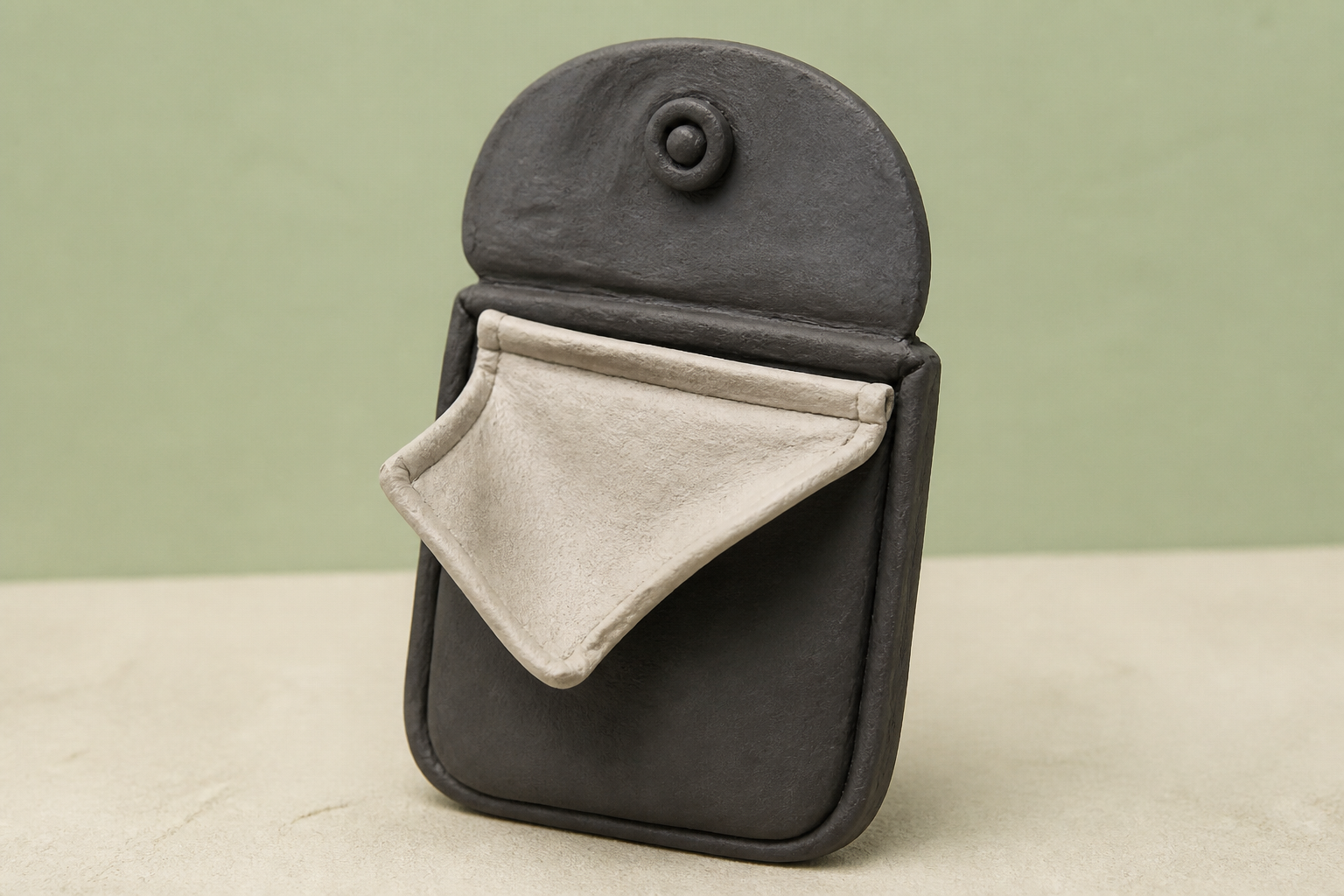
What changes in this design
At first glance, a pouch latch may seem meant simply to hold the contents inside by keeping the opening closed.
This container uses magnets to seal the opening as part of its shielding. It combines a pouch body, shielding pocket, lock mechanism, and conductive materials that attenuate electromagnetic signals around electronic devices.
That makes the closure relevant to more than access to the pouch. It is part of an electromagnetic enclosure around the device.
Three million locked phones
A basic scene keeps coming back to me: a student drops a phone into a pouch at the school door, hears the magnetic lock click, and carries the device through the day. Roughly 3 million U.S. students in 41 states use Yondr pouches, which are also used in 27 countries. The United States government spent $2.13 million on Yondr in 2023. Those figures describe a system used far beyond a single classroom.
The operating premise was blunt and legible: keep the phone, but lock it where you cannot use it. A magnetic pouch controls access without stopping the device from talking to a network. That distinction, I found, was central to what follows.
The signal still got through
Existing Yondr pouches do not block cellular signals or internet connections. Staff have generally asked users to switch on airplane mode. That changes what phone-free means: the phone is unavailable to its owner, but not necessarily quiet. Reported workarounds include decoys and opening a pouch with a magnet, force, or a pencil. They identify practical points of failure in a physical lock.
That gap is why US20260255560A1, published August 27, 2026, matters. It is assigned to Yondr, but its subject is not the lock. It is the opening beneath it. The filing describes a conductive shielding pocket inside a pouch, with magnetic or ferromagnetic material on opposite sides of its opening. As those edges meet, they are intended to press conductive material into electrical contact and complete a Faraday cage around the phone. The claims cover blocking transmissions and receptions, not merely keeping fingers off a screen.
Magnets in the evidence room
Yondr's 2017 foundational patent did not make that claim. It covered a non-disengageable physical lock controlled by location, time, or RFID. Its new application extends that idea from denying access to isolating a signal. It reads to me as a material change in the pouch's stated function.
But magnets and shielding are not new in the patent record. A 2020 patent, filed in 2019 for forensic evidence bags, describes RF-shielding panels closed with neodymium magnets. Its stated problem was the slow, wearing hook-and-loop seal used to preserve a digital device's chain of custody. That earlier record does not decide whether this application's particular claims deserve a patent. It does show that the pairing predates this filing.
This is also a contested kind of object. A competitor, Win Elements, sued Yondr in October 2024 over a separate pouch-lock patent, seeking declarations of noninfringement and invalidity. In August 2025, the court dismissed both sides' claims with prejudice. That outcome does not answer this filing, in my view, which concerns a different asserted invention.
Twenty-six state rules
Meanwhile, policy adoption has accelerated. By August 2025, one tally counted 26 states with laws or policies requiring local school boards to ban or limit cellphone use in K-12 classrooms, including 22 laws enacted that year. That tally remains separate, to me, from evidence of outcomes. One health-policy review says evidence on school cellphone bans is limited and mixed: some studies find better test scores or less bullying, while others find little or no change.
A review of 22 studies reaches a compatible conclusion: a one-size-fits-all answer is unlikely to have strong effects. It reports friction between students and teachers and notes that bans can be difficult to uphold even when people agree with the goal. A signal-blocking pouch changes an enforcement mechanism; it does not supply outcome evidence.
The harder half of the problem
The filing has a precise engineering aim. If a bag is properly closed, its materials are intended to make a phone's silence a property of the pouch rather than a choice made by its owner. That may close one gap in a system whose old lock could be bypassed. It cannot itself answer whether a ban improves learning in a particular school, whether enforcement is difficult, or whether implementation raises equity concerns.
A narrow conclusion is where I am left. Closing an opening without leaking a signal is an engineering task. Assessing a school restriction requires outcome evidence and implementation data. This application is directed at the first task; the cited research remains limited and mixed on the second. It changes what a pouch may physically do, not what research has demonstrated about school outcomes.
Sources
Reporting for this piece drew on the published filing and the references below.
- Magnetic Closure System for a Container with Electromagnetic Shielding
- Yondr
- System and apparatus for selectively limiting user control of an electronic device
- Faraday bag with magnetic closure system
- Win Elements LLC v. Yondr, Inc. case docket
- Twenty-two states enacted K-12 cellphone bans so far in 2025
- A Look at State Efforts to Ban Cellphones in Schools and Implications for Youth Mental Health
- What the Science Says: Smartphones in Schools
The record, briefly. US20260255560A1, “Magnetic Closure System For A Container With Electromagnetic Shielding” The disclosure is directed to a system for blocking electromagnetic signals using magnets to seal a container opening, effectively forming a Faraday cage around electronic devices. The system comprises a pouch body, shielding pocket, and lock mechanism with conductive materials that attenuate electromagnetic signals.
More angles on this
- Duo-Pump Liquid Cooling Device Treats the Relationship as the PointAnother reading from the same H05K classification family, printed circuits.
- Liquid Crystal Polymer Dielectric Powder Or 3D Printed Material Marks a Pause Worth NoticingAnother reading from the same H05K classification family, printed circuits.
- CPC H05K: Printed circuits; casings or constructional details of electric apparatus; manufacture of assemblages of electrical componentsThe official classification family this record was filed into, published in the USPTO Cooperative Patent Classification scheme.
- CPC A45C: Purses; luggage; hand carried bagsThe official classification family this record was filed into, published in the USPTO Cooperative Patent Classification scheme.
- The Potato Product Makes Its Entrance in SlicesAnother reading from the neighbouring A45D classification family, hairdressing or shaving equipment ; equipment for cosmetics or cosmetic treatments, e.g. for manicuring or pedicuring.
Read around this one:Public patent recordUSPTO published figure