Machines
A Stack of Evidence Before the Decision
Transient Fuel Samples is fuel taken at a moment when its condition may be changing, rather than from a stable, fixed batch.

First, the setting
Fuel has to move cleanly through tanks, pipes, and engines before vehicles and equipment can do their work. Water and soap-like residues can mix with fuel during storage or handling, so people who manage fuel pay attention to whether those liquids separate cleanly. It is basic housekeeping for reliable everyday operations.
At a fuel depot or a maintenance bench, a technician handles a collected fuel sample and guides it into a compact test fixture. The liquid passes through narrow channels and layered material while the person watches its behavior. Nearby, vehicles or equipment may be waiting for fuel, without anyone seeing the check underway.
What changes in this design
Without further detail, a reader might simply expect a person to assess whether water separates from fuel. The record does not state the usual testing procedure or the measurements used.
Here, the test uses a coalescer element with aligned fluid conduits and stacked fiberglass discs reinforced with scrim, a supporting fabric. It is intended for changing fuel samples and to indicate surfactant presence while reducing the skill the operator needs.
The practical point is that the water-separation check is tied to possible surfactants and may require less operator skill when fuel conditions are changing. What it measures is not stated, nor is the size of any reduction in skill requirements.
Water Separation as Evidence
Aligned fluid conduits and stacked fiberglass discs give the purpose a physical order: determine water separation characteristics in hydrocarbon fuels. The published record, US20260263967A1, is titled Apparatus For Determining Water Separation Characteristics Of Hydrocarbon Fuels And Related Method and carries a September 10, 2026 publication date. At first, water separation can feel like an ordinary question about whether two liquids will part company, yet the arrangement keeps the focus on what evidence reaches a person before that person is asked to decide anything. What made me look twice was the quieter question embedded beneath it: how does a system prepare a usable view of a transient fuel sample?
That question keeps the purpose from becoming a grand promise. The patent directs attention to a coalescer element arranged for this task, not to a theatrical announcement of certainty. You are asked to notice the setup before you are asked to admire any result, which is an unusually useful order for thinking about a technical system. Purpose comes first: the question is how the system makes a separability reading available before anyone asks what to do with it. The important shift is small but real, because it places the conditions for judgment inside the arrangement rather than leaving them entirely to the moment of judgment.
Conduits, Discs, and Judgment
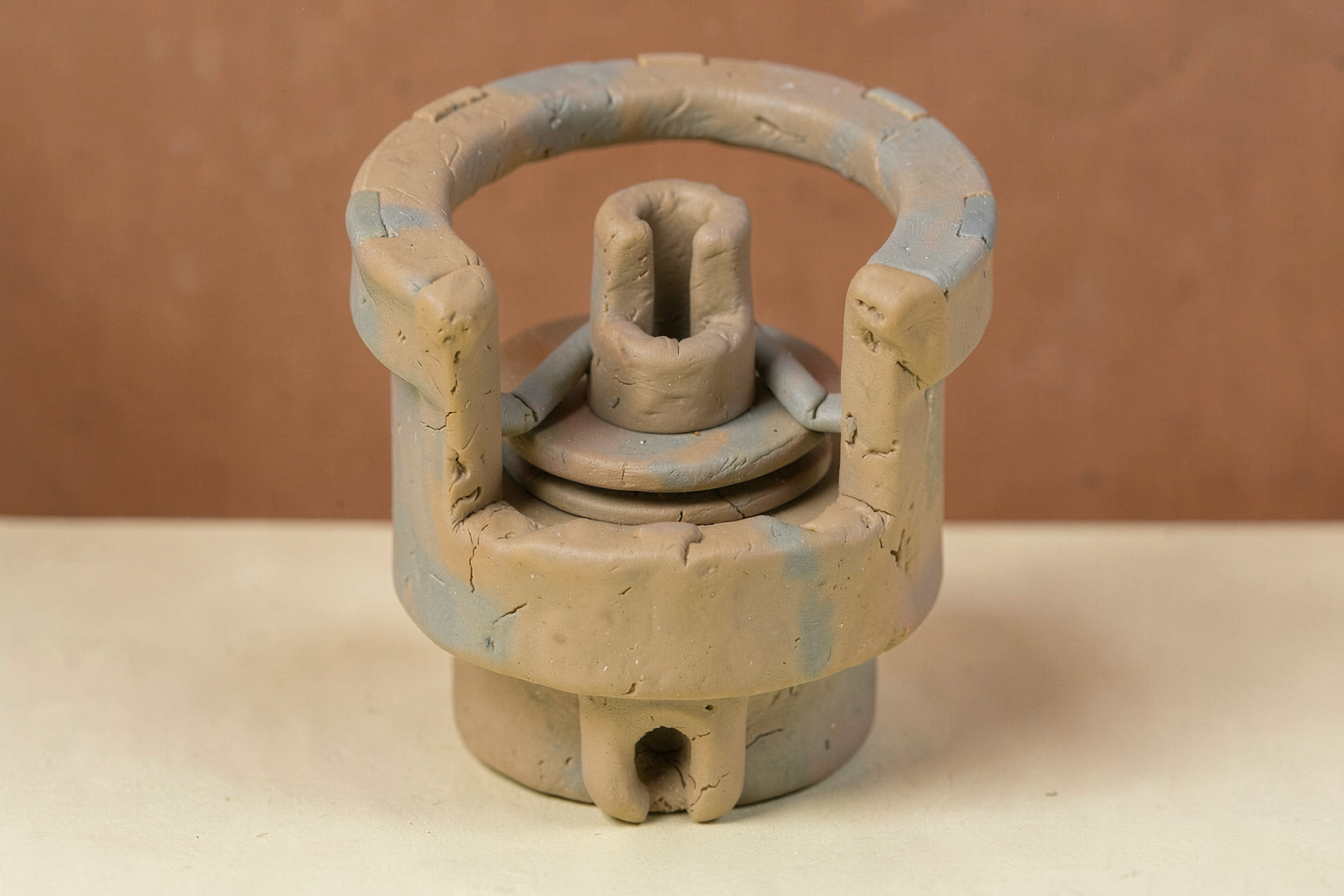
That purpose brings the apparatus into view. The first image is a guided path beside a stack of reinforced circular layers, before the specialist nouns arrive. The filing describes a coalescer element, a component in the apparatus, with aligned fluid conduits, meaning channels set in line to guide fluid, and stacked fiberglass discs, circular layers made of glass fibers, with scrim reinforcement, a supporting open-mesh fabric. That stack has the air of a librarian keeping pages in order while a hurried sample passes through. The image matters because it gives you something more definite than a general wish for separation: an ordered collection of channels and layers whose arrangement is named as part of the evidence-making system.
From that picture, the terms earn their keep. Hydrocarbon fuels are fuels based on hydrocarbons, while water separability means how readily water can be separated from the fuel. A surfactant, a substance that can affect how water and fuel relate at their boundary, is what the filing says the measurement can indicate as present. Transient marks the fuel samples under discussion as samples whose condition may be changing, rather than simply fixed for the sake of a tidy description. Those definitions keep attention on a narrow chain: fuel, water, a measurement of separability, and an indication of surfactant presence. The vocabulary may look as if it arrived with a badge and a clipboard, but its role is plainer than that: it tells you what kind of evidence the apparatus is meant to organize before action follows.
With that vocabulary in place, the mechanism becomes easier to hold in one view. The described system groups aligned conduits and a scrim-reinforced stack of fiberglass discs within the coalescer element; this arrangement is presented for measuring water separability in hydrocarbon fuels and indicating surfactant presence. The setup feels less like an exam for the operator and more like a stage manager arranging the props before the curtain rises. The evidence a person receives is therefore not merely an unexplained pronouncement; the arrangement supplies a sequence of parts and conditions that frame the reading. Nothing in the published description says the person disappears from the judgment, and that restraint matters. The stated reduction in operator skill requirements instead points to a more modest transfer: let the structure shoulder some of the burden of preparing the evidence, especially when samples are transient.
A Modest Burden Shift
Because that transfer is the thread running through the arrangement, the comparison is not about declaring one broad approach superior to another. In a broad, ordinary telling, the task might sound like asking someone to look at a fuel sample and decide whether water is separating. This filing is narrower in what it foregrounds: a coalescer element with aligned conduits, reinforced discs, and an explicit aim of reducing operator skill requirements. The contrast is a change in who carries the burden. The apparatus is less like a brass band demanding a verdict and more like a clipboard that makes the next question easier to ask. One transferable observation is that material arrangement can be part of the evidence, not merely the container for it. Another is that reducing the skill required for a reading can mean preserving human judgment while organizing what reaches it. I think that bounded shift is what deserves your attention: arrange the evidence before asking for the verdict.
The record, briefly. US20260263967A1, “Apparatus For Determining Water Separation Characteristics Of Hydrocarbon Fuels And Related Method” A coalescer element includes aligned fluid conduits and stacked fiberglass discs with scrim reinforcement to measure water separability in hydrocarbon fuels, indicating surfactant presence while reducing operator skill requirements for transient fuel samples.
More angles on this
- Bioactive Phytochemicals: a gourd-family extract that must pass a test before it gets a jarAnother reading from the same G01N classification family, investigating or analysing materials by determining their chemical or physical properties.
- The Small Correction Inside a Roller-Brush Cleaning RoutineAnother reading from the same B01D classification family, separation.
- CPC B01D: SeparationThe official classification family this record was filed into, published in the USPTO Cooperative Patent Classification scheme.
- CPC G01N: Investigating or analysing materials by determining their chemical or physical propertiesThe official classification family this record was filed into, published in the USPTO Cooperative Patent Classification scheme.
- A Wearable Heater That Waits for Two Switches Before It Warms Your SkinAnother reading from the neighbouring G01K classification family, measuring temperature; measuring quantity of heat; thermally-sensitive elements not otherwise provided for.
Read around this one:Public patent recordUSPTO published figure