Field Notes
Antireflective Glass Ceramic Articles And Methods Of Making The Same Makes a Small Case for Better Timing
A recent patent filing shows how dipping phone glass in an acid bath might finally eliminate screen glare without relying on fragile surface coatings.

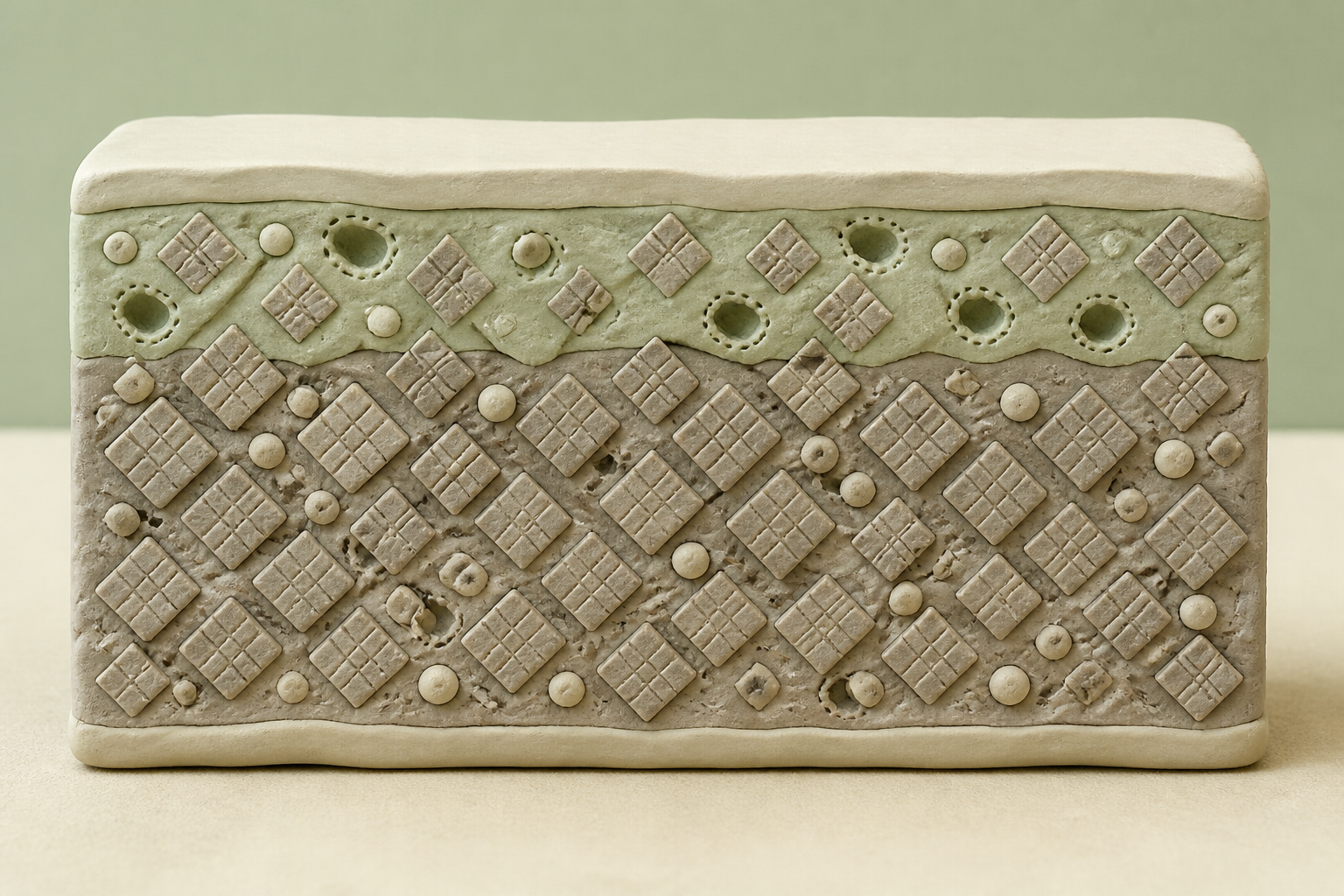
What changes in this design
A person might expect a solid glass-ceramic item to have the exact same makeup and crystal structure from its outer faces straight through to the middle.
Here, the material shifts in structure near the surface. At a depth of 25 nanometers, the composition has lower crystallinity—roughly 50% to 90% of the midpoint—and a refractive index at least 0.01 lower than the composition at the center.
Understanding that an anti-reflective surface can be created by tuning crystal density and refractive index within the object itself, rather than treating the whole piece identically, explains how the article is engineered.
A ninety-year detour
In 1935, a physicist named Alexander Smakula at Zeiss figured out how to stop light from bouncing off glass. By vaporizing a thin film of magnesium fluoride onto a lens inside a vacuum chamber, he cut reflections down to roughly one percent. The German military guarded the technique as a secret until the end of the Second World War. For the next nine decades, the optics industry treated glare reduction as something you stick onto a finished surface.
Whenever I look at a phone screen under midday sun, I am looking at an evolved descendant of Smakula's vacuum-deposited film. Anti-reflective coatings work by creating destructive optical interference, but they sit on the very outside of the device. Pocket grit, car keys, and skin oils constantly grind away at that microscopic top layer. Once the coating scratches or wears thin, the anti-glare effect is gone for good.
Ditching the topcoat
On January 23, 2025, Samsung and Corning launched Gorilla Armor 2 on the Galaxy S25 Ultra, advertising it as the mobile industry's first scratch-resistant, anti-reflective glass ceramic. Five weeks later, on February 28, a patent application titled 'Antireflective Glass Ceramic Articles And Methods Of Making The Same' entered the public record.
I spent an afternoon following this filing because it tries to bypass applied films altogether. Published in September 2026, the application describes modifying the glass ceramic itself so the outer skin bends light differently from the core. At a depth of just twenty-five nanometers, the refractive index drops by at least 0.01 compared to the interior, paired with a ten to fifty percent drop in crystal density. The resulting pane achieves ninety-four percent light transmission and less than half a percent haze, with no separate film that can peel away.
The medicine bottle trick
To reshape the glass without coating it, the inventors borrowed a technique from pharmaceutical packaging. For decades, manufacturers of medicine vials and liquor bottles have washed containers in acid at high temperatures. The process, known as dealkalization, leaches alkali ions out of the surface to create a barrier that prevents chemicals from dissolving into liquid medicine or spirits.
Here, that industrial wash becomes an optical tool. The glass ceramic is submerged in non-hydrofluoric acid, exchanging lithium, sodium, potassium, and calcium ions for hydronium ions down to a depth of about one micrometer. The insistence on non-hydrofluoric acid is a practical manufacturing choice. Hydrofluoric acid is the classic glass etchant, but it causes severe tissue damage that workers may not feel for hours. Replacing it keeps the chemical process viable for high-volume factory lines.
What caught our attention is how little material the chemical bath removes - less than a thousand nanometers across the whole process. It does not carve away the surface like traditional frosting or etching. Instead, it re-engineers the top micrometer of the glass into a gradient that gently matches the refractive index of air.
The crack resistance trade-off
Corning supplies roughly seventy percent of global smartphone cover glass because it solved a different problem sixty years ago: dropping a device without breaking it. Standard chemical strengthening works by stuffing large potassium ions into tiny sodium vacancies, creating a tight compressive shell that resists fractures. Glass ceramics push that idea further by embedding micro-crystals that force cracks to deflect along boundaries rather than splitting the glass.
We often treat hardness and shatter resistance as the same property, but they routinely fight each other. Leaching ions out of a glass ceramic alters the delicate stress network that keeps the pane intact. In a 2020 study in the Journal of Non-Crystalline Solids, glass scientist John C. Mauro - a co-inventor of Gorilla Glass who spent eighteen years at Corning before moving to Penn State - investigated what acid leaching actually does to silicate glass. The acid creates a silica-gel layer a few hundred nanometers thick, which alters how moisture migrates to crack tips during an impact.
Looking at the filing alongside that research, we can see that acid leaching is not a simple shortcut. Changing surface chemistry to defeat reflections inevitably alters the way the material handles impact stress.
The open question
That leaves a fundamental tension at the center of this technology. By stripping alkali ions and lowering crystal density in the top micrometer, the process achieves exceptional optical clarity without a fragile topcoat. Yet the very reason glass ceramics survive concrete drops is their dense, interlocking crystalline structure.
My question is how that softened, leached outer skin holds up after two years of daily abuse. The patent proves that acid leaching can turn the outer boundary of a glass ceramic into an anti-reflective filter. Whether that leached skin can maintain its crack resistance when dropped onto asphalt remains the challenge the industry still has to answer.
Sources
Reporting for this piece drew on the published filing and the references below.
- Antireflective Glass Ceramic Articles And Methods Of Making The Same
- Samsung Galaxy S25 Ultra Introduces Corning Gorilla Armor 2, the Industry's First Anti-Reflective Glass Ceramic for Mobile Devices
- Influence of acid leaching surface treatment on indentation cracking of soda lime silicate glass
- Alexander Smakula
- Dealkalization
- Hydrofluoric Acid
- Gorilla Glass
The record, briefly. US20260259352A1, “Antireflective Glass Ceramic Articles And Methods Of Making The Same” An anti-reflective glass-ceramic article includes a glass-ceramic body with opposing major surfaces and a refractive index-modified layer adjacent the first surface. At 25 nm depth, a first composition has a lower refractive index (at least 0.01 less) and lower crystallinity (about 50% to 90%) than a second composition located at the midpoint depth.
More angles on this
- Semiconductor Device And Method Of Manufacturing The Same Makes the Next Move Easier to SeeAnother reading from the same G02B classification family, optical elements, systems or apparatus.
- Inside chain-type metamaterial absorberAnother reading from the same G02B classification family, optical elements, systems or apparatus.
- CPC G02B: Optical elements, systems or apparatusThe official classification family this record was filed into, published in the USPTO Cooperative Patent Classification scheme.
- CPC C03C: Chemical composition of glasses, glazes or vitreous enamelsThe official classification family this record was filed into, published in the USPTO Cooperative Patent Classification scheme.
- The Interior Route to Surface CoatingAnother reading of a record filed by the same applicant, CORNING INCORPORATED.
Read around this one:Public patent recordUSPTO published figure