Machines
The Quiet Exit Inside a Sensor Attachment
A bridge-sensor patent arrives after Toshiba's upheaval, asking whether removable monitoring can keep pace with Japan's aging roads.

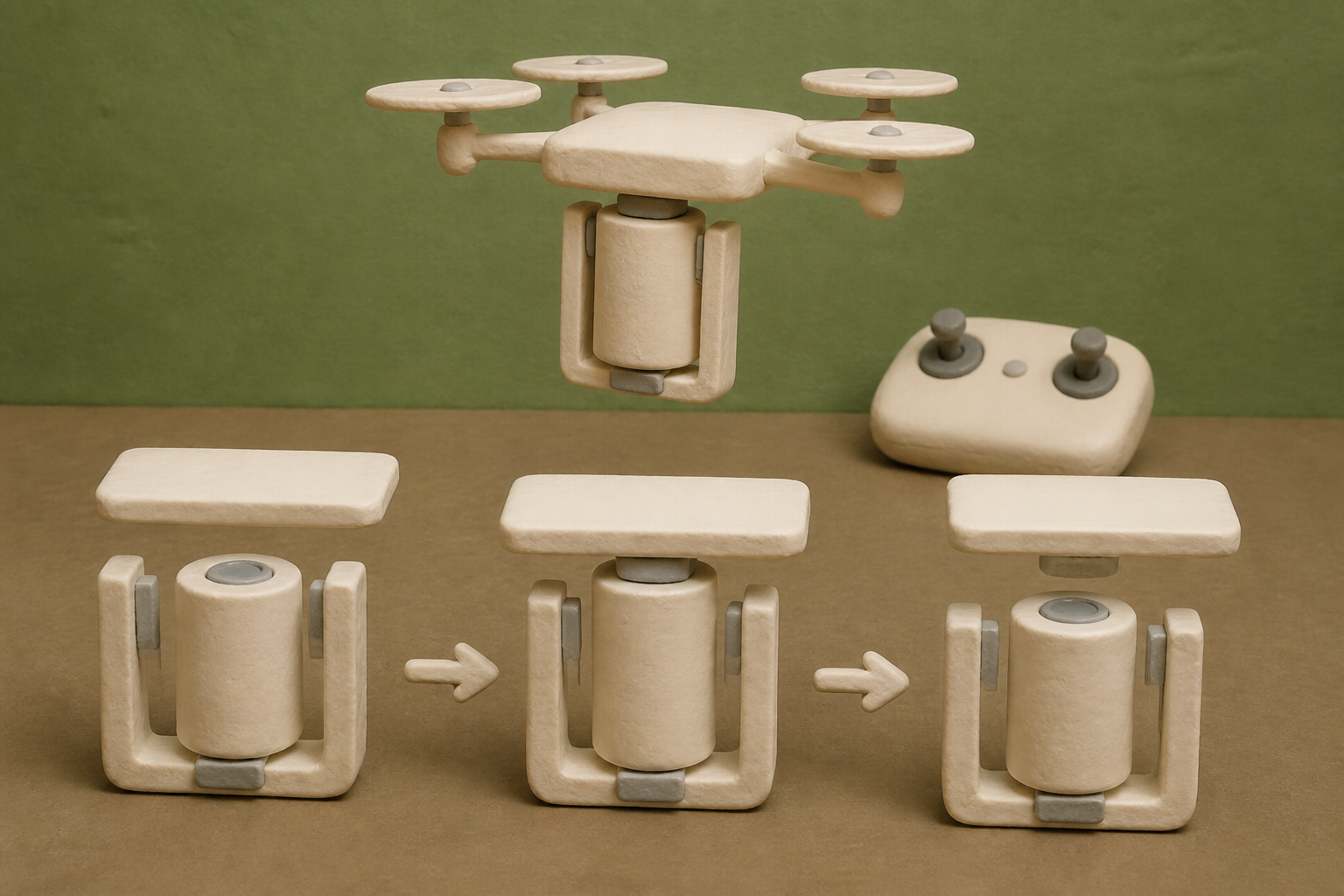
What changes in this design
Someone might assume a sensor is attached with a material that stays sticky until the sensor is pulled away or otherwise removed.
Here, the device includes a support for the sensor and a release part that reduces the bonding material's adhesive force after attachment.
The central idea is that attachment and removal are both part of the device's role. It is not only about holding the sensor in place.
One small crack
In 2020, eighteen acoustic-emission sensors watched a four-by-one-metre patch of concrete on the 40-year-old Fukuoka Expressway. The test detected a 0.2 mm crack. That is an impressive proof point, but it leaves me with a more ordinary question: who gets all those instruments onto a bridge, then gets them back again?
The answer matters because a sensor that works in a demonstration can still be too awkward, slow, or expensive to deploy across a national repair problem. Bridges do not become easier to inspect merely because their failures can be heard. Someone still has to reach the concrete. That distinction is easy to lose in a technical demonstration: finding the crack is only one part of building an inspection practice around it.
The five-year clock
Japan has particular reason to care. About 130 metres of ceiling panels fell in a 2012 expressway-tunnel collapse, after which bridge inspections were required every five years. Toshiba has written that roughly 150,000 Japanese bridges longer than 15 metres exist, and that about a quarter of bridges over two metres were already more than 50 years old in 2018.
That share is projected to reach 63% by 2033. The urgency is not theoretical, and I start to see the appeal of treating sensor placement as an engineering problem in its own right. A monitoring system has to meet the infrastructure where it is: high up, weathered, and already carrying more work than inspection crews can comfortably absorb.
The sensor that leaves
A Toshiba infrastructure subsidiary put one answer into Japanese patent paperwork on March 22, 2022. Its US application, published on September 3, 2026 as US20260257278A1, arrives roughly four and a half years later with a surprisingly practical premise: sensors should not necessarily stay put.
The proposed device supports a sensor while a bonding member holds it in place, then uses a release mechanism to reduce that bonding force after the measurement work. The application anticipates remote attachment and detachment from mobile platforms, including drones, with electrical, thermal, or optical means available to trigger release. Its stated concern is blunt: manual installation and removal work rises with the number of installed sensors. That small detail, I think, makes this less a story about a clever adhesive than about the labour hidden beneath every promised network of sensors.
The company changes shape
The filing date sits inside a difficult period for Toshiba. A private-equity consortium acquired 78.65% of the company in a 2 trillion yen, $13.5 billion tender offer in 2023, ending its 74-year run as a listed company. That followed years marked by a major accounting penalty, a $6.3 billion nuclear writedown, and divestments of businesses including medical, appliance, and television operations.
The patent does not explain its relationship to that upheaval, and I cannot responsibly draw one. Its applicant was nevertheless absorbed into Toshiba Corporation on April 1, 2025, before the US publication, as part of a plan to simplify the post-privatization structure. The subsidiary had reported FY2023 net sales of 383.2 billion yen. Corporate reorganization does not make a sensor attachment device more or less sound, but it does make the delayed appearance of this filing feel like evidence from a company that has since changed shape.
Where the risk actually sits
Toshiba's wider bridge-sensing work supplies both hope and restraint. Its acoustic-emission program remains in demonstration rather than mass rollout. The company projects up to 90 trillion yen in savings over 30 years from preventive instead of reactive maintenance, but that is a projection, and I treat it as one. A researcher involved in the work has also said that using acoustic-emission sensors for bridge inspections is new and "does not yet have a long track record."
The sensing idea is intriguing: elastic waves created by vehicles, and even rainfall, can be useful signals. Yet the published accounts describe different operating ranges for the related system, which leaves me cautious about treating any single description as settled engineering performance. A commercially available alternative takes the opposite route, offering permanently mounted wireless strain sensors so removal is not part of the job at all. This patent's risk is therefore not whether releasing an adhesive is possible. I do not yet see evidence that a drone-delivered, recoverable sensor system can reliably connect safe placement, clean recovery, reuse, and inspection-quality data at the scale Japan's bridges require.
Sources
Reporting for this piece drew on the published filing and the references below.
- Sensor Attachment/Detachment Device
- Toshiba is going private in a $13.5bn private equity buyout, ending a 74-year run as a listed company
- Regarding the Integration of Toshiba Infrastructure Systems & Solutions Corporation into Toshiba Corporation
- An Aging Population, an Aging Infrastructure: How Structural Health Monitoring Combats Both
- A Blue Ocean Strategy Protects Infrastructure
- Toshiba's Sensor-Based Structural Health Monitoring System
- Wireless Bridge Structural Health Monitoring
The record, briefly. US20260257278A1, “Sensor Attachment/Detachment Device, Senor Attachment/Detachment System, Sensor Attachment Method, And Sensor Detachment Method” A sensor attachment/detachment device includes a sensor, bonding member, support portion, and release execution portion. The support supports the sensor, and the release execution portion decreases bonding-member adhesive force after attachment.
More angles on this
- Work Machine Marks a Pause Worth NoticingAnother reading from the same B23B classification family, turning; boring.
- Cutting Tool, And Method For Manufacturing Machined Product Treats the Relationship as the PointAnother reading from the same B23B classification family, turning; boring.
- CPC B23B: Turning; boringThe official classification family this record was filed into, published in the USPTO Cooperative Patent Classification scheme.
- CPC C09J: AdhesivesThe official classification family this record was filed into, published in the USPTO Cooperative Patent Classification scheme.
- Welding-Type Systems Using Fluid Sensors With Bond Resisting Substances Makes the Next Move Easier to SeeAnother reading from the neighbouring B23K classification family, soldering or unsoldering.
Read around this one:Public patent recordUSPTO published figure