Objects
The Seam Is the Story in a Layered Low-Refraction, High-Hardness Device Window
Foldable phones keep getting tougher on paper, but the layer beneath your fingertip may still decide whether the promise holds.

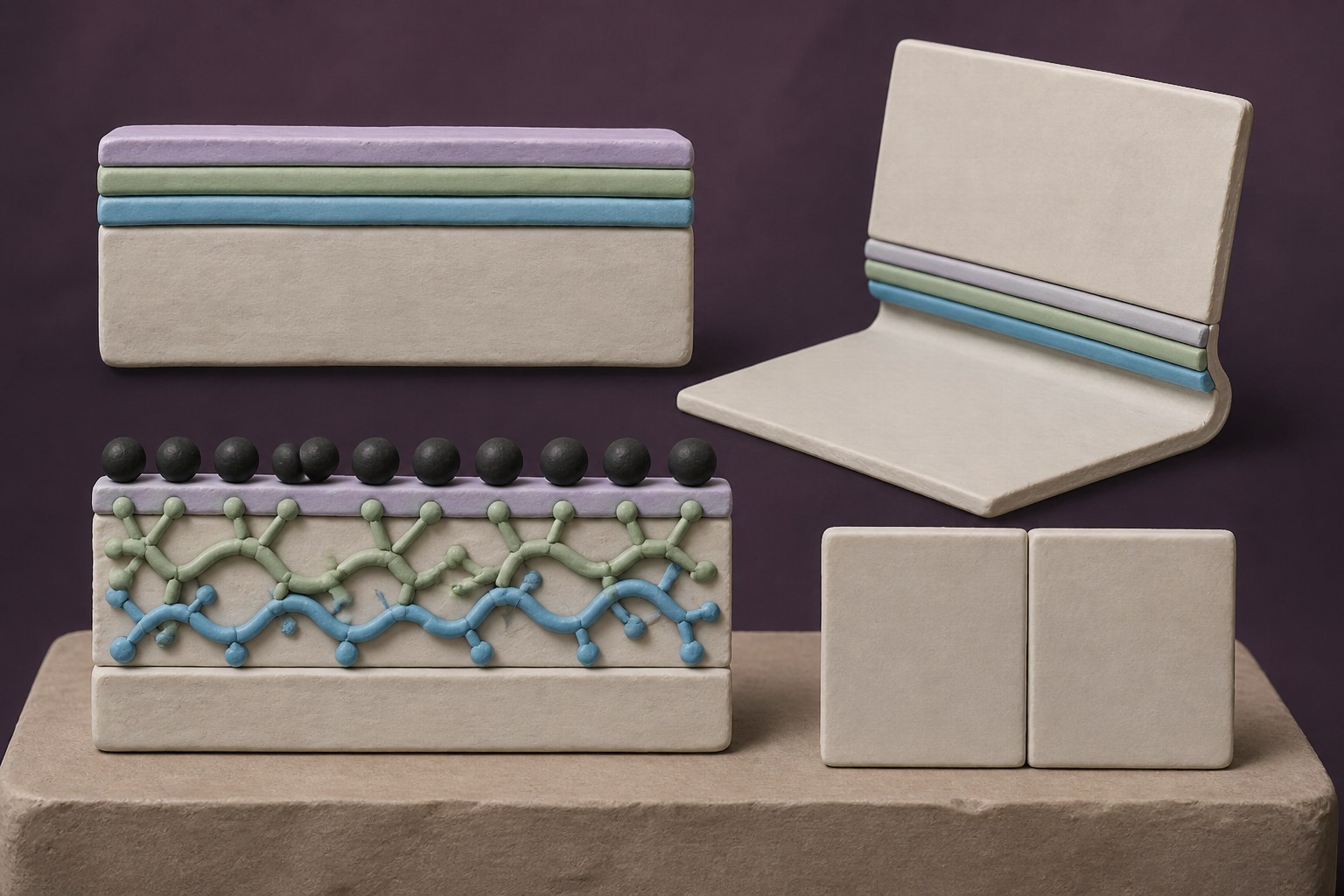
What changes in this design
Without the manufacturing detail, it would be easy to picture a device window as a single solid piece whose only relevant quality is hardness.
This one is built by laying down copolymers one layer at a time. Those long-chain materials include fluoro-based and acrylic-based silsesquioxane polymer chains.
It is worth knowing because the record describes this layered material as part of a window with high hardness and lower refraction.
A scratch at level 2
A small, discouraging detail from a reader discussion about the Galaxy Z Fold7 was where I started: people were saying its inner screen protector scratches at level 2, or 2H on the pencil-hardness scale. Comments can't be treated as a controlled test, and I wouldn't turn them into a verdict on a whole phone. Still, that number fixes the real scene. A folded phone is not judged at the factory bench. It is judged at the surface we touch every day.
That distinction matters more than it first seems. The pencil test used for coatings spans 6B to 8H, but results can shift across laboratories if pencil batches and applied pressure are not controlled. A reported 2H result is not something I would compare straight across with Mohs hardness, a different scale. What I can say is narrower: a softness complaint about the protector is a different problem from a claim about a tougher layer elsewhere in the display.
Three thin layers
That is why I paused at a Samsung Display filing published on August 27, 2026, after an October 15, 2025 filing. US20260255515A1 describes a window made by laying down three silsesquioxane copolymer layers in sequence: fluoro-based, acrylic-based, then a hybrid. Its stated aim is a low-refraction, high-hardness window. A patent listing characterizes the arrangement as pursuing low reflection and hard-coat performance without a separate anti-fog layer. The filing reads to me as careful materials work, not a promise that the vulnerable top surface has already been solved.
The layer we actually touch
One glass-industry comparison supplies the uncomfortable context. It puts foldable ultra-thin glass at Mohs 6 to 7, while the polymer overlay users actually touch is only Mohs 2 to 3. The measurements are not the same as pencil hardness, so I won't collapse them into one score. But the comparison makes a sensible practical point: raising the glass's hardness may not stop visible scratches if a softer covering remains on top. The filing's chemistry could improve an important layer and still leave that last-contact problem intact.
A second hinge arrives
Timing gives the filing an edge of urgency. Samsung's two-hinge Galaxy Z TriFold appeared in Korea on December 12, 2025, shortly after the filing, with a 10-inch inner display. A second hinge means another fold zone. The filing does not make that connection, so I am not claiming this coating was designed for that device. But I do think the product makes the engineering pressure easier to see: each added bend asks the surface materials to stay clear, hard, and flexible at once.
Samsung's description of its Fold7 points in the same direction. It says the device pairs a 50 percent thicker ultra-thin-glass layer than its predecessor with a ceramic cover glass described as 30 percent stronger, a hinge with yield strength up more than 14 percent, and titanium support said to improve durability by 64 percent. Those company figures aren't independent proof to me. They read to me as evidence that no single coating, hinge, or glass change carries this job alone.
Where the risk actually sits
One market-research forecast calls 2026 the beginning of a materials-driven phase for foldables, after earlier years centered on feasibility and structural optimization. It expects Apple's first foldable iPhone in the fall and estimates about 20 percent share for it, with Samsung and a rival near 30 percent each. Forecasts are not outcomes, and I would not use one to call the race. Yet I agree with its central diagnosis: the crease cannot be handed off to mechanics alone. The glass, adhesive, and outer layers have to cooperate.
That leaves me cautiously impressed by US20260255515A1 and unconvinced by any broad hardness message attached to it. Three carefully chosen copolymer layers may help reduce reflection and increase a window's hardness. But until the layer facing our hands can share that resilience, the reported 2H complaint will matter more in daily life than a technical stack beneath it. In this part of the foldable race, the risk sits at the last layer between the phone and us.
Sources
Reporting for this piece drew on the published filing and the references below.
- Window, Electric Device Comprising The Same And Method For Manufacturing The Same
- 20260255515 - Window, Electric Device Comprising The Same And Method For Manufacturing The Same
- Galaxy Z Fold7 passes gruesome durability test
- ASTM D3363 Testing
- Foldable Glass in Smartphones: Samsung UTG vs Corning vs SCHOTT
- Samsung reveals Galaxy Z TriFold, confirms US launch in early 2026
- The Breakthroughs Powering Samsung's Thinnest, Most Refined Foldables
- Foldable iPhone is Coming. Is the Crease Problem Finally Solved?
The record, briefly. US20260255515A1, “Window, Electric Device Comprising The Same And Method For Manufacturing The Same” The disclosure provides a window, an electronic device including it, and a manufacturing method, describing a low-refraction, high-hardness window formed by sequential deposition of copolymers including fluoro-based and acrylic-based silsesquioxane polymer chains.
Identity details. The saved title-page transcription needs review, so names are not repeated here. Check the official published title page.
More angles on this
- Duo-Pump Liquid Cooling Device Treats the Relationship as the PointAnother reading from the same H05K classification family, printed circuits.
- Liquid Crystal Polymer Dielectric Powder Or 3D Printed Material Marks a Pause Worth NoticingAnother reading from the same H05K classification family, printed circuits.
- CPC H05K: Printed circuits; casings or constructional details of electric apparatus; manufacture of assemblages of electrical componentsThe official classification family this record was filed into, published in the USPTO Cooperative Patent Classification scheme.
- CPC C09D: Coating compositions, e.g. paints, varnishes or lacquersThe official classification family this record was filed into, published in the USPTO Cooperative Patent Classification scheme.
- Apparatus And Method For Reorder Buffer With Sliding Window In A Treats the Relationship as the PointAnother reading from the wider H04L classification family, transmission of digital information, e.g. telegraphic communication.
Read around this one:Public patent recordUSPTO published figure