Machines
The Storage Condition Behind a Carbon Removal Filing
A carbon-removal startup's new patent shows how biomass became a monitored industrial product, and why that still isn't permanence.

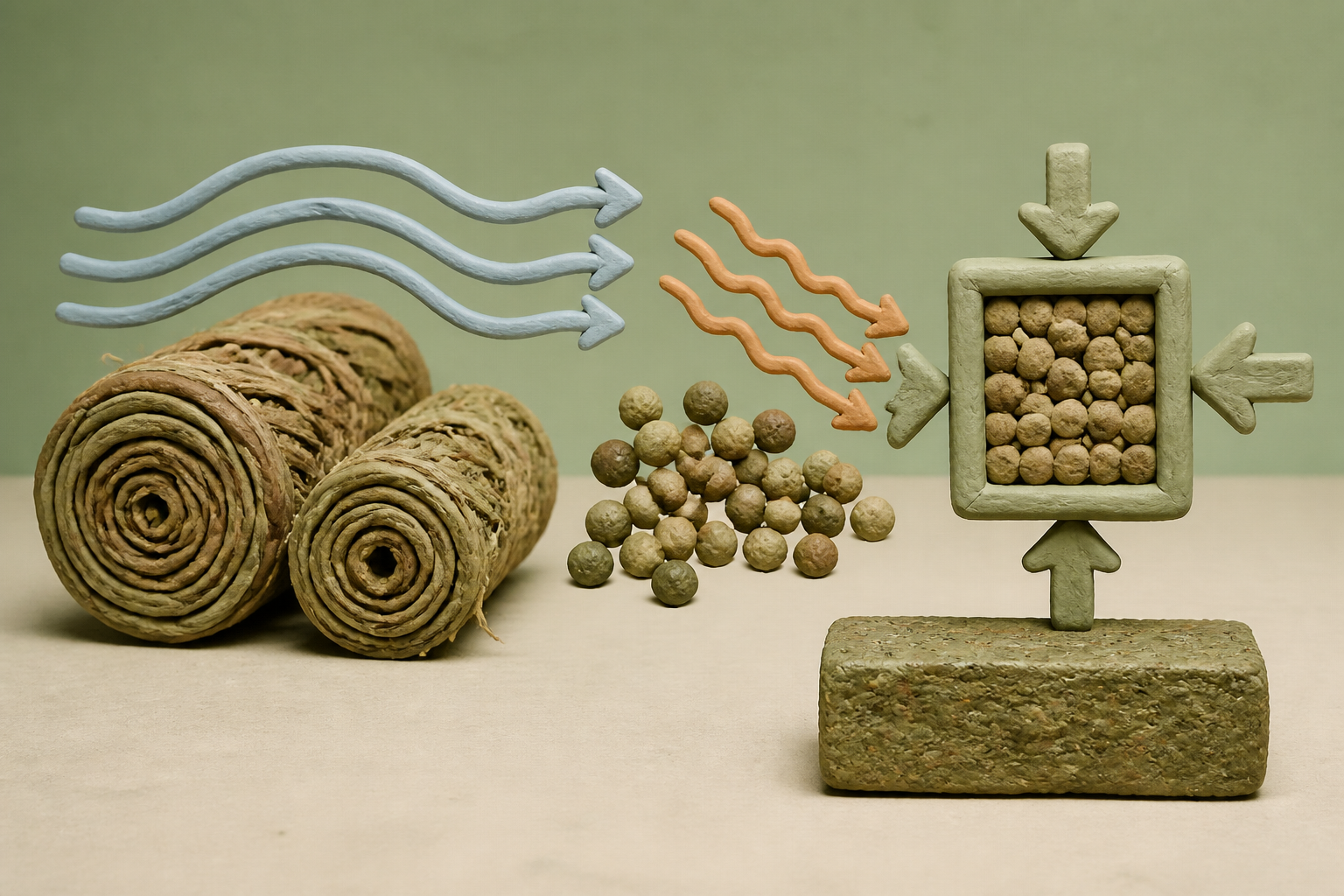
What changes in this design
Without this information, a reader might assume carbon removal involving biomass means simply putting the material into storage.
Instead, the record covers handling biomass before storage: making it smaller, heated drying, consolidating it, enclosing it, measuring carbon content, and checking for leaks or degradation.
That matters because storage is presented as an ongoing job: the material is prepared, its carbon content is quantified, and possible leaks or breakdown are monitored.
Five percent in reserve
At Graphyte's Loblolly project in Arkansas, the carbon registry does not treat every removal certificate as a permanent win. It adds a 5% contribution to a shared buffer pool for reversal risk. In the registry snapshot used for this story, 20,444.62 certificates had been issued and 13,237.05 had been retired. That small reserve matters more to me than any grand promise: somebody is admitting that stored biomass can fail.
Failure has a particular shape here. Organic material can rot, make gases, leak, and put carbon back into circulation. Graphyte's published patent application, US20260257256A1, makes that risk the center of an industrial sequence: chop biomass, control its biology, heat-dry it, consolidate it, encapsulate it in polymer, quantify its carbon, and look for leakage or degradation. The application was filed February 26, 2026 and published September 3.
A trench proposal
None of this begins as software, chemistry theater, or a sweeping new theory. In 2008, researcher Ning Zeng proposed burying wood in trenches where anaerobic conditions could slow decomposition. The paper estimated a sustainable potential of 10 plus or minus 5 gigatonnes of carbon a year, using 65 gigatonnes of forest-floor debris, at roughly $50 per tonne of carbon, or about $14 per tonne of CO2. Those are proposal-scale estimates, not a result anybody has demonstrated.
What I find clarifying is the change in ambition. Zeng described a low-tech, distributed and reversible practice. The application turns the vulnerable parts into a managed product, with drying, polymer barriers and inspection built in. The premise has not changed: keep carbon away from the organisms that would eat it. The accountability mechanism has.
The polymer barrier
That mechanism deserves more attention than the word burial. The filing does not claim that putting wood underground alone solves durability. It lays out systems that comminute biomass and either reduce biodegradation or sustain biological activity, then use heated drying, consolidation and encapsulation before storage. It also calls for quantifying carbon content and checking for leakage or degradation. I don't read the leak-detection language as a victory lap. I read it as an admission that storage needs to be measured after the door shuts.
Graphyte's chief executive, Barclay Rogers, has said its polymer barrier undergoes accelerated aging intended to simulate the environmental stresses of 1,000 years. That is a serious attempt to confront time, and it is still an engineering claim rather than a millennium of evidence. The number I cannot get past is not 1,000. It is 5: the 5% registry buffer says the people issuing credits have made room for a reversal.
Purchase orders and equity
Capital has nonetheless begun to treat this process as something more concrete than a paper proposal. Graphyte was founded in 2023, received a $30 million Series A from investors that included a Bill Gates-backed climate fund, and built its Loblolly facility to roughly 15,000 metric tonnes a year of removal capacity by April 2024, according to public profiles. A Japanese trading house has taken a 49% position in the Loblolly joint venture. Those details make the patent feel less like a speculative detour.
A 10-year agreement with JPMorganChase covers 60,000 metric tonnes of removals, while a second facility in Arizona is under development. Earlier coverage put Graphyte's claimed cost near $100 per tonne, lower than several other engineered removal routes. This is why I resist dismissing biomass burial as a clever sketch. Buyers, investors and a registry are building procedures around it.
The part worth watching
Yet a procedure for keeping carbon inside a chamber is not a procedure for obtaining biomass without harm. The World Resources Institute warns that unchecked demand for biomass carbon removal could use more than 100 million acres by 2050. That is roughly California's land area, about a quarter of current U.S. cropland, and far more land than equivalent wind and solar. Diverting forestry residue or using food-crop land can deplete forest carbon stocks or shift land-use emissions elsewhere. I think those risks belong in every conversation about the apparent cheapness of this method.
Biomass burial and bio-oil injection remain pilot-scale approaches, and the institute also flags weak monitoring, reporting and certification enforcement. I come away persuaded that this particular application is more responsible than a pure "bury it and forget it" story because it specifies detection as part of the system. But the real test is not simply whether the polymer holds. It is whether the feedstock, the monitoring, and the buffer stay credible when the project grows.
Sources
Reporting for this piece drew on the published filing and the references below.
- US20260257256 - Degradation-Resistant Biomass Polymer Composites For Carbon Removal
- Carbon sequestration via wood burial
- Loblolly Project
- Graphyte
- Graphyte Secures Backing From Sumitomo And Expands Partnerships
- Graphyte Secures 60K-Ton Carbon Removal Deal With JPMorganChase
- Carbon casting: The low-hanging fruit of carbon removal
- Biomass for Carbon Removal, Explained
- This Startup Says It's Figured Out How to Trap Carbon Affordably
The record, briefly. US20260257256A1, “Degradation-Resistant Biomass Polymer Composites For Carbon Removal” Systems and methods process, store, and monitor biomass by comminuting it, reducing biodegradation or sustaining biological activity, heated drying, consolidating, encapsulating, quantifying carbon content, and detecting leakage or degradation.
More angles on this
- CPC B09B: Disposal of solid waste not otherwise provided forThe official classification family this record was filed into, published in the USPTO Cooperative Patent Classification scheme.
- CPC A61L: Methods or apparatus for sterilising materials or objects in generalThe official classification family this record was filed into, published in the USPTO Cooperative Patent Classification scheme.
- Where Upward Assistance Enters an Exercise-Machine LiftAnother reading from the neighbouring A61H classification family, physical therapy apparatus, e.g. devices for locating or stimulating reflex points in the body.
- When Acidic Gas Recovery Stops Waiting for a RefillAnother reading from the wider B01D classification family, separation.
- Liquid Dispensing System With Internal Recirculation Makes a Small Case for Better TimingAnother reading in the same Machines category on this site.
Read around this one:Public patent recordUSPTO published figure