Field Notes
Vacuum Has Joined the Seed Team
A small Illinois inventor's seed meter is now a Deere patent with a fresh continuation, and the agronomy behind the fight keeps coming up short.

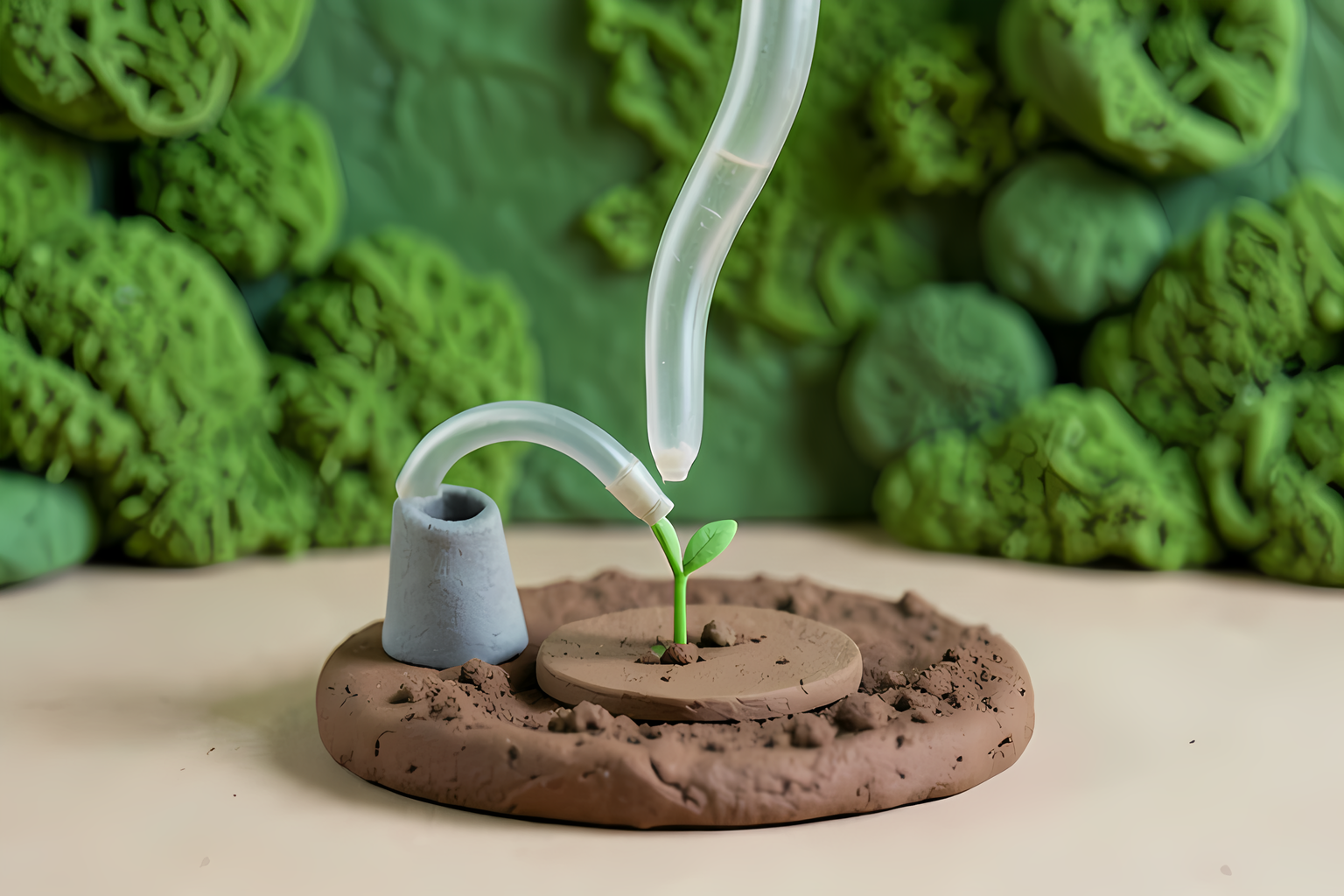
What changes in this design
A reader might otherwise picture a basic device that simply moves seeds toward an outlet before they leave it.
Here, the housing includes a circular component, a low-pressure air setup for bringing seed into position, and outlet pressure that can be controlled for ejecting seed.
It shows that air pressure is involved at two moments: helping put seed into position and helping eject it. The exact result of that control is not stated.
A seed that bounces
There are two ways to put a seed in the ground at speed, and each fixes the other's problem while creating its own. A vacuum meter holds seed against a spinning disk by suction, lets go, and leaves the last few inches to gravity. Gravity is not precise on a toolbar crossing a field at ten miles an hour. A pressure meter fixes that by shooting the seed down the tube, and then the seed arrives fast enough to bounce out of the furrow. There's a second complaint: one vacuum source usually feeds every row, so suction for loading runs thin.
To my eye, the filing separates the jobs. A small impeller-type vacuum device sits on each row, so loading no longer depends on a shared blower. Controlled positive pressure at the outlet then pushes the seed out at a chosen speed and angle, zero to ninety degrees to the ground, usually forty-five. Regulation is either passive, through a differential valve, or active, through a wastegate. The disk has seventy-two holes, meant to run corn and soybeans, so you change crops by changing disk speed rather than swapping disks.
Sycamore, Illinois, and a chain of four filings
The chain starts with a provisional filed on 30 December 2020. An international application followed a year later, and the applicant on it is not Deere. It is Underground Agriculture Company LLC, Joseph D. Bassett's company in Sycamore, Illinois, and Bassett is the sole inventor. The US application entered in June 2023 and issued on 21 April 2026 with seventeen claims, by which point the assignee was Deere & Company and Underground Agriculture was listed as prior assignee. Five weeks before that grant, Deere filed a continuation. The continuation is what published in August 2026: the fourth filing in a chain begun five and a half years earlier, which I read as keeping a claim-drafting option open on technology the company now owns.
The rest of Bassett's business moved on a parallel track. In June 2023, sales of the Sycamore operation's core lines - trashwheels, coulters, closing wheels - transferred to an agricultural technology firm in which Deere holds an eighty percent stake. Bassett kept the strip-till line and the Underground Agriculture name.
What an inch of spacing is worth
The case for precision metering is real and smaller than the marketing suggests. A 2004 trial in northwest Indiana found corn yield fell about 2.2 bushels per acre for every inch of increase in the standard deviation of plant-to-plant spacing: 192.4 bushels at zero, 178.5 at eight inches, a straight line explaining almost 97 percent of the variation. The agronomist who ran it warned that this was one location in one year. Other trials have put the figure between 1.2 and 4.5.
Then there's the number that keeps bothering me. A major seed company's own agronomy review puts spacing uniformity at roughly 1 to 2 percent of corn yield variation, against 5 to 9 percent for emergence uniformity, which no meter controls. Across more than 6,000 plants, skips did the real damage, near 8.9 percent at 30,000 plants per acre, while doubles slightly raised yield, and plants set off their mark barely mattered unless they moved more than half a normal spacing.
A Delaware jury, and dust over Ontario
Independent trials of the two dominant high-speed systems found both held placement uniformity steady from five to ten miles an hour while a conventional planter's degraded. What that work documents is productivity, not yield: more acres in a day, which is not, in my view, the same as a bigger harvest.
Two other things sit oddly beside the filing. A Delaware jury decided in 2022 that a rival's high-speed delivery tube did not infringe Deere's patents, and an appeals court upheld that in January 2025; the argument turned on whether capturing and delivering a seed covers projecting and accelerating one, which is the same suction-versus-pressure line this design is drawn along. And dust from vacuum-planting treated seed killed bees across southwestern Ontario - 278 beeyards in 2012, 420 in 2013 - until Health Canada required a flow lubricant before the 2014 season. A blower on every row is more airflow, not less.
Where this leaves things
I like the engineering. A vacuum source per row is a sensible answer to a real shortage of suction, and not swapping disks between corn and soybeans is a genuine convenience: a leading pressure-fed planter still ships discs matched to crop and seed size. What I can't make add up is the intensity of the contest around it. The agronomy says spacing uniformity is a small share of yield, doubles can help slightly, and skips are the thing worth chasing. Meanwhile the assignee spent July 2026 signing a ten-year settlement over farmers' ability to repair its machines. It is buying more of the planter while losing ground on servicing it.
Sources
Reporting for this piece drew on the published filing and the references below.
- US20260231851A1 - Seed meter with vacuum producing device and controlled outlet pressure
- WO2022147050A1 - Seed meter with vacuum producing device and controlled outlet pressure
- US20240057514A1 - Seed meter with vacuum producing device and controlled outlet pressure
- US12604792B2 - Seed meter with vacuum producing device and controlled outlet pressure
- Dawn Equipment Looks to Full-Size Implements After SurePoint Ag Deal
- Effect of Plant Spacing Variability on Corn Grain Yield (Purdue University Agronomy)
- Planting Outcome Effects on Corn Yield (Pioneer Agronomy)
- High Speed Planting Technology (Iowa State University Integrated Crop Management)
- Vaderstad Tempo - Where Speed Meets Precision
- Deere loses appeal against Agco in patent dispute over precision planting technology
- FTC, States Secure Settlement with Deere & Company, Advancing Farmers' Right to Repair
The record, briefly. US20260231851A1, “Seed Meter with Vacuum Producing Device and Controlled Outlet Pressure” The abstract describes a seed disk housing with a vacuum loading arrangement and controllable outlet pressure for ejecting seed.
More angles on this
- The Seed Method's Extremely Serious Fresh StartAnother reading from the same A01C classification family, planting; sowing; fertilising.
- Seeds Are Being Asked to Land With IntentionAnother reading from the same A01C classification family, planting; sowing; fertilising.
- CPC A01C: Planting; sowing; fertilisingThe official classification family this record was filed into, published in the USPTO Cooperative Patent Classification scheme.
- The Leveling Bar Has a Very Firm Opinion About LevelAnother reading from the neighbouring A01B classification family, soil working in agriculture or forestry.
- Ruts Have Filed a Formal ComplaintAnother reading of a record filed by the same applicant, Deere & Company.
Read around this one:Public patent recordUSPTO published figurePatent issue-date index