Machines
When a Vibration Signal Changes the Keeper of the Lock
Aerosol-Generating Device is a device that produces a mist-like output. Here, it includes a function that can be locked or unlocked.

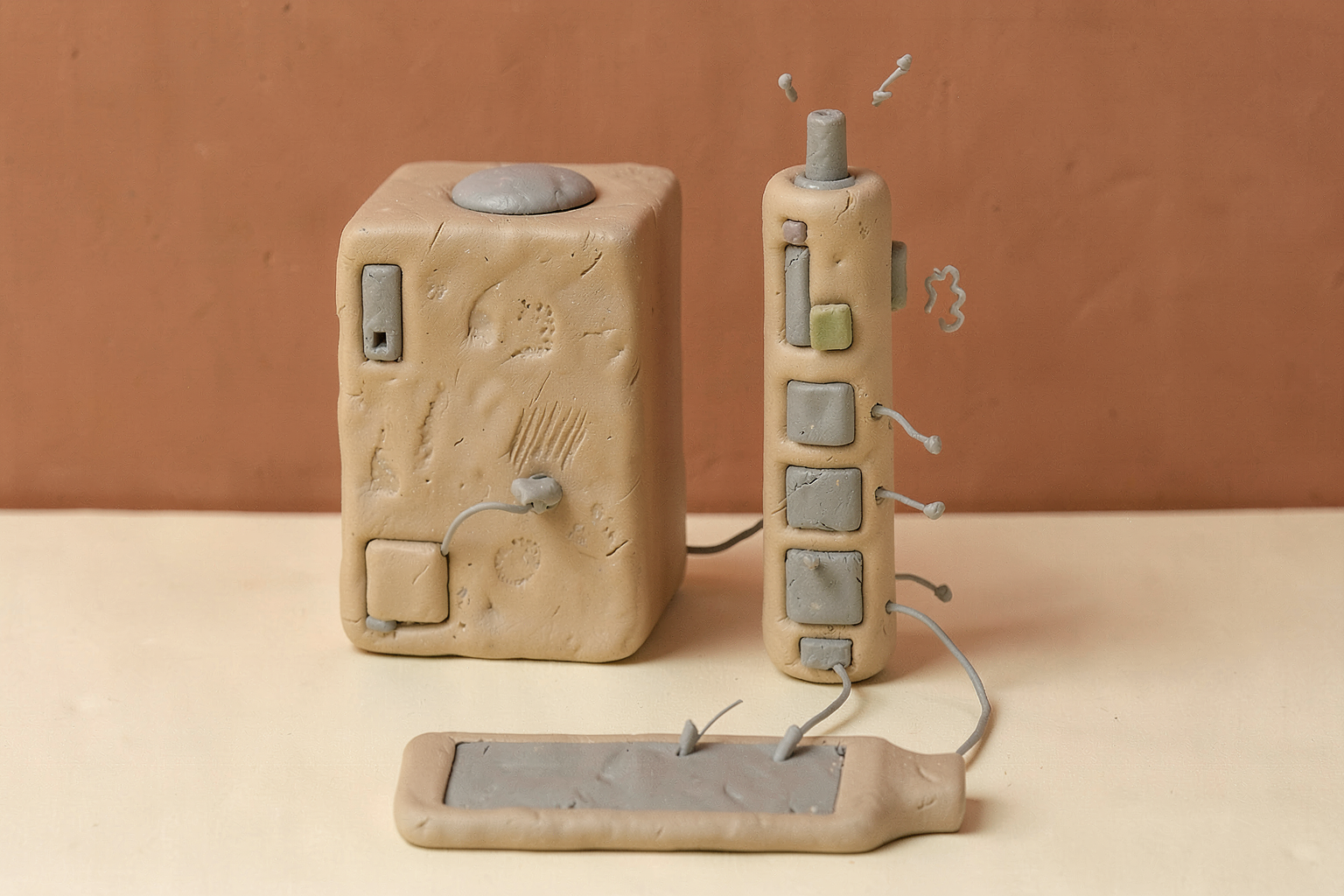
First, the setting
Small handheld devices that warm a liquid or material into an inhalable mist have become part of daily routines for some adults. Because they can be carried in a pocket and handled easily, households, retailers, and caregivers may want clear ways to keep them from being used by children or by someone who should not have access.
In a home, shop, or shared outdoor space, a person may hold a compact device in one hand, take it from a pocket, and move it while walking or riding. A nearby child might see it on a table or pick it up. The device can change between a ready state and a locked state as it is handled.
What changes in this design
A reader might expect the aerosol-making function simply to be available when the device is used, or to be locked and unlocked by another method. No ordinary access-control method is identified.
This record says a controller can lock or unlock aerosol generation, while a motion sensor supplies vibration signals that the controller uses to change the device from locked to unlocked.
It helps explain that the focus is controlling access to the aerosol-making function, rather than explaining how the aerosol is made. The required vibration is not stated.
Vibration and the Locked Moment
A motion sensor supplies vibration signals, and a controller changes an aerosol-generating device from locked to unlocked. That compact arrangement opens a larger question: when a system crosses from one state to another, who supplies the missing context? I notice how much of the scene turns on that handoff. You can picture the device at its locked point, with aerosol generation under the controller's lock, while a vibration signal enters the arrangement. The published record, US20260262735A1, is titled Improved Youth Access Prevention For Aerosol-Generating Devices and carries a September 10, 2026 publication date. The controller is less like a permanent padlock and more like a restrained committee receiving a vibration signal.
That question needs a few unglamorous words before the picture grows bigger. A controller is the part that changes the device's condition here: it locks or unlocks aerosol generation, meaning it determines whether aerosol generation is locked or unlocked. A motion sensor is the part that supplies vibration signals, signals associated in this arrangement with vibration. Those definitions matter because the title can invite a reader to reach for a broad social story, while the published description keeps the action close to a change of state within a device. The filing describes the controller using those vibration signals to move the device from locked to unlocked. That boundary deserves attention: you can notice a design question without supplying a surrounding narrative the published record does not provide.
Signals Before the State Change
With those terms settled, the picture becomes sharper by staying small. An aerosol-generating device is locked, then vibration signals supplied by its motion sensor are used by the controller, and the state changes to unlocked. For this picture, it is enough to hold to the published arrangement: locked device, motion sensor, vibration signals, controller, unlocked device. The motion sensor has the air of a quiet librarian, passing along vibration signals without asking the device to explain itself. That restraint is not a gap to patch with speculation; it is what lets you watch context arrive in a narrow form, not as a biography, an instruction, or a verdict, but as a signal connected to vibration.
From that picture, the mechanism stays surprisingly legible. The controller is not described merely as sitting next to a sensor; it locks or unlocks aerosol generation, and it uses vibration signals supplied by the motion sensor to make the change from locked to unlocked. That sequence matters editorially because it assigns separate jobs without pretending the jobs are people. The sensor supplies the particular context named in the filing, vibration signals. The controller changes the stated condition, a lock on aerosol generation. A label-maker would call this a small chain of custody: signal first, state change next. The phrase is playful, but the distinction is serious enough to carry elsewhere. When you encounter a system that changes a permission, a setting, or a mode, look for the same split between the part that supplies context and the part that changes status.
That split leads to the comparison worth carrying forward. An ordinary way of talking about a lock puts the burden on the locked thing: it is either closed or open, as though the state itself could speak for its circumstances. This filing puts the burden of supplying the relevant context with the motion sensor, while leaving the controller to change the lock status of aerosol generation. The arrangement is less like a gate that tells its own story and more like a small stage manager waiting for a cue. The contrast is not a claim that one approach outperforms another; it is a change in who carries the burden. For you, two useful observations emerge: separate the evidence-supplying role from the state-changing role before deciding what a system is doing, then ask whether the context is named narrowly enough that its path remains visible. Here, vibration signals are named, and the transition from locked to unlocked is named.
Ownership of a Transition
I think the reason this small scene stays with me is that it does not demand a larger story than the published record provides. It offers no need to inflate a controller into an all-knowing judge or a motion sensor into a witness with a life story. The published record gives a more modest arrangement: vibration signals come from the sensor, and the controller changes the device from locked to unlocked. You can bring that modesty to any everyday question about a changing state. When context is needed, ask what supplies it; when a state changes, ask what is tasked with changing it; and do not quietly let either role do both jobs in your imagination. The value of this filing's narrow picture is bounded but memorable: ownership of a transition can sit not in the object that waits, but in the relationship between a signal and the part tasked with changing the state.
The record, briefly. US20260262735A1, “Improved Youth Access Prevention For Aerosol-Generating Devices” An aerosol-generating device has a controller that locks or unlocks aerosol generation and a motion sensor that supplies vibration signals used by the controller to change the device from locked to unlocked.
More angles on this
- A Step, Two Hollows, and the Small Surface That Says Where a Mouthpiece StopsAnother reading from the same A24F classification family, smokers' requisites; match boxes; simulated smoking devices.
- Before Remote Modes: What Reaches the Device?Another reading from the same A24F classification family, smokers' requisites; match boxes; simulated smoking devices.
- CPC A24F: Smokers' requisites; match boxes; simulated smoking devicesThe official classification family this record was filed into, published in the USPTO Cooperative Patent Classification scheme.
- A CBT-to-Nitrogen Boundary Worth a Second LookAnother reading from the neighbouring A24B classification family, manufacture or preparation of tobacco for smoking or chewing; tobacco; snuff.
- Two sensors, one puff, and a controller that retunes when nothing arrivesAnother reading of a record filed by the same applicant, Philip Morris Products S.A..
Read around this one:Public patent recordUSPTO published figure