Groundwork
A Cart That Makes Room for the Pause
The most dangerous routine act in American hunting has an obvious mechanical fix, and the law is quietly closing off the ground where it would be legal to use.

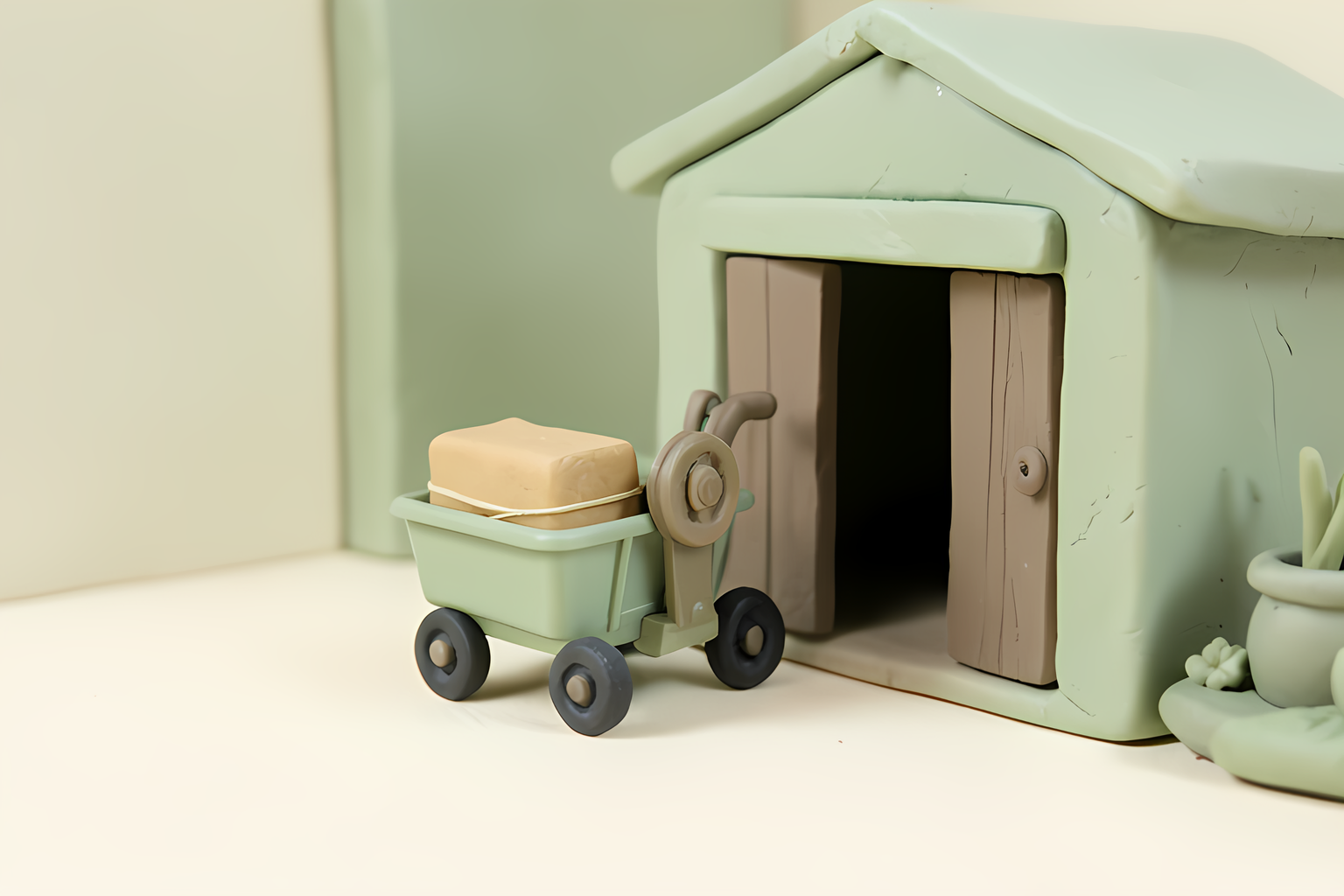
What changes in this design
Without this record, a reader might expect a cart to be moved by a person or pulled behind another vehicle.
Here, the record identifies powered wheels at the back, a front wheel that pivots and locks, and a handle control. It also lists a battery, winch, support stand, anchor points, and tow hitch.
That list helps a reader see this as more than a basic push cart, while also showing the limit of the record: the exact role of each part is not explained.
Twenty-two of twenty-five hunters over their treadmill max
In 2007 a team at a hospital in Michigan strapped heart monitors on 25 middle-aged men and sent them deer hunting. Seventeen already had diagnosed coronary artery disease. All but three went past the peak heart rate they had managed on a treadmill in a lab, and the thing that pushed them hardest was not the walk in or the cold or the shot. It was dragging the animal out. I couldn't open the paper itself, since the medical databases turned me away, so those figures come from a hunting magazine's account of it. The writer of that piece clocked himself at 201 beats per minute pulling a game cart.
Pennsylvania hunters took an estimated 476,880 deer in the 2024-25 seasons, up about 11 percent on the year before. Every one of them had to be moved out of the woods by somebody.
A flatbed, a winch mast, and a tow eye
The filing I want to show you was published on August 27, 2026, under a title that gives nothing away: Motorized Electric Cart Device. Anthony Fama of Cairnbrook, Pennsylvania, is named as both applicant and inventor, alone. The drawing shows a flatbed on two large spoked wheels, a hinged winch mast over the deck, a tow eye at the front. Rear drive wheels, a front wheel that pivots and locks, a handle control, a lithium-ion battery in a weather-resistant compartment, anchor points, a support stand, and a hitch so an ATV can tow it.
His background section puts the problem in his own words: 'Transporting heavy game, equipment, or supplies across rugged outdoor environments presents significant challenges for hunters,' and 'the absence of built-in lifting mechanisms forces users to rely on external hoists or additional labor.' It is a direct answer to the drag.
The exception written for carts without motors
Pennsylvania's rule for state game lands bars riding a nonmotorized vehicle or conveyance except on roads normally open to public travel, on posted routes, or 'while lawfully engaged in hunting, trapping or fishing.' That last clause is why a game cart is legal out there at all, and it was written for conveyances without motors. The subsections governing motor vehicles carry no hunting exception. They set a 25 mph default and a 12,000-pound registered weight cap. Put a motor on a game cart and it steps out of the carve-out that made game carts fine in the first place.
Federal wilderness is stricter still. Across roughly 110 million acres in 765 units, even a hand-pushed cart counts as mechanical transport and is barred. A 2017 bill would have let agencies permit non-motorized game carts there; it cleared the House Natural Resources Committee 22-18 and then died. A motorized one was never in it.
Hand carts at $130 and no battery rules
The competition is cheap and none of it is electric. A 2026 roundup of the best deer carts tested three models at $130, $170 and about $320, rated for 300 to 500 pounds, every one pushed by hand. The reviewer even shrugged at the capacity race, saying a 300-pound limit has never bothered him because he has never shot a whitetail near that weight.
The battery has no rulebook either. In June the Consumer Product Safety Commission proposed mandatory standards for six named categories of micromobility product - e-bikes, e-scooters, self-balancing scooters, e-skateboards and e-unicycles - plus their batteries and chargers. A battery-powered game cart is in none of them. The incident record behind that proposal counted 227 lithium-ion incidents from 2019 to 2023, 195 of them fires, 39 deaths, and 53 percent of incidents starting during charging.
A claim that says wheel, then wheels
The published front page lists no attorney or agent of record. You can see what that costs in claim 1, which recites 'a rear wheel,' singular, and then a few lines on describes a drive system that drives 'the rear wheels.' That mismatch is the standard unrepresented stumble. A 2012 study of 250 pro-se applications against 250 represented ones found 64.9 percent of the pro-se filings drew indefiniteness rejections, against 26.9 percent, and 76.4 percent were abandoned, against 34.8 percent. Figures published in January put micro-entity allowance at 40 percent this year against 80 percent for large entities. Cairnbrook is a former coal town of 505 people, and shrinking.
The open question
I don't think this is a bad idea. It is an obvious one, aimed at the exact moment that hurts people, from someone who has done the dragging. What sticks with me is that it lands between two doors closing at once: the odds of an unrepresented filer getting a patent, and the ground where the patented thing could legally be used. I found no product, no company, no trace of one built. Whether that changes is the part nobody can look up.
Sources
Reporting for this piece drew on the published filing and the references below.
- USPTO published application PDF, US 2026/0249894 A1
- 58 Pa. Code § 135.41 - State game lands
- H. Rept. 115-1032 - Bicycles, Wheelchairs, Strollers, and Game Carts in Wilderness Areas
- Game Commission Releases Deer Harvest Estimates
- Is Hunting Killing Your Heart?
- The Best Deer Carts of 2026, Tested and Reviewed
- The Lone Inventor: Low Success Rates and Common Errors Associated with Pro-Se Patent Applications
- Large Entities Achieve Double the Patent Allowance Rate of Micro Entities
- CPSC's Proposed Micromobility Rule Could Reshape the E-Bike and E-Scooter Industry
- Cairnbrook, Pennsylvania
The record, briefly. US20260249894A1, “Motorized Electric Cart Device” The public record describes a motorized cart with rear drive wheels, a pivoting lockable front wheel, a handle control, battery, winch, support stand, anchor points, and a tow hitch.
More angles on this
- Liquid Cooling Heat Dissipation Device For Multi-Disk Drive System Marks a Pause Worth NoticingAnother reading in the same Groundwork category on this site.
- When a Vehicle Notices Something, Who Decides What the Moment Means?Another reading in the same Groundwork category on this site.
- Measurement Apparatus For Determining A Velocity Of A Fluid Gets a Better Next StepAnother reading in the same Groundwork category on this site.
- What a 24-Minute Width Change Teaches About Designing for the In-BetweenAnother reading in the same Groundwork category on this site.
- A Tape Surface Asked to Be Consistent, Not PerfectAnother reading in the same Groundwork category on this site.
Read around this one:Public patent recordUSPTO published figure