Field Notes
A Fixed Center in a Bed That Moves
Follow Platform Comprises Head alongside Key detail: An adjustable bed platform comprises head/neck. It keeps the central design choice visible.

First, the setting
At home and in care settings, people often rest, read, watch television, or recover in bed. A flat sleeping surface does not suit every activity or every body position, so beds with moving sections are a familiar way to change posture without leaving the mattress.
A person lies under bedding while a handheld control or side button changes the bed’s shape. The upper surface can rise near the shoulders, bend around the middle, or lift beneath the legs. A partner, caregiver, or family member may notice the mattress and bedding shifting nearby.
What changes in this design
Without a fixed middle section, someone might picture the whole sleeping surface moving together or every panel changing position.
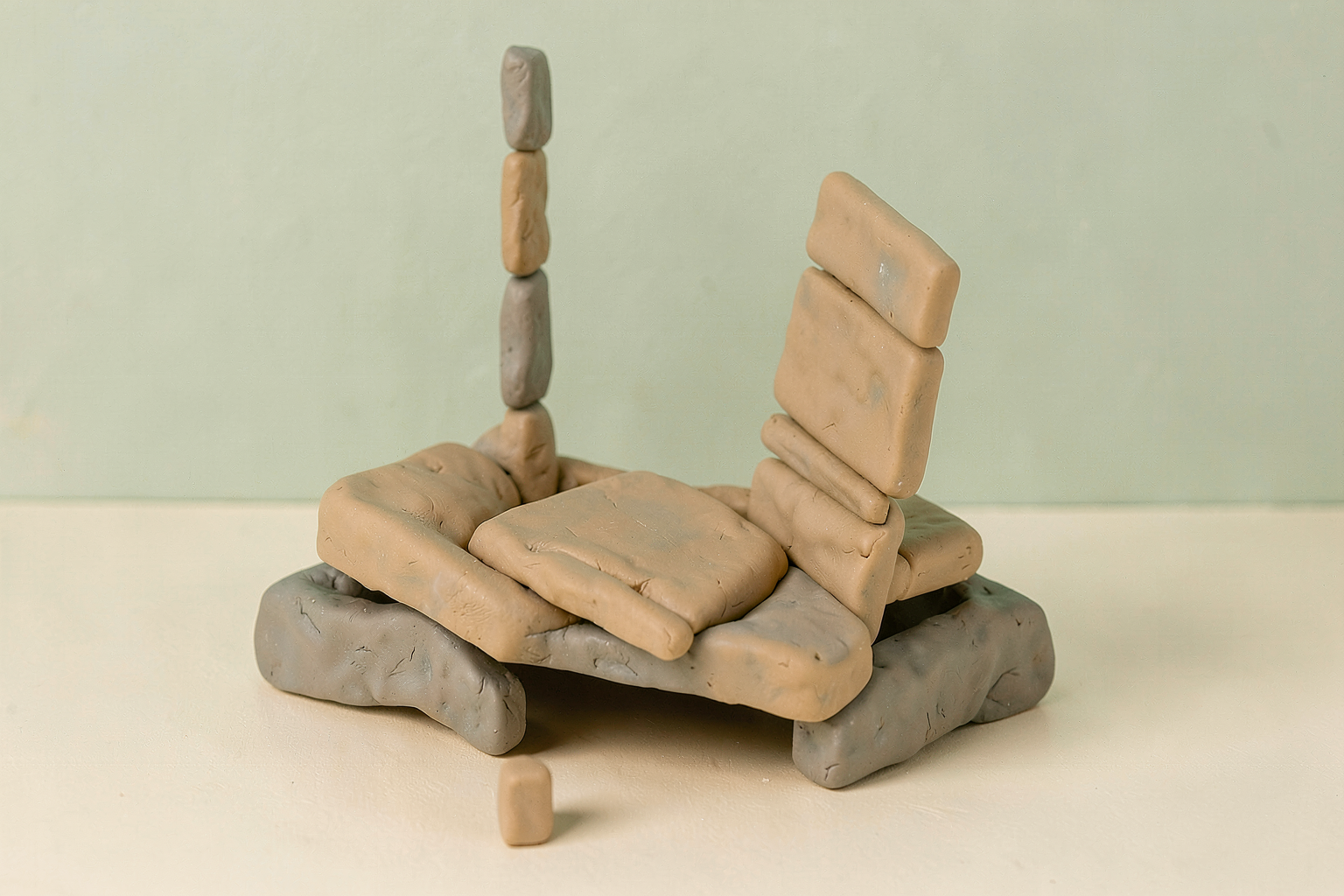
Here, the seat panel is fastened to the bed frame in a level position. The head and neck, back, lower back, leg, and foot panels are the parts that move.
The fixed center is the main idea to notice. It explains why the illustration divides the bed into several panels instead of showing one unbroken surface.
The Fixed Center
A fixed center causes the surrounding parts to become legible, the effect is a clearer picture of change, and the next choice is whether that picture gives you enough evidence to act. Ordinary objects often earn attention when a familiar routine is divided into visible decisions: a chair tips, a drawer slides, a lamp turns, and someone can see where one condition ends and another begins. The published patent, US20260262848A1, titled Powered Adjustable Bed Platform and published September 10, 2026, asks for that kind of attention from a bed. Its purpose is not presented here as a grand promise about what sleeping should become; what caught my eye instead is the deliberate effort to give motion a stable reference. That restraint matters because you already know what a bed is supposed to look like, while this filing invites you to notice what has to stay put for its other parts to move in an orderly way.
That purpose becomes easier to inspect once the familiar picture is slowed down. The platform is described with head/neck, back, lumbar, seat, leg, and foot decks, with “deck” meaning a section of the platform rather than a decorative layer on top of it. The seat deck is fixed to the bed frame in a horizontal orientation, while the other named decks are movable to predetermined positions, including opposite vertical planes. The arrangement feels less like a bed making up its mind and more like a stage manager placing marks before the curtain rises. A person reading this need not imagine hidden capabilities beyond those details; the useful picture is simply of one horizontal section holding its place while adjacent sections have specified places to go.
From that picture, the terms begin to carry practical weight. “Fixed” means attached to the frame and held horizontal in the stated arrangement, while “movable” means able to reach predetermined positions rather than merely drifting into whatever angle happens to result. “Opposite vertical planes” sounds technical, but here it can be read as upright directions on opposing sides of the fixed seat section. The seat deck has the air of a patient librarian keeping one place while the rest of the room adjusts. What made me look twice was not the number of sections alone, but the pairing of named sections with a named anchor: the filing describes a layout that lets you ask where each part is relative to something that has not moved.
Six Decks in View
With the terms settled, the mechanism is best understood as a sequence rather than a spectacle. First, the bed frame carries the horizontal seat deck; next, the head/neck, back, lumbar, leg, and foot decks are the portions identified as movable; then, those portions can be brought to predetermined positions, including the stated vertical orientations on opposite sides. The effect is not proof of a particular experience or result, and the published record does not supply one. It is evidence of an arranged response: when motion is considered, the reader is given named parts, a fixed reference, and specified destinations. That defined response replaces a guess, as if a quiet committee had labeled the next position before anyone reached for it. The contrast with an ordinary broad notion of an adjustable bed is therefore modest but useful: instead of treating the whole surface as one vague moving thing, this filing sets out a divided platform whose movement can be considered section by section against its fixed seat deck.
A Modest Test of Movement
That comparison suggests a practical test you can carry beyond this one patent. Before acting on a description of a moving system, look for the part that remains stable and then ask whether the other parts have defined positions rather than undefined movement. The first observation is transferable to everyday design: a fixed reference can make a complex arrangement easier to describe without making claims about how well it works. The second is equally portable: names for the parts help a reader distinguish the picture from the assumption, especially when several components move in relation to one another. A folding table, an adjustable shelf, or a screen with articulated sections can all be read through the same small discipline, though this filing itself describes only the bed platform arrangement.
The conclusion should stay no larger than the evidence. This published application presents an adjustable bed platform with a horizontally fixed seat deck and other named decks that move to predetermined positions, including opposite vertical planes. What seems worth your attention is the editorial lesson inside that arrangement: before a routine object persuades you with motion, ask what remains fixed, what is named, and what destination has actually been defined. That consequence travels well, because a clear reference point can turn an impression into something you can inspect before you decide what to do with it.
The record, briefly. US20260262848A1, “Powered Adjustable Bed Platform” An adjustable bed platform comprises head/neck, back, lumbar, seat, leg, and foot decks. The seat deck is fixed to a bed frame in a horizontal orientation, while the other decks are movable to predetermined positions, including opposite vertical planes.
More angles on this
- A Chair Rest Begins With a PlaceAnother reading from the same A47C classification family, chairs; sofas; beds.
- A Seat Where the Setting Meets the PromiseAnother reading from the same A47C classification family, chairs; sofas; beds.
- CPC A47C: Chairs; sofas; bedsThe official classification family this record was filed into, published in the USPTO Cooperative Patent Classification scheme.
- The Closet That Borrows Nearby Floor Only While You Need ItAnother reading from the neighbouring A47B classification family, tables; desks; office furniture; cabinets; drawers; general details of furniture.
- When Soil, Vehicle, and Control Share the Next ChoiceAnother reading from the wider A01B classification family, soil working in agriculture or forestry.
Read around this one:Public patent recordUSPTO published figure