Field Notes
Before Debris Moves: A Cleaner Head's Quiet Direction
The central pairing is Cleaner Head with Hard Floor: A cleaner head for a hard floor cleaner has a roller. It keeps the central design choice visible.

First, the setting
Hard floors collect grit, crumbs, hair, and damp marks as people move through kitchens, entryways, shops, and shared rooms. Cleaning them is a recurring household and workplace task because loose debris can spread underfoot, gather along edges, and make an otherwise cared-for space feel untidy.
A person guides a hard-floor cleaner across tile, wood, or similar smooth flooring while a roller turns against the surface. Dust and small scraps meet the moving parts near the floor, and material gathers toward an end of the roller. Someone nearby notices the path behind the cleaner becoming free of loose debris.
What changes in this design
People might picture a cleaner head as a roller that simply meets the floor and picks up debris, without any stated way of gathering material toward one side.
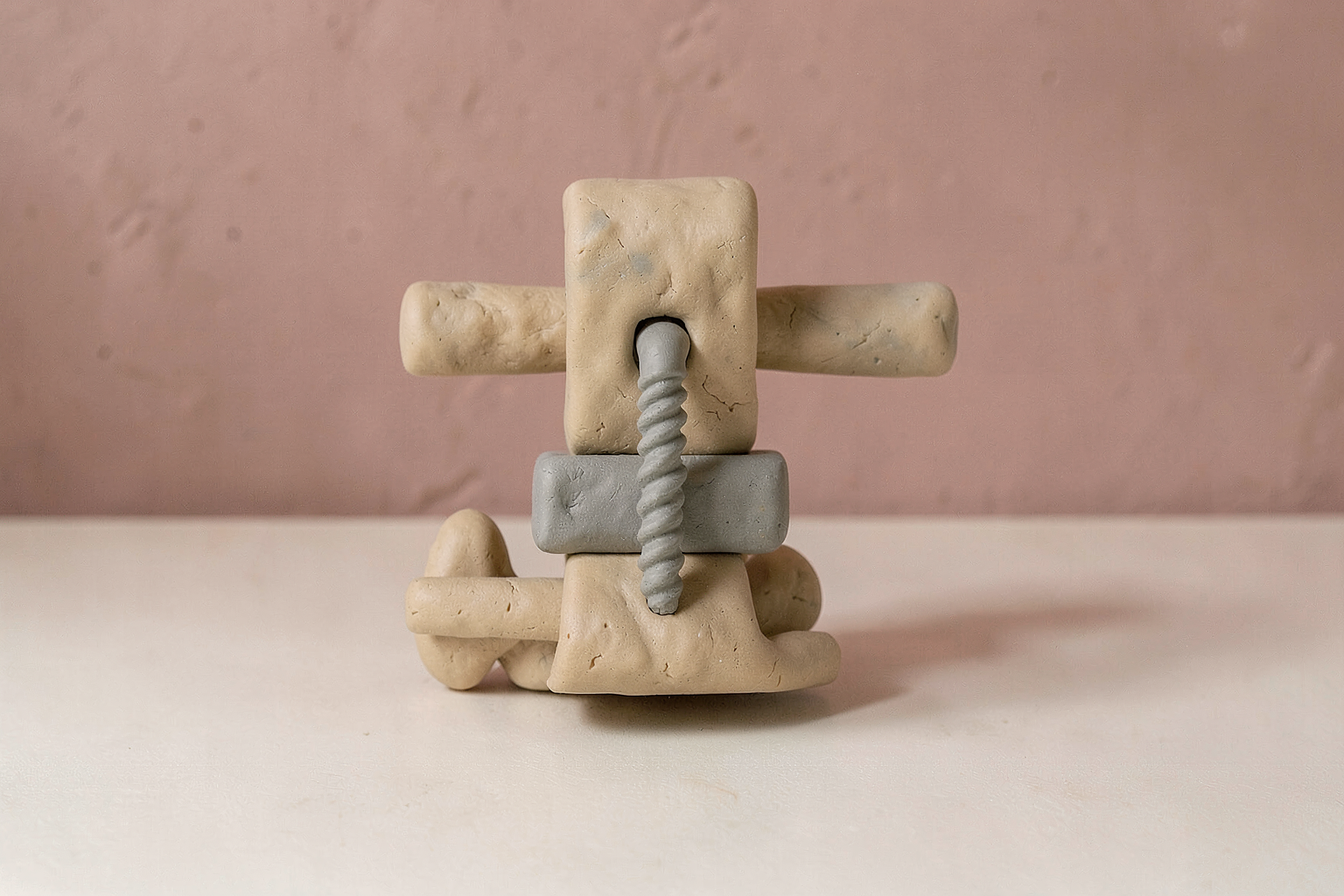
Here, the roller is paired with a helical screw, a carrier head that the turning screw moves along its axis, and a contact member touching the roller's outer surface. That contact member pushes debris toward one roller end.
It gives the reader a clearer picture of the cleaner head's internal job: not just a roller in contact with debris, but parts that direct debris toward a chosen end. The page does not state what is located there.
Debris With a Destination
A cleaner head's purpose comes into view in one practical picture: debris resting on a hard floor needs a direction before it is pushed toward one roller end. In US20260262898A1, published September 10, 2026, the title Cleaner Head For A Hard Floor Cleaner tells you the setting, while the described arrangement supplies the point of attention: a roller and parts arranged to guide debris to its end. The scene is ordinary enough to pass unnoticed, which is why it deserves a second look. Before a reader can decide whether a mechanism is intelligible, the reader needs evidence of where its work is meant to lead. The published record makes that evidence concrete by placing the destination at one roller end rather than leaving it as an atmospheric idea of cleaning. That choice makes the purpose inspectable at the outset, before the named terms ask you to follow their individual roles.
Parts That Supply Direction
That destination brings the named terms into focus, and it is worth translating them before asking them to carry a larger point. The filing identifies a roller, the part whose outer surface is contacted; a helical screw, meaning a screw described as spiraling around an axis, with an axis being the central line used to describe direction; a carrier head, a named component that moves along that axis; and a contact member, the named part that contacts the roller's outer surface. The words are not ornamental labels. They give you four plain questions before any conclusion: what has the surface, what establishes the direction line, what moves along it, and what touches the surface. I noticed that this is already a useful discipline, because a design becomes more legible when each named part can be connected to a stated relation instead of being left to borrow meaning from its neighbors.
With those names in place, the mechanism can be described in everyday order. The filing says that the rotating screw moves the carrier head along its axis. It also says that the contact member contacts the roller's outer surface and pushes debris toward one roller end. Put together, those statements offer a reader a visible account: the screw accounts for the carrier head's travel, and the contact member accounts for debris being pushed in the stated direction. Nothing needs to be supplied from outside the description to see the division: one named component moves the carrier head, while another contacts the roller and pushes debris in the specified direction. The arrangement has the air of a small stage manager, giving debris a reason to leave by one end. That is not drama, exactly, but it is a useful insistence that direction should have an identified source before it is treated as self-explanatory.
Because the account identifies both a movement and a contact, the contrast becomes clearest against a vague handoff. A broad description could say only that debris arrives at an end, leaving you to imagine the intervening relationship. This published record is clearer in the narrow way its words support: it names a contact member against the roller's outer surface, says it pushes debris toward one roller end, and separately states that the rotating screw moves the carrier head along its axis. The helical screw is less like a vague handoff and more like a label-maker that keeps the carrier head on a named path. The contact member reads less like a bystander and more like a restrained committee with one task: push debris toward one roller end. This is a bounded distinction, not a claim about results. The point is the difference between an unnamed transition and stated relationships among parts.
A Standard for Visible Direction
The stated relationships lead to a larger design question without making the cleaner head stand in for more than it can: what evidence should you receive before acting on a system's apparent direction? One transferable observation is that a destination becomes easier to inspect when a named part is tied to a stated action, as the contact member is tied to pushing debris toward one roller end. Another is that motion becomes easier to question when its line is specified, as the carrier head is described as moving along the rotating screw's axis. Both observations ask for an ordinary form of clarity: identify the mover, identify the contact, and identify the direction. The observations are concrete because they ask for stated evidence before judgment rather than confidence after the fact. A mechanism can be modest and still decline to make the reader play detective with a clipboard.
That practical standard keeps the publication number and date - US20260262898A1 and September 10, 2026 - in their proper place: coordinates for a particular described arrangement, not an excuse to enlarge it. I cannot tell from the published record what broader outcome, if any, follows from the arrangement, and nothing here needs to pretend otherwise. What made me look twice was the calm precision of the handoff: a carrier head is moved along an axis, while a contact member at the roller's outer surface pushes debris toward one end. The reason to keep that picture in mind is bounded but memorable. That restraint is part of the value for you: it leaves the mechanism readable without turning its parts into a grander story. When the next mechanism, screen, or process tells you something will get where it belongs, can you point to the mover, the contact, and the destination without supplying the missing handoff yourself?
The record, briefly. US20260262898A1, “Cleaner Head For A Hard Floor Cleaner” A cleaner head for a hard floor cleaner has a roller, helical screw, carrier head and contact member. The rotating screw moves the carrier head along its axis, while the contact member contacts the roller's outer surface to push debris toward one roller end.
More angles on this
- When Dirty Water Talks Back: Turbidity as the Cue in a Floor ScrubberAnother reading from the same A47L classification family, domestic washing or cleaning ; suction cleaners in general.
- Two Liquids at the Dock: A Question About Cleaning BoundariesAnother reading from the same A47L classification family, domestic washing or cleaning ; suction cleaners in general.
- CPC A47L: Domestic washing or cleaning ; suction cleaners in generalThe official classification family this record was filed into, published in the USPTO Cooperative Patent Classification scheme.
- CPC A46B: BrushesThe official classification family this record was filed into, published in the USPTO Cooperative Patent Classification scheme.
- Flip-Up Potty Seat: The Quiet Question of Where a Child's Seat Waits Between UsesAnother reading from the neighbouring A47K classification family, sanitary equipment; accessories therefor, e.g. toilet accessories.
Read around this one:Public patent recordUSPTO published figure