Objects
Inside protective film, method
A new Samsung Display coating patent matters less for its blue-light pitch than for the hard lessons and high stakes of foldable screens.

What changes in this design
Without further detail, a reader might picture a protective film as simply a covering for an electronic device. This record does not state how such a film is normally made or used.
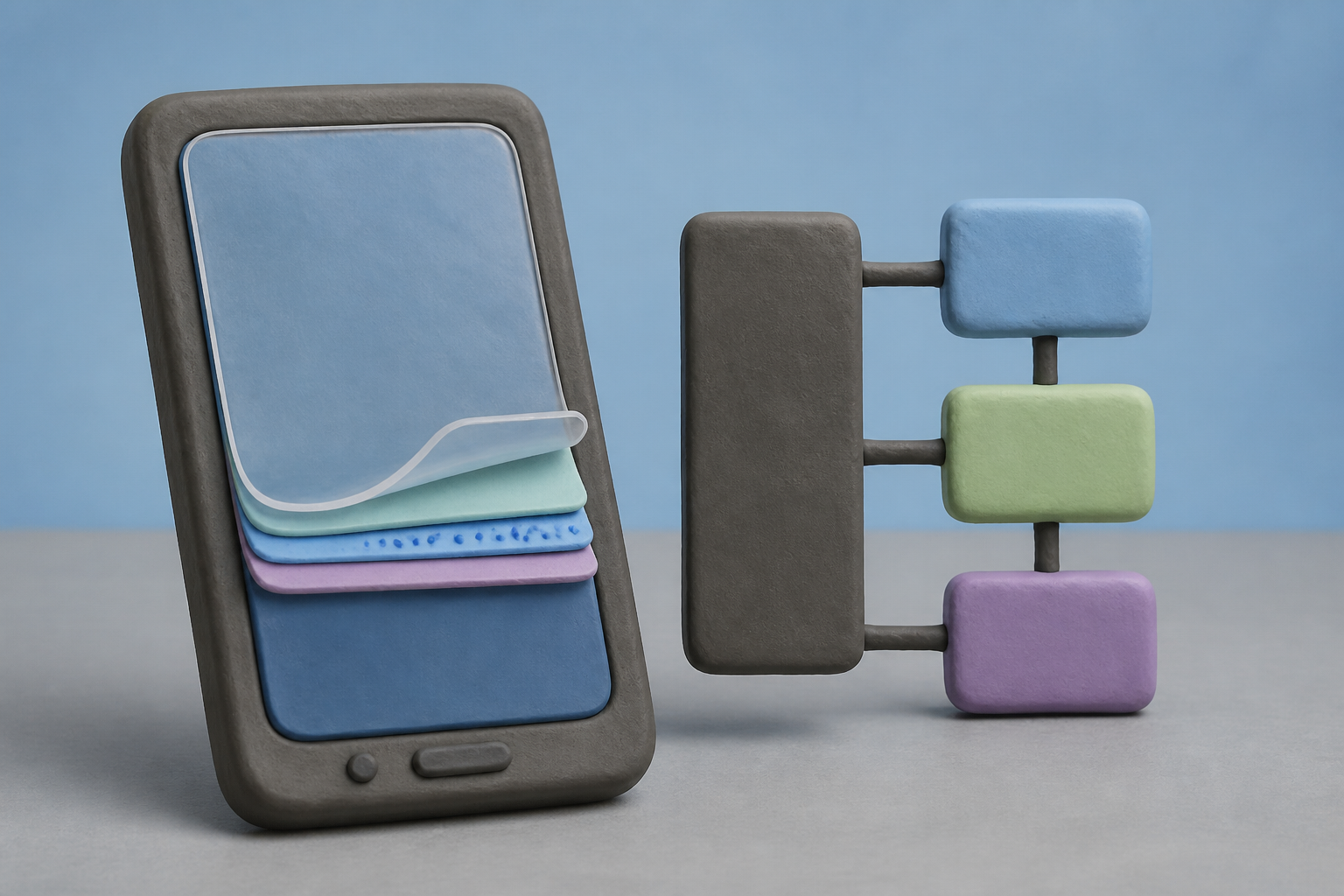
Here, the film may have an underlying sheet, a tougher surface film, and a light-reflection-reducing surface film. The tougher film or the reflection-reducing film may contain a substance that takes in blue light.
It helps explain that the film is intended to address two light-related concerns: lower reflectivity and blue-light blocking. What degree of either effect it provides is not stated.
The layer reviewers peeled
On April 23, 2019, the phone maker recalled all Galaxy Fold review units after screens broke. Some reviewers had peeled away a layer that looked disposable but was actually bonded into the display stack, destroying the screen. The delayed $1,980 launch made a thin protective film suddenly visible as an engineering problem, not a piece of packaging.
That history is why I cannot treat a new display-film patent as mere materials housekeeping. On a folding screen, a coating has to survive bending, resist scratches, preserve the picture, and stay put when a person mistakes it for something they can remove. A failure is immediate and expensive.
A patent from September
Samsung Display's application, published September 3 and filed February 27, describes a protective-film stack with a base layer, a hard coating, and an anti-reflective layer. A blue-light absorber can go into either coating layer, with the stated aim of lowering reflectivity while blocking some blue light. The application claims priority to Korean filings from February and May 2025, and one claim specifically reaches a folding-display device.
The named absorbers - benzoxazole, phenyltriazine, and naphthalimide - are the patent's chemistry. The larger point is more ordinary and more consequential: several jobs are being pressed into one very thin layer. I don't think this reads as a health breakthrough. It reads as an attempt to make screen protection carry another marketable feature without giving up the dark, low-reflection surface people now expect from premium displays.
The blue-light promise
Blue light supplies the filing's health rationale. Its background says blue light may increase eye strain and may cause amblyopia. The American Academy of Ophthalmology takes a sharply different view: it finds no scientific evidence that blue light from digital devices damages eyes, attributes much screen discomfort to reduced blinking, and does not recommend special blue-light-blocking eyewear for eye-strain symptoms.
The disagreement is not entirely empty. A 2024 technical account collected laboratory findings that blue light can generate reactive oxygen species in corneal and lens cells, and noted that infants' lenses transmit far more 400-nanometer light than those of older adults. Yet it also conceded that blue-light glasses have no proven advantage over neutral filters and that long-term human clinical evidence is insufficient. The trouble, I think, is that the patent's language moves from a plausible laboratory concern to a consumer-health implication without showing that this film changes either real-world symptom or disease outcome.
A display certification program from TÜV Rheinland measures 16 indicators across six dimensions, including low blue light, flicker, and color accuracy, and favors hardware reduction over software filtering. That makes a coating-based approach testable. I would ask for results across those measures, plus color performance and durability after repeated folding, before treating a blue-light label as much more than a feature claim.
The foldable supply race
The stakes explain the incrementalism. Global foldable-panel shipments are projected at 27.5 million this year, up 24 percent year over year, while Samsung Display is resuming work on a long-suspended capacity project targeted for 2028. In the first quarter, Samsung's foldable shipment share reportedly rose from 14 percent to 25 percent, even as another manufacturer remained the global leader.
Protective films are also being sold as visible product differences. In March, Samsung Display announced a parallel QD-OLED monitor film that it says cuts reflectance 20 percent against its prior low-reflection film and raises hardness from 2H to 3H. A layer once meant to disappear is now part of how a display is described and sold.
The legal pressure is just as close to the hardware. An April lawsuit sought a permanent US injunction over nine foldable-related patents spanning display protection, hardware, and software. My judgement is that this patent belongs in that crowded contest: a narrow addition to the stack, but one that may matter because every layer is being defended, branded, and differentiated.
What would have to be true
For this particular film to deserve attention beyond patent paperwork, three things would have to hold at once. It would need to maintain low reflection and color quality while the absorber is added. It would need to retain hardness and adhesion through the folding life of a real device. And it would need to show a meaningful user benefit that survives comparison with ordinary screen use, not simply a lower blue-light measurement.
Until then, I see the filing as a sensible engineering hedge inside a fraught category, not evidence that blue light from phones is making users ill. The Fold recall supplied the lasting lesson: on a folding display, a protective film is never just a protective film.
Sources
Reporting for this piece drew on the published filing and the references below.
- Samsung Display Develops QuantumBlack, a Low-Reflection, High-Durability Film for QD-OLED Monitors
- Should You Be Worried About Blue Light?
- Myth: Blue Light Toxicity Isn't Real
- Eye Comfort Certification
- Samsung Display to expand capacity to meet growing foldable phone demand
- Samsung almost doubles foldable market share while Huawei leads
- Samsung sued by the original developer of foldable phones, but a ban seems unlikely
- Samsung recalling all Galaxy Fold review units
The record, briefly. US20260257241A1, “Protective Film, Method For Manufacturing Protective Film, And Electronic Device” A protective film may include a base layer, a hard coating layer, and an anti-reflective layer. The hard coating or anti-reflective layer may contain a blue-light absorber to provide low reflectivity and blue-light blocking.
More angles on this
- CPC B05D: Processes for applying fluent materials to surfaces, in generalThe official classification family this record was filed into, published in the USPTO Cooperative Patent Classification scheme.
- CPC B29D: Producing particular articles from plastics or from substances in a plastic stateThe official classification family this record was filed into, published in the USPTO Cooperative Patent Classification scheme.
- Liquid Dispensing System With Internal Recirculation Makes a Small Case for Better TimingAnother reading from the neighbouring B05B classification family, spraying apparatus; atomising apparatus; nozzles.
- Portable Nucleic Acid Detection Device, System And Method Treats the Relationship as the PointAnother reading from the wider B01L classification family, chemical or physical laboratory apparatus for general use.
- The Next Choice in a Random Card OrderAnother reading in the same Objects category on this site.
Read around this one:Public patent recordUSPTO published figure