Machines
Inside the haptic device
The central pairing is Haptic Device with Assembly: A testing method and devices use headphones that filter and amplify low-frequency audio.

First, the setting
People use headphones to hear music, voices, games, and films without filling a room with sound. Deep bass is often meant to be felt as well as heard, which can make a scene or song feel more physical. Designers and repair workers pay attention to comfort, fit, sound, and vibration because these sensations meet at the listener's head.
In a quiet listening room, a person settles padded headphones over their ears while music or a film plays. Low notes travel through the speakers and may also be felt as a gentle vibration through the headband or ear cups. A technician adjusts the fit and listens closely for whether the sound and vibration seem to arrive together.
What changes in this design
A reader might think headphone testing is only about what is heard, rather than also considering sensations felt at the top of the skull and ear cups.
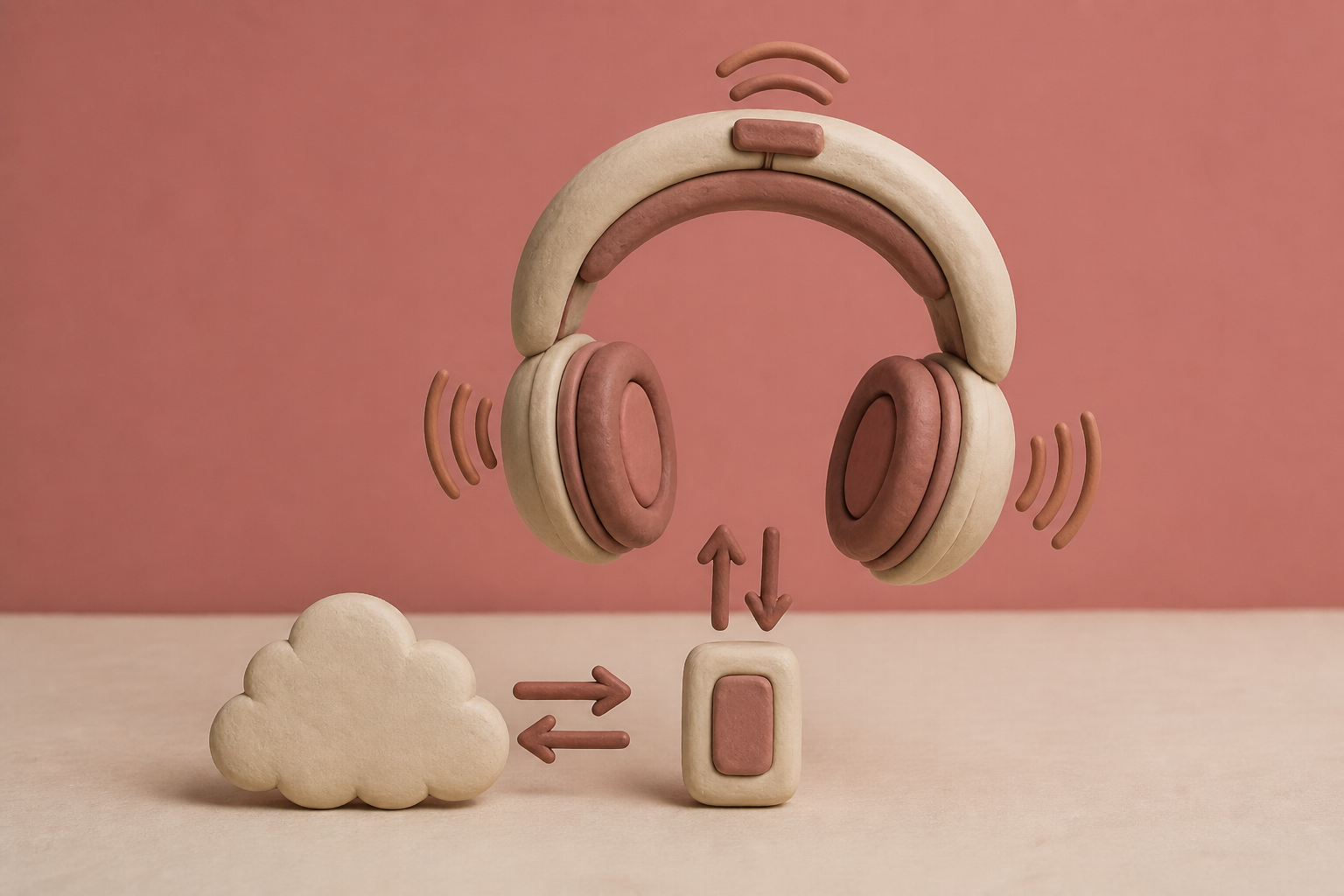
Here, the headphones filter and amplify low-frequency sound, then send it to a haptic device, a part that produces felt bass at the top of the skull and ear cups. The method evaluates both the felt sensations and the sound to assess the assembly and calibrate the headphones.
This matters because both what is heard and what is felt are included in the evaluation used to assess the assembly and calibrate the headphones.
Inside the haptic device
I read Reproducing Audio Signals With A Haptic Apparatus On Acoustic Headphones as asking for a small amount of evidence before any large conclusion is allowed onto the stage. The emphasis is on the relationship that has to hold, not on a parts list. A broad reading could leave haptic device and assembly as unrelated labels. The checked description gives them one particular stated sequence instead. The published description says: A testing method and devices use headphones that filter and amplify low-frequency audio, send it to a haptic device, produce bass sensations at the skull top and ear cups, and evaluate haptic and acoustic sensations to assess assembly and calibrate the headphones.
Reading the assembly
The named details add specific footing rather than rhetorical weight. The terms are concrete evidence first, not a cue for a broad conclusion. Haptic Device means the named haptic device in the source's described arrangement; Assembly means several parts joined so they can work as one unit. Haptic Device and Assembly stop trying to enter through the same door once the sequence is clear.
The record can now be read as evidence before it is treated as a conclusion. Read as one stated sequence, haptic device and assembly are not detached labels. Their places in the checked arrangement give the reader a usable mental picture. The steps do not need a marching band; their order is already doing the useful work in Reproducing Audio Signals With A Haptic Apparatus On Acoustic Headphones.
Their documented relationship is the next piece of evidence. The important move is their placement: Haptic Device and Assembly are not loose labels but part of one stated sequence. That is the disclosed stated sequence, not an extra mechanism supplied by the reader.
What the record actually names
That footing clarifies why the design choice matters. For Reproducing Audio Signals With A Haptic Apparatus On Acoustic Headphones, the immediate value is clarity: the record gives a reader one concrete design choice to inspect instead of a long title to decode. The immediate reader value is a specific design choice to inspect: how haptic device and assembly remain part of one account.
The evidence is enough to remember without turning it into a verdict. Reproducing Audio Signals With A Haptic Apparatus On Acoustic Headphones is easiest to explain as an ordered chain in which haptic device and assembly appear as part of the same account. A faithful short account of Reproducing Audio Signals With A Haptic Apparatus On Acoustic Headphones keeps those roles together instead of turning the invention into a list of detached nouns. The title may bring a large suitcase, but the chain itself is the part worth carrying.
The record, briefly. US20260255114A1, “Reproducing Audio Signals With A Haptic Apparatus On Acoustic Headphones And Their Calibration And Measurement” A testing method and devices use headphones that filter and amplify low-frequency audio, send it to a haptic device, produce bass sensations at the skull top and ear cups, and evaluate haptic and acoustic sensations to assess assembly and calibrate the headphones.
Identity details. The saved title-page transcription needs review, so names are not repeated here. Check the official published title page.
More angles on this
- When Context Changes Hands in Healthcare InformationAnother reading from the same G06F classification family, electric digital data processing.
- Device And Method Of Virtual Reality Interaction Based On Bimanual Treats the Relationship as the PointAnother reading from the same G06F classification family, electric digital data processing.
- CPC H04R: Loudspeakers, microphones, gramophone pick-ups or like acoustic electromechanical transducersThe official classification family this record was filed into, published in the USPTO Cooperative Patent Classification scheme.
- CPC G01H: Measurement of mechanical vibrations or ultrasonic, sonic or infrasonic wavesThe official classification family this record was filed into, published in the USPTO Cooperative Patent Classification scheme.
- An 86-Millisecond Decision: The Ophthalmic Camera That Reads Its Own ExposureAnother reading from the neighbouring H04N classification family, pictorial communication, e.g. television.
Read around this one:Public patent recordUSPTO published figure