Machines
Lens Device And Camera Device Including Same Questions the Default Arrangement
LG shut down its phone business in 2021, but its lens engineers kept filing patents, and this one is built for a body cavity, not a pocket.

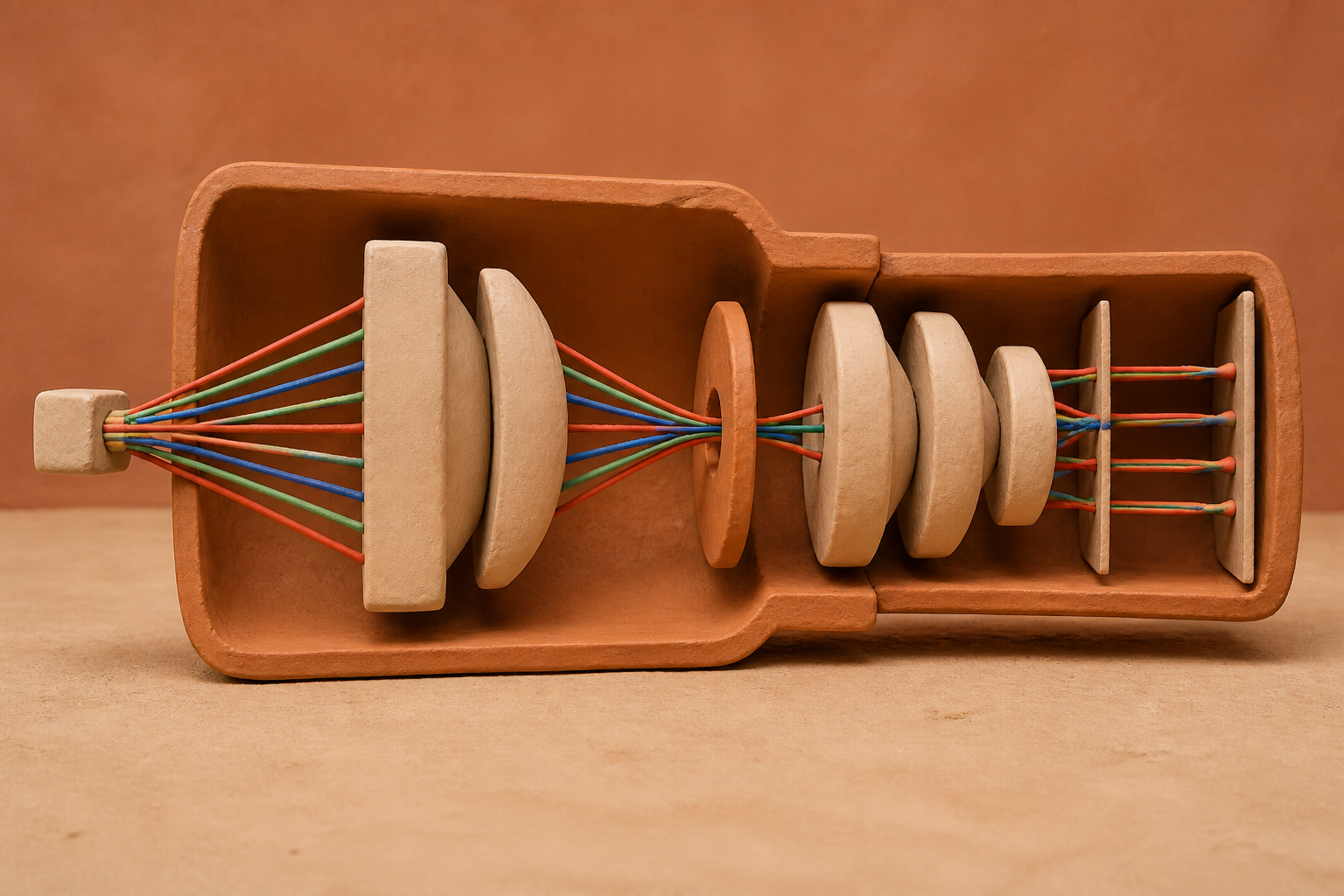
What changes in this design
Most people picture a camera lens as one curved piece of glass, and assume the road to a sharper image runs through more glass, bigger and more precisely ground. Under that assumption, shrinking the optics or building them cheaply is a trade you eventually pay for in picture quality.
Here the job is split in two. A front group that bends light outward comes first, then the aperture, then a rear group that bends it back to a point on the sensor. The pieces are plastic rather than glass, and one number is pinned down: the ratio written |f0/f1| must be at least 1.1. Which two focal lengths that compares is not stated.
Two things stand out for a reader. Cheap material usually reads as a worse picture, yet plastic and high resolution sit here as goals held together rather than traded against each other. The ratio matters too, because it turns a layout you could only describe into a number a particular lens can be measured against.
A phone company with no phones
In April 2021, LG Electronics closed its mobile phone division, walking away from smartphones after six years of losses that had reached about $4.4 billion. The company said it would move the freed-up people and money into electric-vehicle components, connected devices, robotics, AI, and business-to-business hardware. That was five years ago. LG has not shipped a phone since.
Which makes it a little strange that LG's optics engineers are still filing patents that look, at first glance, exactly like phone camera patents. One of them, US20260259391A1, published in 2026 and credited to inventor Yeo Sang-ok, describes a small lens assembly: a front group that bends light outward, an aperture, and a rear group that bends it back in, built mostly from plastic to keep the whole thing cheap and compact. Read the claim on its own and you'd guess it was headed for somebody's camera bump. I went looking for the earlier filing behind it, and that's where the guess falls apart.
Five millimeters, not a pocket
The 2026 filing traces back to a document filed internationally in April 2023, under the same title, the same applicant, the same inventor, and the same governing ratio. That earlier filing says outright what the device is for: a medical endoscope with an outer diameter of about 5 millimeters or less, built to deliver Full HD video or better. Not a phone. A tube meant to go inside a person.
The optics themselves aren't the surprising part. Plastic lens elements have been standard in smartphone cameras for years, chosen for the reasons this filing gives: they're lighter, cheaper to mold, and easier to shrink than glass. What's specific to this filing, and what I had to check twice, is where that old trick gets pointed. Fitting a negative-then-positive lens pair, tuned so the front group's focal length is at least 1.1 times the back group's, into a channel narrower than a pencil, is a packaging problem, not an optical breakthrough.
A growing shelf of hospital hardware
LG didn't disappear from imaging when it left phones. It has run a business-to-business medical device unit since 2016, and by 2024 that unit was selling thirteen monitor models: five for diagnostics, five for surgical suites, three for general clinical use, including a mammography display cleared by the U.S. Food and Drug Administration. In 2023 it won a four-year hospital contract in France worth about 10 million euros. None of that is an endoscope camera, but it's a live division with hospitals already as customers, and a lens built for a 5mm scope has an obvious shelf to land on, though I don't have evidence that LG has put one there yet.
Two deaths and a market response
The reason anyone is building disposable endoscope optics at all traces back further than this patent. Public health investigators linked outbreaks of multidrug-resistant bacteria to duodenoscopes in the fall of 2013, and the FDA followed with safety warnings in 2015 after specific hospital outbreaks. The worst of them, at Ronald Reagan UCLA Medical Center, killed two patients and reportedly exposed roughly two hundred more during a two-year gap before the hospital told anyone. Olympus, which made the scope involved, held around 85 percent of the US duodenoscope market at the time.
The agency's answer was to start clearing scopes with disposable components in 2017, and by April 2022 it was recommending hospitals move to fully disposable duodenoscopes wherever they could. Analysts now project the single-use duodenoscope market will grow at nearly 28 percent a year through 2033, led by two of the field's biggest disposable-scope makers, with North America expected to stay the largest market. A patent for a cheap plastic lens narrow enough to fit a single-use scope sits right in the middle of that growth curve, whether or not LG ever brings a product to it.
The other side of the ledger
None of this is free, and the research pushes back on its own premise here. A study published in a peer-reviewed hepatology journal estimates that switching all endoscopic procedures to single-use devices would raise net medical waste by around 40 percent and multiply carbon emissions by at least 24 times, since only the small metal parts of a disposable scope are actually recycled and the rest goes to incineration. Cheaper and safer for the patient in front of you is not the same as cheaper for anyone else, and I don't think this filing, or LG, is claiming otherwise. It's just not mentioned.
It's also worth saying plainly that filing a patent is not the same as building a device. The same negative-front, positive-rear lens layout turned up in another major camera-lens maker's filing the same month this one published, for a completely different purpose: faster autofocus on interchangeable lenses, spread across 21 variant designs that the company itself says come with no guarantee any of them reach production. Large optics divisions file broadly and build selectively. I couldn't find any public LG endoscope product to point to, and that absence matters as much as the filing does.
The part worth watching
What I keep coming back to is the shape of the incentive, not the specific company. Somewhere between an infection scandal that killed people and a market now compounding at nearly 28 percent a year, there's real pressure to make endoscope optics small enough and cheap enough to throw away after one patient. A company that no longer sells you a phone is still, it turns out, in the business of making things small and cheap. This time it has aimed that skill at a different opening.
Sources
Reporting for this piece drew on the published filing and the references below.
- LG Electronics is exiting from its smartphone business
- LG Accelerates Its B2B Medical Device Business
- Infections Associated with Reprocessed Duodenoscopes
- Olympus Scopes Lawsuit: Endoscope and Duodenoscope Infections and Injuries
- Single-use accessories and endoscopes in the era of sustainability and climate change
- Canon Patents Three-Group Lens Designs That Promise Faster Focus
- Almost all smartphone camera lenses are plastic
The record, briefly. US20260259391A1, “Lens Device And Camera Device Including Same” The disclosure describes a lens device and a camera device including it, comprising a front lens group with negative refractive power, an aperture, and a rear lens group with positive refractive power arranged from the object to the image sensor, using plastic material to reduce lens size and cost while keeping high resolution, with |f0/f1| at least 1.1.
More angles on this
- Inside fiber optic connector assemblyAnother reading from the same G02B classification family, optical elements, systems or apparatus.
- Optical Processing System Questions the Default ArrangementAnother reading from the same G02B classification family, optical elements, systems or apparatus.
- CPC G02B: Optical elements, systems or apparatusThe official classification family this record was filed into, published in the USPTO Cooperative Patent Classification scheme.
- Inside multi-tiered semiconductor waveguideAnother reading from the neighbouring G02F classification family, optical devices or arrangements for the control of light by modification of the optical properties of the media of the.
- Inside road safety system including multiple roadAnother reading from the wider G01W classification family, meteorology.
Read around this one:Public patent recordUSPTO published figure