Field Notes
Method For Treating Cancer By Anti-B7H3 Antibody-Drug Conjugate Makes a Small Case for Better Timing
Pharmaceutical Composition plus Method carry the practical point: administering an anti-B7H3 antibody-drug conjugate with another therapeutic agent for cancer treatment.

First, the setting
Cancer treatment often involves difficult choices for people, families, and care teams. Clinics and hospitals work to manage illness while helping patients continue daily life as comfortably as possible. This work matters because cancer can affect health, routines, relationships, and a person’s sense of control.
In an infusion clinic, a patient sits in a reclining chair while a nurse prepares medicines, checks identification, and monitors how the visit is going. A treatment may travel through a small tube into the patient’s body. Nearby, family members wait, staff answer questions, and follow-up care is arranged.
What changes in this design
A reader might assume a cancer treatment uses one medicine at a time, or that separate treatments are simply available on their own.
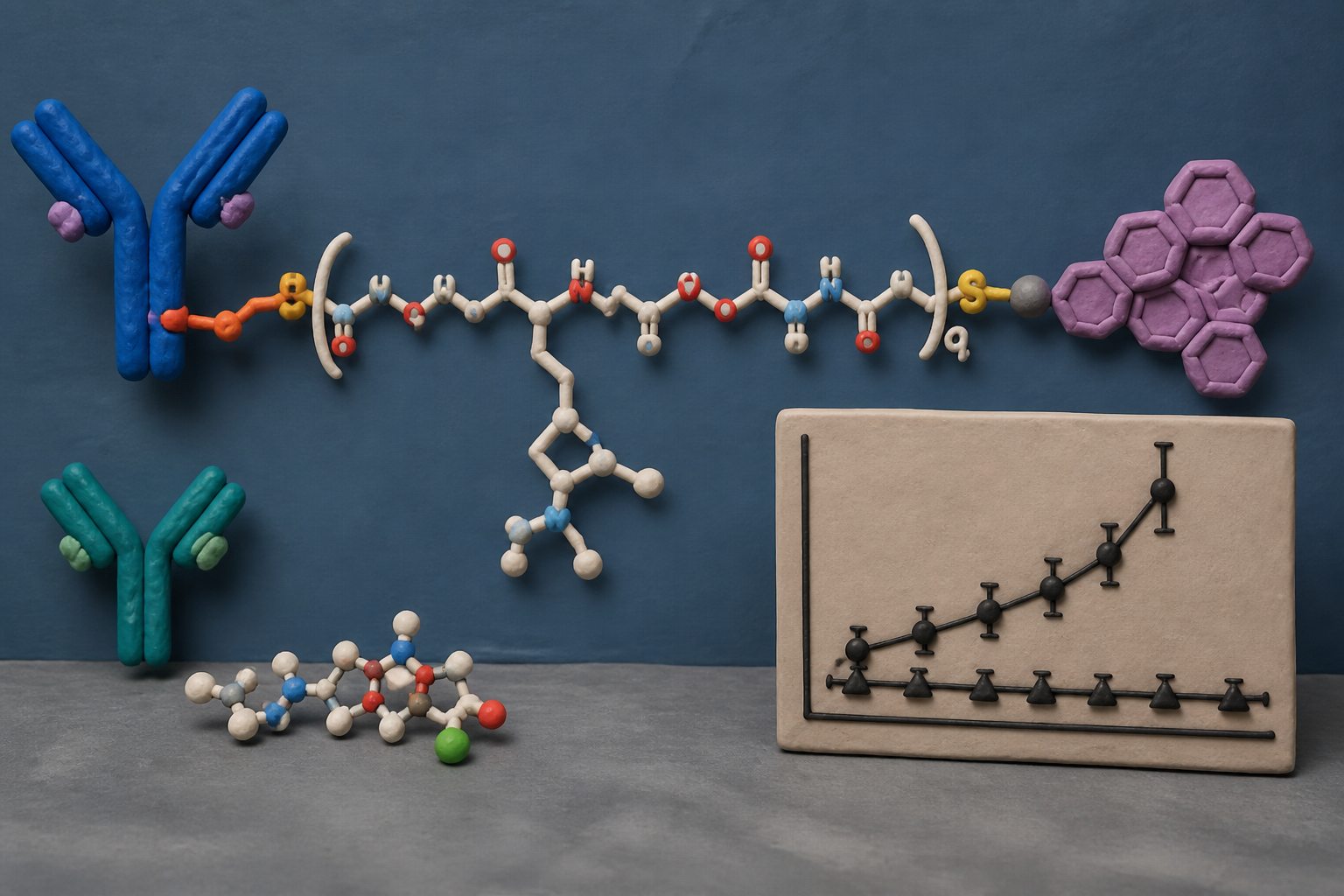
Here, treatment with an anti-B7H3 antibody-drug conjugate is given with another therapeutic agent: an anti-PD-1 antibody or antigen-binding fragment, a chemotherapy drug, or both. They can be supplied as a pharmaceutical composition or a kit.
The key point is the combination: it is not only about the B7H3-targeting medicine, but about using it alongside another cancer treatment. The record does not state how well this approach works.
Inside method
Method For Treating Cancer By Anti-B7H3 Antibody-Drug Conjugate Makes a Small Case for Better Timing is easiest to follow by holding the named details in one arrangement before asking what the whole setup means. A small technical detail can carry a surprisingly clear opinion about how a task should unfold. The route returns to the practical consequence after each fact earns its place. The published description says: administering an anti-B7H3 antibody-drug conjugate with another therapeutic agent for cancer treatment, where the other agent is an anti-PD-1 antibody or antigen-binding fragment and/or a chemotherapeutic drug, as a pharmaceutical composition or kit. Method For Treating Cancer By Anti-B7H3 Antibody-Drug Conjugate keeps the named details together, which is kinder than making readers herd them one by one.
The arrangement in the record
The terms mark positions in that arrangement rather than interrupting it. The terms become useful once their shared arrangement is kept in one clear frame. Pharmaceutical Composition means a stated mixture or material combination in the arrangement; Method means a defined sequence of steps used to carry out a task. Pharmaceutical Composition and Method have a shared frame instead of separate waiting rooms.
That relationship explains why the opening detail mattered. For Method For Treating Cancer By Anti-B7H3 Antibody-Drug Conjugate, the immediate value is clarity: the record gives a reader one concrete design choice to inspect instead of a long title to decode. The immediate reader value is a specific design choice to inspect: how pharmaceutical composition and method remain part of one account.
What the record actually names
The next step is to inspect the stated relationship between those positions. The important move is their placement: Pharmaceutical Composition and Method are not loose labels but part of one shared arrangement. That is the disclosed shared arrangement, not an extra mechanism supplied by the reader.
A comparable account has to preserve or materially change that stated relationship. Another record should be read in the same direction: does it preserve the stated link from pharmaceutical composition to method, or change the chain? The checked record identifies no named predecessor and does not establish legal novelty, infringement, market success, or a head-to-head performance result.
The reader can now remember the named details as one arrangement. Method For Treating Cancer By Anti-B7H3 Antibody-Drug Conjugate is easiest to explain as one setup that keeps pharmaceutical composition and method in the same picture. A faithful short account of Method For Treating Cancer By Anti-B7H3 Antibody-Drug Conjugate Makes a Small Case for Better Timing keeps those roles together instead of turning the invention into a list of detached nouns. The page can stay calm without a parade of arrows.
The record, briefly. US20260256932A1, “Method For Treating Cancer By Anti-B7H3 Antibody-Drug Conjugate” Describes administering an anti-B7H3 antibody-drug conjugate with another therapeutic agent for cancer treatment, where the other agent is an anti-PD-1 antibody or antigen-binding fragment and/or a chemotherapeutic drug, as a pharmaceutical composition or kit.
More angles on this
- The Interior Route to Surface CoatingAnother reading from the same A61K classification family, preparations for medical, dental or toiletry purposes.
- Timing at the Kilogram-Scale Mushroom HandoffAnother reading from the same A61K classification family, preparations for medical, dental or toiletry purposes.
- CPC A61K: Preparations for medical, dental or toiletry purposesThe official classification family this record was filed into, published in the USPTO Cooperative Patent Classification scheme.
- CPC A61P: Specific therapeutic activity of chemical compounds or medicinal preparationsThe official classification family this record was filed into, published in the USPTO Cooperative Patent Classification scheme.
- Ambient Light's Quiet Job in Facial VideoAnother reading from the neighbouring A61B classification family, diagnosis; surgery; identification.
Read around this one:Public patent recordUSPTO published figure