Machines
Quiet Alignment at the Wellhead
Start with Assembly and System: An apparatus for autonomous landfill gas monitoring and automation includes a non-invasive wellhead assembly.

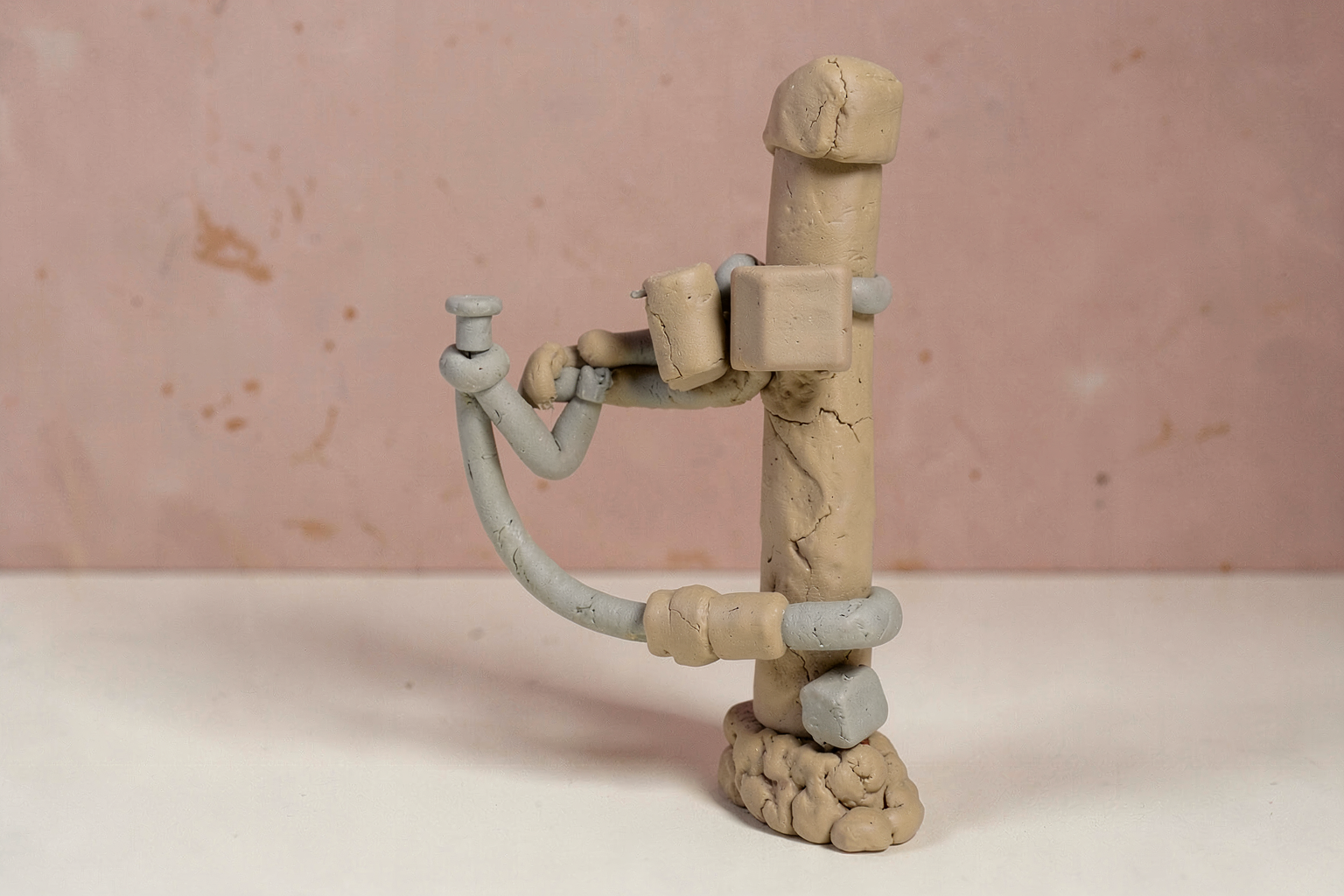
First, the setting
When household trash is buried, gases can collect beneath the ground. Site workers pay attention to those gases because they need to be handled carefully and kept moving through pipes. Managing this work helps keep the landfill orderly and reduces unwanted odors around the surrounding area.
At a landfill, a worker may walk past a row of capped pipes rising from the ground, each connected to hoses and fittings. Small devices sit at the wellheads, watching gas flow and pressure. Valves can be adjusted while equipment sends information to a nearby control area.
What changes in this design
A reader might picture checking gas conditions at a landfill wellhead and changing pressure as separate tasks, with each well considered on its own.
This system combines a non-invasive wellhead assembly, a valve adjuster that conforms to the valve, pneumatic conditioning, two-way mesh communication, and feedback used for wellfield balancing.
It shows that the focus is broader than a single valve or reading. The equipment is intended to connect monitoring and pressure adjustment across a field of landfill gas wells.
Wellhead Arrangement in One Frame
When pressure at a landfill-gas wellhead, the equipment point at a well's surface, calls for adjustment, the effect is a need for wellfield balancing, meaning bringing the field's wells into balance, and the next choice is how the parts around that wellhead answer together. The published record for US20260264122A1, dated September 10, 2026, sets that moment in a concrete little scene: a non-invasive wellhead assembly sits at the point of attention, while a valve adjuster, pneumatic conditioning, two-way mesh-network communication, and control-loop feedback form its surrounding sequence. The wellhead assembly has the air of a stage manager holding a clipboard just outside the scene. That image made me look twice because the title, Autonomous Wellhead Monitoring And Pressure Adjusting System, can sound broad until the pieces are viewed in one frame.
That frame needs a few plain definitions before it asks you to admire the machinery. Non-invasive means the wellhead assembly is described as avoiding intrusion into the wellhead; it describes how the assembly meets its setting, not a result for every setting. Conformable means capable of fitting its setting, so the conformable valve adjuster is best read as an adjusting part shaped by the valve context. Pneumatic conditioning names the handling of the pressurized-gas part of the arrangement. Two-way mesh-network communication names a connected network that can send information both directions across its paths, while control-loop feedback means information comes back into the next round of control. The valve adjuster waits as if a stage manager had penciled in its cue. The terms are unglamorous on purpose: they tell you where the alignment has to hold.
With those terms in place, the sequence described in the filing becomes easier to walk through in order. The non-invasive wellhead assembly is the contact point; the conformable valve adjuster is the part associated with adjustment; pneumatic conditioning serves the pressurized-gas portion; and two-way mesh-network communication carries the exchange across a connected network. Control-loop feedback then brings information back to the adjustment, with wellfield balancing named as the broader task. Condition, information, adjustment, and return are enough to show why the components appear together. The design lesson is not that any single label does all the work, but that each label is positioned to make the next one legible.
Feedback Replaces an Isolated Guess
Once the arrangement is read as a sequence, the contrast becomes sharper without asking the filing to prove more than it describes. A broad picture of pressure adjustment might leave you imagining an isolated adjustment followed by a separate check; this published record instead places a non-invasive wellhead assembly, a conformable adjuster, pneumatic conditioning, two-way mesh-network communication, and feedback in one stated arrangement for wellfield balancing. The control loop is less like a brass band demanding attention and more like a stage manager returning a note before the next entrance. That is a defined response replacing a guess: information is not treated as a detached afterthought, and adjustment is not treated as a self-contained gesture. What deserves attention is the declared fit among parts, not an unsupported comparison of results, speed, reach, or superiority.
Alignment Beyond the Wellfield
That contrast leads to a practical test you can take beyond this one wellhead: when a system is meant to respond, can you point to the path from condition to adjustment and then back again? The first transferable observation is about interfaces. A part described as non-invasive or conformable asks you to notice how it meets an existing setting, rather than treating fit as a detail to settle after the system has been imagined. The second is about communication. Two-way network movement becomes meaningful when its return path belongs to the stated control sequence, rather than ending as an unconnected signal. A librarian could approve of that restraint: every signal has a shelf, and every shelf leads somewhere.
That test, in turn, keeps attention on alignment rather than spectacle. What I think is worth carrying forward is the modest question behind the apparatus: does each part have a clear role in the next response, and can you explain that handoff without filling the gaps with faith? The published record gives one bounded answer through its wellhead assembly, valve adjuster, pneumatic conditioning, two-way mesh-network communication, and control-loop feedback for wellfield balancing. It does not ask you to turn those names into claims about outcomes beyond the filing. When you encounter any connected arrangement, you can look for the same three beats, condition, defined response, practical return, and use them to decide whether the pieces truly fit.
The record, briefly. US20260264122A1, “Autonomous Wellhead Monitoring And Pressure Adjusting System” An apparatus for autonomous landfill gas monitoring and automation includes a non-invasive wellhead assembly, a conformable valve adjuster, pneumatic conditioning, two-way mesh-network communication, and control-loop feedback for wellfield balancing.
More angles on this
- Inside techniquesAnother reading from the same E21B classification family, earth or rock drilling; obtaining oil, gas, water, soluble or meltable materials or a slurry of minerals from wells.
- Look-Ahead Vsp Elastic Waveform Inversion Treats the Relationship as the PointAnother reading from the same E21B classification family, earth or rock drilling; obtaining oil, gas, water, soluble or meltable materials or a slurry of minerals from wells.
- CPC B09B: Disposal of solid waste not otherwise provided forThe official classification family this record was filed into, published in the USPTO Cooperative Patent Classification scheme.
- CPC E21B: Earth or rock drilling; obtaining oil, gas, water, soluble or meltable materials or a slurry of minerals from wellsThe official classification family this record was filed into, published in the USPTO Cooperative Patent Classification scheme.
- Splitting Appliance Control Between Physical Safety and an Operating SystemAnother reading from the neighbouring G05B classification family, control or regulating systems in general.
Read around this one:Public patent recordUSPTO published figure