Machines
The Handoff a Timing System Declines
Four contact pads will soon decide official cube-solving starts, bringing a patent family, a loophole, and a $30 timer into view.

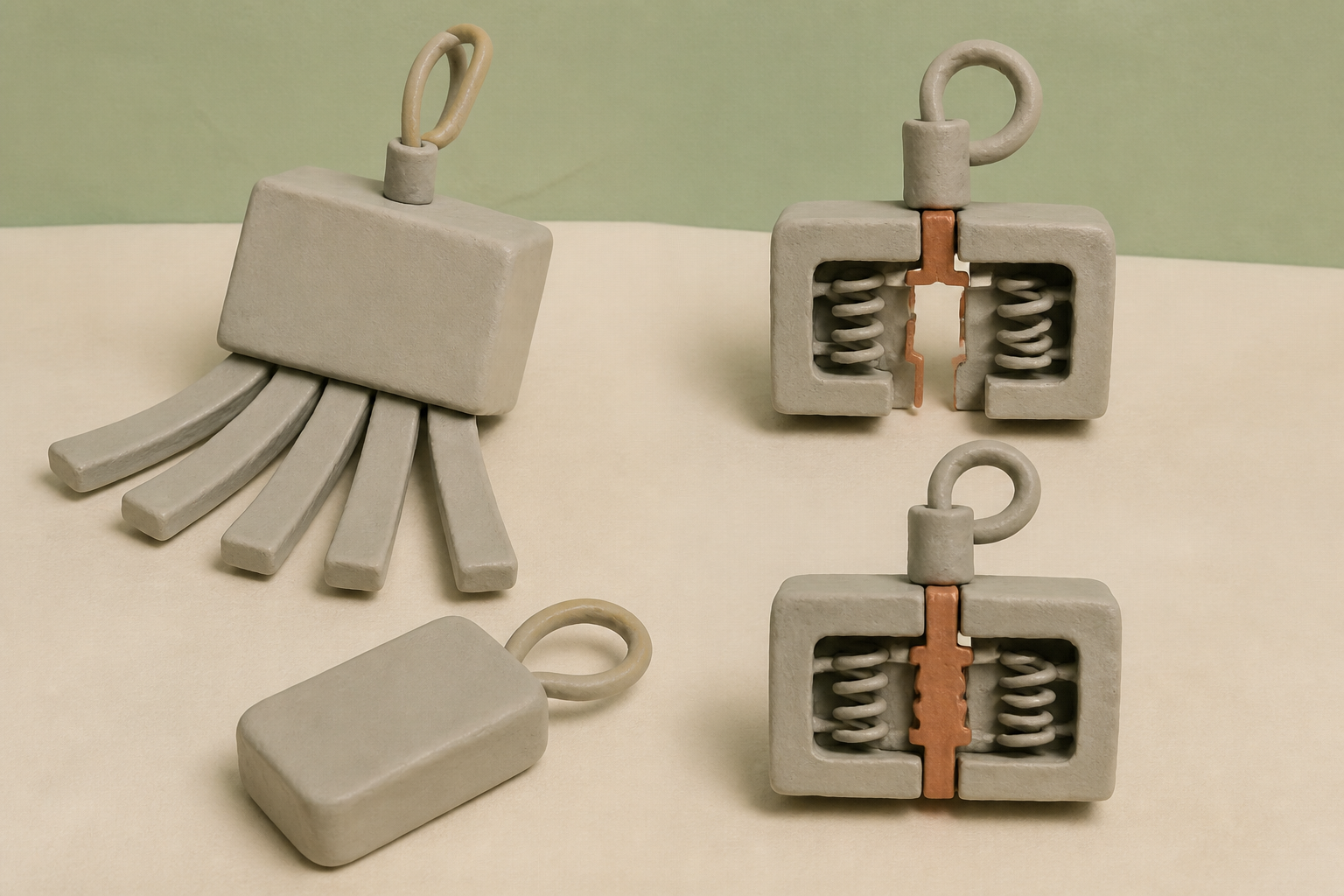
What changes in this design
Race timing can depend on a human judgment about exactly when a timing moment occurs. That leaves room for error when deciding when to mark the time.
It uses a task beginning or ending, a change in a sensing connection, or removal of a sensor to create a timing point.
The time mark can be tied to something that happens in the competition or sensing setup. This matters because the system is intended to remove human error and judgment variables from race timing.
Four pads, January 2027
The number that caught my attention was four. On January 2, 2027, the World Cube Association will require every official speedsolving attempt to use the Speed Stacks G5 StackMat Pro Timer in four-pad mode. A change that sounds tiny will decide whether a competitor is allowed to begin an official solve.
The association says two-pad timers can leave some infractions invisible to a live judge, while frame-by-frame video review is slow and depends on good footage. Four-pad timing adds smaller thumb sensors to the familiar hand pads, making it much harder for a competitor to slide into position while retaining partial contact. The WCA also says it will fund and supply the required equipment in regions that lack it. That support matters, because a rule about timing hardware can otherwise become a rule about who can afford to compete.
The two-pad start
This is not a general-purpose upgrade. It is a decision to define a fair start through a particular physical gesture: all four contact points must be released. The G5 product page puts its retail price at $29.99 and promotes its four-pad system as a way to prevent a class of cup-stacking infractions. In the United Kingdom, one speedcubing retailer lists the mandated unit at £32.95, against £11.95 and £9.95 for two rival timers.
The price gap caught my attention because the same retailer says discussion around Speed Stacks patents has kept those cheaper timers from approval. That is a report of community concern, not proof that a patent legally requires the WCA's decision, and I cannot treat it as more than that. Still, the practical result is unusually clear: the rulebook will favor one device's way of measuring a start.
A recurring hardware problem
StackMat timing has been shaping competition rules for years. In 2021, the WCA approved the G5 for its 2022 regulations and retired the older Generation 2 timer for 2023 after concerns about malfunctions, giving organizers roughly a year to replace equipment. Histories of the devices also record display inconsistencies in one generation and stop or reset failures in another. Hardware is not a neutral backdrop here. It keeps becoming part of the sport's definition of a valid result.
That history makes the four-pad mandate harder to dismiss as a simple anti-cheating fix. A forum post describes a two-year-old G5 displaying "888:88.888," then shutting down and resetting itself into four-pad mode; replies point toward battery or hardware trouble, without identifying a confirmed repair. One report does not establish a widespread defect, but it reminds me that a system built to remove human judgment can introduce new judgment calls when the machine itself behaves oddly.
The Goers filings
This is where US20260257144A1, Timer Signaling System And Methods, enters the story. It describes competition timing that can create a timing point from a task's start or finish, a change in a sensing connection, or removal of a sensor. Its purpose is plain: reduce the human error and judgment involved in race timing. Four-pad starts are a close fit for that ambition, because the system records contact instead of asking a person to decide what a competitor's hands were doing.
An earlier patent, US10722776B1, filed in 2019, names Aaron Goers and John Lawrence Goers and was assigned to Speed Stacks. It covers multiple ergonomic trigger points that require simultaneous user contact to start or stop a timer. The new filing names the same father-and-son inventors and deals with the same basic problem. I could not directly retrieve the new filing's assignee field, so I will not present it as confirmed proof that this exact publication governs the current rule change. The matching inventors, subject matter, and timing make the connection strong, but still unconfirmed.
Where this leaves things
None of this proves that patent licenses compelled the WCA to select this timer, or that the association chose it for any reason other than enforcing a cleaner start. That distinction matters to me. Yet the rule's effect is already visible: from January, official competition will rely on a $29.99 four-pad device, while lower-cost alternatives remain outside the approved system.
Track offers the larger precedent. Electronic chip timing existed for years before record rules caught up, and hand-timed sprints were found to run about 0.24 seconds faster than fully automatic times because people react late to the starter's gun. We usually welcome the machine when it removes that kind of discrepancy. I read this filing in that tradition, but with a caution: better measurement is not automatically better governance. The case for four pads is persuasive; the case for letting one patented device become the sole practical path deserves just as much daylight.
Sources
Reporting for this piece drew on the published filing and the references below.
- Timer Signaling System And Methods
- Adoption of 4-Pad Timing (August 2026)
- Updating the Official List of Approved Timers (October 2021)
- US10722776B1 - Timing Apparatus for Timing Competitions
- G5 StackMat Pro Timer
- G5 stackmat issues
- 4 Pad mode to be made mandatory for WCA solves next year
- Why 0.24 Seconds is Added to Hand Times
The record, briefly. US20260257144A1, “Timer Signaling System And Methods” Competition timing systems use an event such as task commencement or completion, a sensing-connection change, or sensor removal to create a timing point, enabling removal of human error and judgment variables from race timing.
More angles on this
- CPC A63K: Racing; riding sports; equipment or accessories thereforThe official classification family this record was filed into, published in the USPTO Cooperative Patent Classification scheme.
- Fog, Turns, and the Timing of a HandoffAnother reading from the neighbouring A63H classification family, toys, e.g. tops, dolls, hoops or building blocks.
- Where Upward Assistance Enters an Exercise-Machine LiftAnother reading from the wider A61H classification family, physical therapy apparatus, e.g. devices for locating or stimulating reflex points in the body.
- When a Squat Machine Treats the Handoff as the Main EventAnother reading in the same Machines category on this site.
Read around this one:Public patent recordUSPTO published figure