Field Notes
The Interface Before the Promise
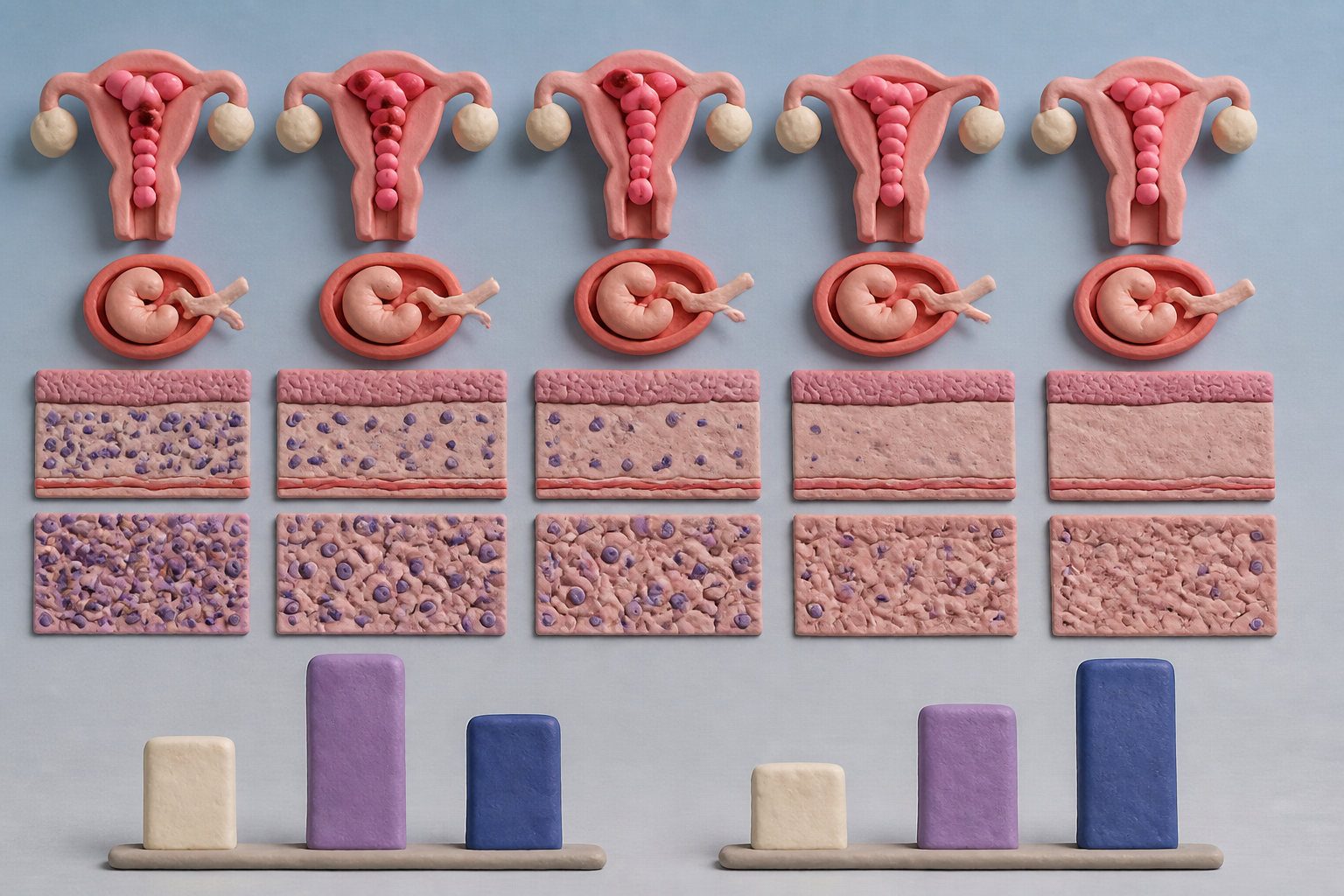
Maternal-Fetal Interface is this is the area in pregnancy where the mother's body and the developing embryo come into contact.

First, the setting
Trying to build a family can be emotionally demanding when pregnancies end unexpectedly. People and their care teams look for possible reasons, offer support, and explore ways to protect health during pregnancy. This work belongs to the everyday world of reproductive care, where uncertainty can leave families seeking clearer options.
In a fertility clinic or prenatal care office, a patient may discuss options with a clinician, receive written directions, and take home a small bottle or prescribed medicine. At home, routines may include taking a capsule, attending follow-up visits, and sharing concerns about symptoms or pregnancy changes with the care team.
What changes in this design
For repeated miscarriages with no identified cause, the record does not say what prevention or treatment ordinarily involves.
Instead, it describes using resveratrol to prepare a product. It reports mouse findings of reduced embryo resorption, improved inflammatory response, increased Sirt1, and prevention of aseptic inflammation where mother and embryo meet.
That distinction matters because the reported observations are in mice. Whether similar results occur in people, or how a product would be used, is not stated.
Resveratrol at One Interface
When you encounter language about a product for prevention or treatment, you might assume it begins with the broad problem it hopes to address. It starts elsewhere. Publication US20260256713A1, dated September 3, 2026, carries the title Use Of Resveratrol In Preparation Of Product For Preventing And/Or Treating Unexplained Recurrent Spontaneous Abortion. Yet the published record concentrates attention on the maternal-fetal interface, the named meeting point between maternal and fetal sides. The setup feels less like a universal answer and more like a clipboard placed at one very specific doorway.
That narrow picture gives the mechanism question its frame. In mice, the filing reports reduced embryo resorption, improved decidual inflammatory response, increased Sirt1, and prevention of aseptic inflammation at the maternal-fetal interface. The wording has the air of a careful stage manager, putting the interface onstage without pretending it is the entire play. What made me look twice was not a grand leap but the stack of four reported observations, each attached to a limited setting.
Those observations need their labels kept in view. Here, embryo resorption is the name applied to a mouse outcome; a decidual inflammatory response is the filing's named inflammation-related response; Sirt1 is the label applied to a reported increase; and aseptic inflammation means inflammation without infection. These are not interchangeable dials on a dashboard. That is a transferable reading habit: let each term retain its job until the filing itself connects it to another.
Mouse Signals and Product Purpose
Once those terms do their separate work, the stated purpose comes into focus. The filing describes resveratrol's use to prepare a product for preventing and/or treating unexplained recurrent spontaneous abortion. Its product language arrives as if a restrained committee had insisted on a label before the details began to wander. For you, the practical diagnostic is to mark that purpose sentence, then keep the reported mouse setting beside it rather than quietly folding one into the other.
That separation calls for a distinction, not deflation. The setting is a mouse report involving embryo resorption, inflammatory response, Sirt1, and aseptic inflammation at an interface; the promise is the stated preparation of a product for a named prevention-and-treatment purpose. They are related. They are not the same kind of statement. This is the everyday systems question of whether a label is being asked to carry more than the panel beneath it shows.
Labels Before Promises
That modest revision is why I think this deserves your attention. Try a practical reading experiment: cover the sentence about preparing a product, note what was reported, where it was reported, and which terms do distinct work, then uncover the purpose and notice the category change. The old default deserves a concise challenge: do not let a label carry more than the panel beneath it shows.
The record, briefly. US20260256713A1, “Use Of Resveratrol In Preparation Of Product For Preventing And/Or Treating Unexplained Recurrent Spontaneous Abortion” The abstract discloses use of resveratrol to prepare a product for preventing and/or treating unexplained recurrent spontaneous abortion, reporting in mice reduced embryo resorption, improved decidual inflammatory response, increased Sirt1, and prevention of aseptic inflammation at the maternal-fetal interface.
More angles on this
- The Interior Route to Surface CoatingAnother reading from the same A61K classification family, preparations for medical, dental or toiletry purposes.
- Timing at the Kilogram-Scale Mushroom HandoffAnother reading from the same A61K classification family, preparations for medical, dental or toiletry purposes.
- CPC A61K: Preparations for medical, dental or toiletry purposesThe official classification family this record was filed into, published in the USPTO Cooperative Patent Classification scheme.
- CPC A61P: Specific therapeutic activity of chemical compounds or medicinal preparationsThe official classification family this record was filed into, published in the USPTO Cooperative Patent Classification scheme.
- The Small Moment Between Power StatesAnother reading from the neighbouring A61B classification family, diagnosis; surgery; identification.
Read around this one:Public patent recordUSPTO published figure