Machines
The Signal Behind a Disappearing Lottery Code
Details Display Device is the screen or other display where information about an ordered draw lottery ticket, including its code, is shown.

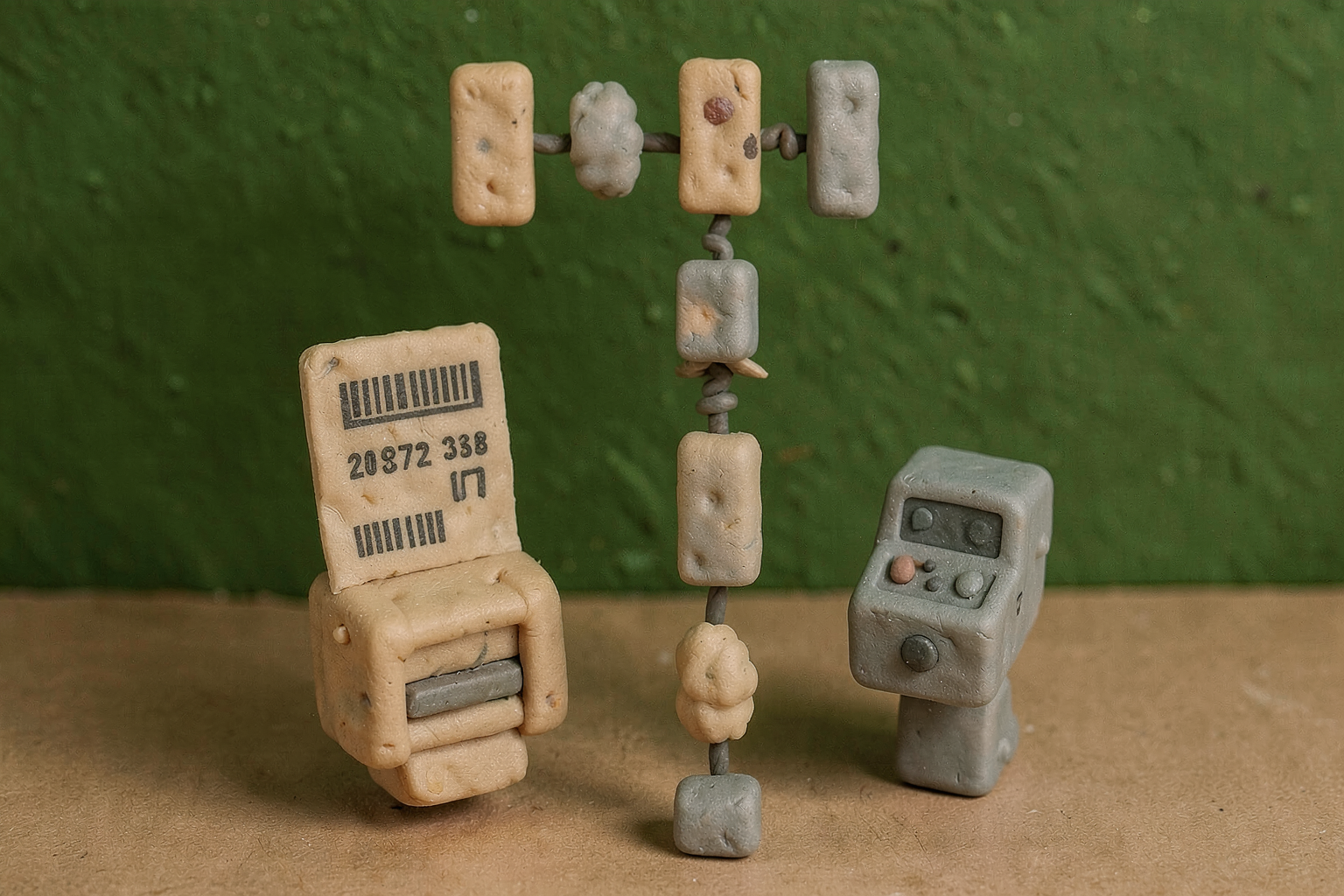
First, the setting
Lottery games often fit into ordinary errands: someone buys a ticket at a counter and waits for a later drawing. Shops need a clear way to handle requests, print slips, and keep the exchange between customer and clerk understandable.
At a busy shop counter, a clerk works at a terminal while a small printer feeds out a paper ticket. A code may appear on a nearby screen during the handoff, then vanish after the printer has finished.
What changes in this design
A reader might expect a ticket code to stay on a screen until a person clears it or until another separate screen-update step occurs after printing.
Here, the server displays the code for an ordered draw lottery ticket and removes it when a printer sensor indicates that the ticket has printed.
The key point is what triggers the screen change: the indication that printing occurred. That tells the reader when the displayed code is meant to disappear.
The Code and the Sensor
A code sits on a wager details display device, then it is removed after a printer sensor indicates that an ordered draw lottery ticket has printed. The obvious headline in US20260263910A1, published September 10, 2026, is a lottery ticket selling system with a sensor connected to that disappearance. The more useful question is narrower: which signal is allowed to change what you see when an order has crossed from pending information to printed ticket? That physical-seeming detail made me look twice because it puts the decision at the point where a machine reports printing, not simply at the moment a code has been shown. It is a small physical detail, but it steers attention away from the code's mere presence and toward the condition under which that presence ends.
That question needs its terms before it can carry much weight. The filing describes a ticket courier server, meaning the server in the arrangement that displays the code for an ordered draw lottery ticket. It describes the wager details display device as the place where that code appears, and a printer sensor as the component whose indication that the ticket printed prompts the server to remove it. A draw lottery ticket is the ordered ticket at issue here; the patent does not ask you to imagine a general dashboard, just this display-code and printing-signal arrangement. Once those roles are separated, the picture becomes almost domestic: a code waits on a screen while the printing indication arrives. None of those names has to do much expressive work on its own. Their value is in the sequence the filing gives them: display first, sensing next, removal afterward. That sequence is why the screen should not be read as a standalone object. It is the visible end of a relationship the patent specifies.
What Printing Changes
That waiting code sets up the consequence: the display changes when the printing indication is received. In everyday language, the mechanism is a short chain. The ticket courier server displays the code; the printer sensor indicates the draw lottery ticket printed; the server causes the code to be removed from the wager details display device. The printer sensor behaves less like a witness to a sale and more like a stage manager lowering a cue card. What matters is not the theatrical flourish, but the ordering: the signal supplies the condition for the visible change. You can therefore see a described relationship between an event in the printing step and a choice on the display, rather than a screen change treated as detached decoration. That sentence-like sequence prevents the detail from dissolving into general talk about selling or printing. The filing does not need a grand theory to make its point; the stated relationship does the work on its own.
A Better Comparison Question
That chain is the point at which a comparable published record becomes easier to read. A broad version of the same task might say that a system displays order information and later clears it. This filing describes a more bounded relationship: the code is displayed by the ticket courier server and removed when the printer sensor indicates printing. The contrast is one relationship becoming visible, between the printing indication and the display decision. The code has the air of a library slip that leaves the desk once the book is in hand. That image should not be stretched into an assertion about anything beyond the described arrangement; it simply keeps your attention on the specific trigger instead of on the generic fact that a screen eventually changes. That is a useful discipline when the title of a publication sounds larger than the visible action it contains. The scope of the editorial question can stay small: which named event makes a particular display update occur?
Once that contrast is clear, there are two transferable observations worth holding onto. First, when a display is meant to reflect a real-world step, ask what concrete signal is being treated as the condition for that step. Here, the filing makes the printer sensor's indication that the ordered draw lottery ticket printed the condition that leads to code removal. Second, ask whether the visible response is stated just as plainly as the signal. Here, removal of the code is paired with that indication, and the server is the actor described as causing it. Those questions help you distinguish a system that merely has several pieces from one whose pieces have an explicit handoff between observation and decision. The first observation is concrete enough to carry elsewhere: identify the event in language someone can locate in the workflow. The second is equally concrete: identify the display consequence in language someone can picture.
Those two observations lead to a final, modest question for you: what would remain uncertain if the printing signal were not named? In this filing, naming it lets the reader follow the path from display to indication to removal without pretending that the patent says more than it does. I think that restraint is worth attention because many system descriptions make an outcome visible while leaving the deciding event foggy. This one brings the event forward. The handoff is less like a grand reveal and more like a quiet clipboard tick. Return, then, to the first thing you can picture: a code on a wager details display device, waiting until the printing indication arrives before it leaves the screen.
The record, briefly. US20260263910A1, “Lottery Ticket Selling System Having A Lottery Ticket Printer Sensor That Detects The Printing Of Draw Lottery Tickets By A Draw Lottery Ticket Printer” A ticket courier server displays a code for an ordered draw lottery ticket on a wager details display device and, when a printer sensor indicates the ticket printed, causes the server to remove that code from the display.
More angles on this
- When a Rounded Base Takes the HandoffAnother reading from the same A63F classification family, card, board, or roulette games.
- When the Board Carries the MoveAnother reading from the same A63F classification family, card, board, or roulette games.
- CPC A63F: Card, board, or roulette games; indoor games using small moving playing bodies; video games; games not otherwise provided forThe official classification family this record was filed into, published in the USPTO Cooperative Patent Classification scheme.
- The Small Condition Beneath a Cycling System's Big SwitchAnother reading from the neighbouring A63B classification family, apparatus for physical training, gymnastics, swimming, climbing, or fencing; ball games; training equipment.
- When One Signal Sets the Filter BandAnother reading from the wider A61B classification family, diagnosis; surgery; identification.
Read around this one:Public patent recordUSPTO published figure