Machines
What a Bladder Estimate Brings to Its Own Evidence
System is here, it means the monitor, its estimate-making model, and the ways it checks and improves that estimate, working together to gauge bladder fluid.

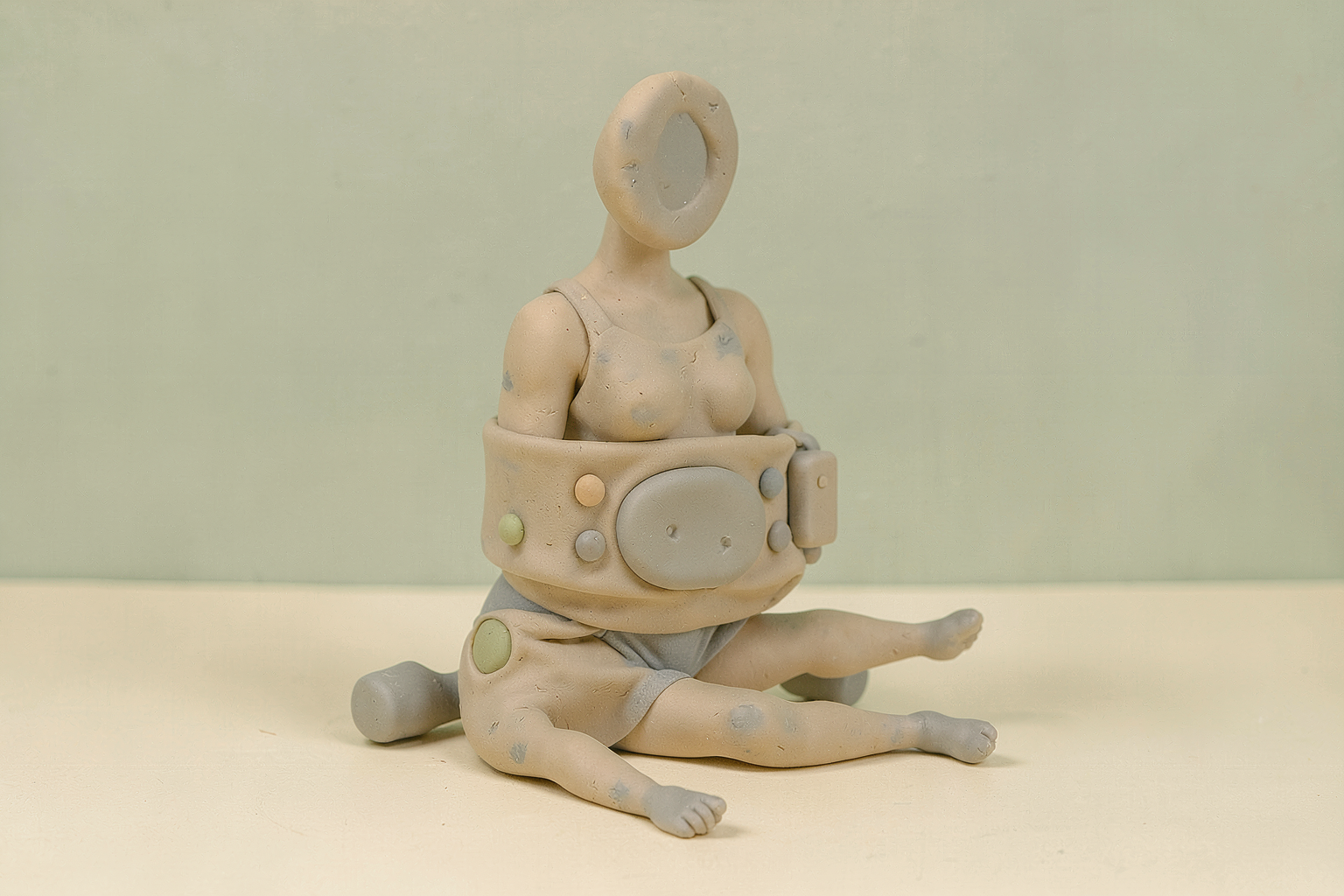
First, the setting
People sometimes have trouble sensing when their bladder is filling or emptying, especially during illness, recovery, or limited mobility. Caregivers and clinicians may need a clearer picture of what is happening without making someone repeatedly get up, undress, or undergo an uncomfortable procedure. That makes gentle ways of checking bladder fullness part of everyday care.
In a hospital room, rehabilitation clinic, or home-care visit, a clinician may place a small sensor against a person's lower abdomen while the person rests in bed or sits in a chair. A screen can display a reading for the care team, who may use it alongside the person's comfort, bathroom routine, and other observations.
What changes in this design
How bladder volume is ordinarily determined is not stated. The record identifies user input, automatic urine-output monitoring, ultrasound, and pressure inside the bladder as ways to check estimated volumes.
This system measures electrical impedance in the bladder region and feeds that into a model that estimates fluid volume. It adjusts the estimate for total body water measured in nearby tissues, then can train the model with volume checks.
The key point is that the system is intended to produce an estimate without putting an instrument into the bladder. It also does not treat one reading as final: the model can be checked and trained against other volume information.
Evidence Around Volume Estimates
At the point when you need a bladder-volume estimate, the ordinary assumption is simple: a monitor gives a number, and you decide what to do with it. This published application asks for more. Publication US20260262984A1, titled Self-Learning And Non-Invasive Bladder Monitoring Systems And Methods and published September 10, 2026, describes a bladder monitoring arrangement that estimates fluid volume in a patient's bladder region while also providing routes for adjustment and checking. Rather politely, the arrangement has the air of a restrained committee asking each estimate to bring its notes before it takes a seat. The turn worth noticing is not a promised result; it is a design choice about what evidence should accompany a number before you rely on it.
That purpose becomes clearer if you picture not an anatomical diagram but a small chain of evidence around a bladder-region estimate. The filing describes measuring the electrical impedance of the patient's bladder region and using an impedance-to-bladder-volume model to estimate fluid volume there. It also describes adjusting that model for measured total body water in the surrounding tissues. You do not need to treat those terms as a promise of certainty to see the arrangement: a number begins with a measurement, moves through a model, and is not left entirely alone when information about surrounding tissue water is measured. What made me look twice was that the estimate is presented as something with context, not merely an answer detached from the conditions around it.
That picture needs a few ordinary-language labels before the machinery can be inspected. Electrical impedance is a measure of how a region opposes electrical current, while an impedance-to-bladder-volume model is the rule that turns such a measurement into a volume estimate. Measured total body water, as described here, concerns water in the tissues surrounding the bladder region and is used to adjust that rule. Measured total body water enters with the modest insistence of a stage manager checking the surrounding set before the central scene begins. The useful distinction remains narrow: the application describes an adjustment to an estimate, rather than asking you to imagine one electrical reading as a complete account by itself.
Checks That Train the Model
Once those terms are in place, the practical hinge is the training unit. The filing describes it as checking volumes and training the model, with the listed checking sources being user input, automatic urine output monitoring, ultrasound, or intrabladder pressure, meaning pressure measured inside the bladder. Here, training means that volume checks are used to adjust the model. That is less like a device issuing a decree and more like a librarian keeping the estimate's place with a careful bookmark. The evidence worth your attention is therefore not only the impedance reading, but also the stated presence of a way to compare volume estimates against volume checks.
Because that checking route follows the initial estimate, the contrast with the old default is modest but specific. The broad version of the task is measurement in, number out; this filing describes measurement through a model, an adjustment for measured surrounding-tissue water, and a training unit that checks volumes. The difference is not a basis for declaring a winner. It is a revision in what can revise the estimate before action. Two transferable observations travel well beyond this particular setting: a system is easier to inspect when its adjustment input is named separately from its primary signal, and a system remains more legible when its mapping can be checked against another stated source of evidence. Those are everyday design questions, whether you are looking at an instrument panel, a forecast, or a form that offers a recommendation.
A Better First Question
That modest revision brings the attention back to the person facing the number. I think the published record is worth your attention because it makes evidence part of the arrangement instead of treating it as an afterthought. The takeaway stays bounded: this filing describes impedance measurement, a volume model adjusted for measured total body water in surrounding tissues, and listed ways for a training unit to check volumes and train that model. It does not require a grand conclusion to change the question you bring to such a system. Ask not only for the number. Ask what checked it before you act.
The record, briefly. US20260262984A1, “Self-Learning And Non-Invasive Bladder Monitoring Systems And Methods” A bladder volume monitoring system measures the electrical impedance of a patient's bladder region and estimates the fluid volume there using an impedance-to-bladder-volume model, which it adjusts for measured total body water in the surrounding tissues. A training unit (user input, automatic urine output monitoring, ultrasound, or intrabladder pressure) checks the volumes and trains the model.
More angles on this
- When One Signal Sets the Filter BandAnother reading from the same A61B classification family, diagnosis; surgery; identification.
- A Wearable Heater That Waits for Two Switches Before It Warms Your SkinAnother reading from the same A61B classification family, diagnosis; surgery; identification.
- CPC A61B: Diagnosis; surgery; identificationThe official classification family this record was filed into, published in the USPTO Cooperative Patent Classification scheme.
- When a Delivery Composition Learns to WaitAnother reading from the neighbouring A61K classification family, preparations for medical, dental or toiletry purposes.
- The Small Condition Beneath a Cycling System's Big SwitchAnother reading from the wider A63B classification family, apparatus for physical training, gymnastics, swimming, climbing, or fencing; ball games; training equipment.
Read around this one:Public patent recordUSPTO published figure