Machines
What the Bag's Fill Level Changes Upstream
A buffer system mixes concentrate with water, checks the recipe, and lets storage bags call for refills. The inclined shelves matter more than you'd expect.

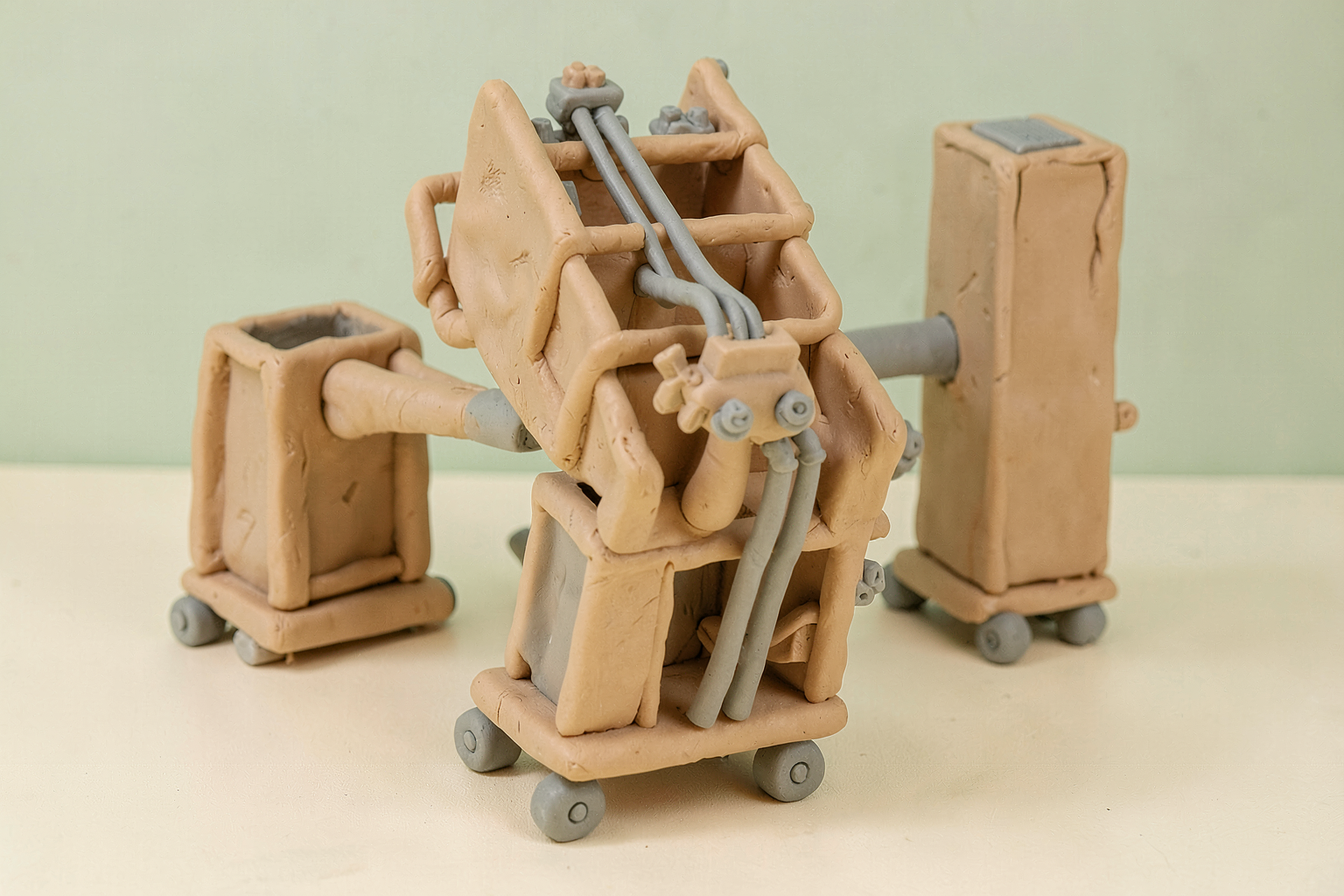
First, the setting
Bioprocessing operations use multiple buffer solutions during steps such as chromatography and tangential flow filtration. Preparing, storing, and delivering those liquids requires space as well as coordination, especially when different solutions are needed at different times.
Buffer handling connects preparation equipment, tubing, storage containers, and downstream processing equipment. Operators need the intended solution available in sufficient quantity. Measurements of solution characteristics and stored volume answer different practical questions about what is ready and how much remains.
What changes in this design
The patent describes preparing large quantities of full-strength buffer, storing them in totes, and moving those totes to the process suite, with load cells commonly measuring stored liquid.
The proposal combines sequential dilution, sensor-based recipe checks, diversion to waste during stabilization, and individual bag-level feedback that triggers production and replenishment.
Preparing buffer as reserves fall could reduce the inventory awaiting use, but the shared dilution equipment must complete flushing and recipe changes before any required reserve runs out.
The Water Takes Up the Room
A 200-liter tote of concentrate can supply the ingredients for 2,000 liters of finished buffer at tenfold dilution. The water still has to arrive, but it doesn't all have to wait around in prepared solution. That's the space problem that interests me in this buffer-management proposal: when should a bioprocessing facility turn concentrated liquid into a much larger inventory?
The application describes the conventional alternative as preparing large quantities of full-strength buffer, storing them in totes, then transporting them to the process suite. Its proposed arrangement combines concentrated supplies, a dilution skid, and stacked bags holding smaller reserves of prepared buffer. The bags feed downstream operations such as chromatography or tangential flow filtration. Water is an impressively bulky ingredient to keep waiting for its appointment.
Published September 10, 2026, US20260264072A1 is titled Buffer Management For Bioprocessing System. Its most interesting move, to my eye, is connecting the question of what to mix with the question of how much is already waiting. Patent description
Two Pumps Set the Recipe
The illustrated manifold, the connected network through which liquid travels, accepts up to six different concentrates and a supply of water for injection, abbreviated WFI. Valves select a concentrate. Separate pumps move that concentrate and the water toward a T-shaped mixing junction. The controller adjusts pump speed or displacement to change their proportions, with described concentrate strengths commonly ranging from five to twenty times the desired final concentration.
I like that the recipe doesn't end at a commanded pump ratio. Downstream conductivity and pH sensors send measurements back to the controller, which checks them against the selected recipe's tolerances and can adjust the pumps. A pressure sensor supplies a separate operating measurement. Getting the proportions commanded and checking the resulting liquid are distinct jobs here.
The single-use manifold includes replaceable pump heads that connect to pump bodies housed in the skid cabinet. External pinch valves close flexible tubing by squeezing it. After use, the manifold can be removed and replaced. That division gives the proposal a concrete boundary between the equipment doing the driving and the replaceable assembly carrying the liquid.
The Drain Gets the First Batch
Before a storage bag receives buffer, the proposed sequence flushes the manifold with WFI while isolating the concentrate supplies and receiving bags. Initial startup also primes the water flow so it reaches a steady state before concentrate enters. Mixing then begins, but the first output goes to waste until the controller determines that the recipe is within tolerance. The bag gets dinner only after the drain has tasted the cooking.
A second conductivity sensor sits in the waste line, and this is the detail I'd keep in any explanation of the invention. The liquids can continue mixing after passing the first sensor. Measuring farther along gives the controller another basis for deciding when acceptable buffer has arrived and when to switch flow from waste to the designated bag.
That sensor also supports checking the incoming water and deciding when a flush has sufficiently cleared the previous buffer. To change recipes, the system flushes, stabilizes the next mixture, and selects its receiving bag. Because the manifold already contains liquid, the description says another priming step can be unnecessary. I find that distinction more revealing than a broad promise of automation: startup and changeover ask different things of the plumbing. Operating sequences
The Shelf Helps Read the Bag
The receiving container is flexible, which makes its support part of the measurement arrangement. In one embodiment, a two-panel bag rests on a shelf inclined at 25 degrees. Gravity gathers liquid toward the lower end; as more enters, the liquid extends farther up the bag. Hooks at the upper edge and a cradle at the lower end help hold it in position.
A capacitive sensor strip runs along the shelf, potentially beneath a support panel described as nominally 2 millimeters thick. The nearby liquid changes the sensor's electrical response, allowing it to generate a fill-level signal without putting the strip inside the bag. A steeper shelf can improve resolution for smaller volume changes, according to the description. Here the furniture has a measurement job.
This is where the proposal earns my attention beyond ordinary inventory control. Bag geometry, shelf angle, and sensor placement work together to make the liquid level detectable. Other embodiments use discrete sensors at selected levels or a load cell that converts weight into volume. The inclined shelf and capacitive strip are a particular implementation, rather than requirements of every version.
A Refill Request Travels Upstream
The bag's level signal tells the controller when to stop producing a buffer at a predetermined maximum and when to restart its filling sequence below a threshold. The refill target can differ from the maximum. The description contrasts topping up within a narrow band, such as 40/45 liters, with allowing a reserve to fall to a nominal 10 liters before replenishment while downstream equipment continues drawing.
These are proposed operating arrangements, not demonstrated performance results. The application doesn't establish measured savings in space, water, or discarded buffer, or validate uninterrupted delivery under competing demands. I'd want those questions tested together: a shared dilution path must spend time flushing and stabilizing while the bags continue supplying their respective processes.
That scheduling tradeoff is the part I would press hardest. The system couples a recipe-checking loop with an inventory loop, using stored reserves to bridge sequential preparation. Its practical appeal rests on whether those reserves last long enough for the skid to finish the buffer it's making and reach the next one that needs replenishing. Level-control description
The record, briefly. US20260264072A1, “Buffer Management For Bioprocessing System” A buffer-management system uses independently controlled concentrate and WFI pumps with a replaceable manifold to prepare selected buffer recipes. Conductivity and pH feedback support mixture adjustment and diversion to waste until specifications are met. Valves then direct buffer to designated surge bags. Bag-level feedback stops production at a maximum and triggers replenishment below a threshold. Embodiments measure flexible bags on inclined shelves using capacitive sensors, while a waste-line conductivity sensor supports stabilization and flushing decisions.
More angles on this
- Portable Nucleic Acid Detection Device, System And Method Treats the Relationship as the PointAnother reading from the same B01L classification family, chemical or physical laboratory apparatus for general use.
- Centrifugal Microfluidic Analysis Chip Marks a Pause Worth NoticingAnother reading from the same B01L classification family, chemical or physical laboratory apparatus for general use.
- CPC B01L: Chemical or physical laboratory apparatus for general useThe official classification family this record was filed into, published in the USPTO Cooperative Patent Classification scheme.
- CPC G01F: Measuring volume, volume flow, mass flow or liquid level; metering by volumeThe official classification family this record was filed into, published in the USPTO Cooperative Patent Classification scheme.
- A Stack of Evidence Before the DecisionAnother reading from the neighbouring B01D classification family, separation.
Read around this one:Public patent recordUSPTO published figure