Machines
When a Chamber Leaves Room for Judgment
The central pairing is Environmentally Controlled Chamber with Psychological Data: A method controls an environmentally controlled chamber using an infrared heater.

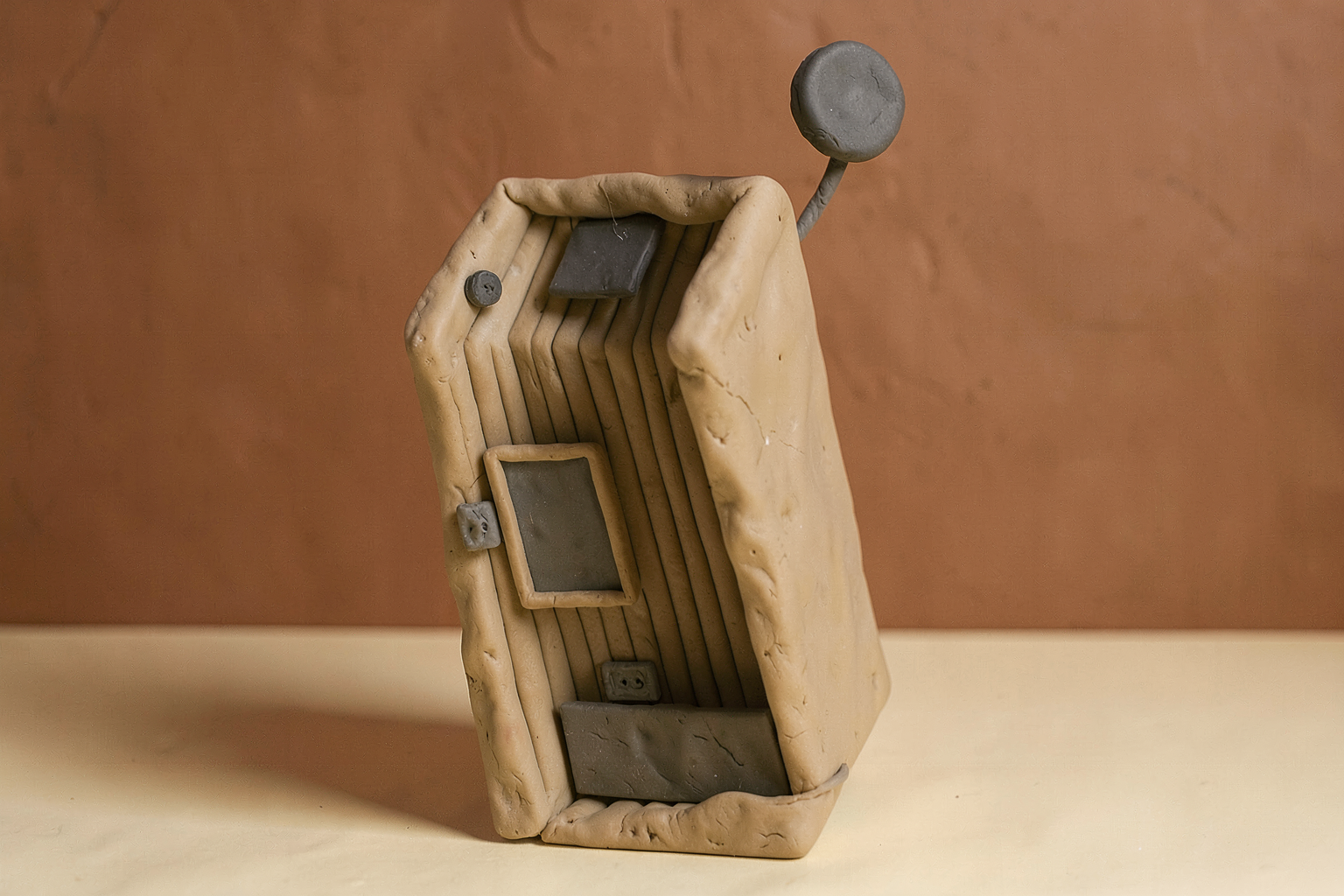
First, the setting
People often set aside time to exercise, stretch, cool down, or simply rest after a demanding day. Some prefer a quiet, private space with warmth, sound, and guidance, while others need staff or a caregiver nearby to keep an eye on comfort and response.
Inside a gym, recovery room, or private wellness suite, a visitor sits or lies in an enclosed cabin. A heater warms the space while a screen shows calming or guided material and speakers play sound. A camera and controls may be used by a nearby attendant or someone working remotely as the visitor settles in.
What changes in this design
A reader might expect someone to adjust a room's settings directly, based on what they see, hear, or are told.
Here, the chamber includes an infrared heater, screen, barrier, camera, and speakers, while its conditions can be adjusted remotely using received body-related and/or mind-related information.
It is worth knowing that the chamber is presented as more than an enclosed space: it combines environmental control, media equipment, and remote adjustment in one setting.
A Room That Answers Back
This chamber makes a room answer back. Picture the moment the published arrangement holds in view: an environmentally controlled chamber, an infrared heater, a content screen, a barrier, a camera, and speakers, with its conditions subject to remote adjustment based on received physiological and/or psychological data. Compared with the broad idea of a room that merely maintains its conditions, this arrangement puts several presences around the question of adjustment. The arrangement feels less like a single appliance and more like a restrained stage manager, waiting for the next cue before changing the room. That contrast made me look twice, because the interest is not a claim of superiority but the room it makes for your judgment about what should count as a cue. It also changes the editorial task: the question is not what the chamber is supposed to promise, but what you are permitted to notice without adding a private theory.
That need for judgment first requires keeping the terms narrow. Publication US20260263895A1 is dated September 10, 2026, and its title is Environmentally Controlled Multi-Modality Chamber, Communication Systems And Methods Of Use. An environmentally controlled chamber is, in everyday language, a contained space whose conditions are controlled. Remote adjustment means changing those conditions from somewhere other than the chamber. Physiological and/or psychological data identifies received information in bodily and mental terms; the published record, as presented, does not identify a particular measurement, diagnosis, or conclusion. Multi-modality is best read cautiously as the title's signal that different kinds of elements occur together, not as a label that settles their exact relationship. Those limits are part of the evidence, not empty space to decorate.
The Chamber's Named Ensemble
With the terms kept narrow, the picture grows sharper rather than grander. The filing places an infrared heater, content screen, barrier, camera, and speakers in the chamber arrangement. Placed side by side, those objects turn a general phrase about a chamber into a scene you can hold in mind. Each is a distinct named item, which keeps the picture concrete without assigning an unstated role to every item. The infrared heater has the air of a quiet sun lamp that has agreed to share the stage with the other named pieces. The screen, barrier, camera, and speakers do not become a story about what they achieve merely because they are present; their stated presence is the evidence at hand. The objects also make an everyday design question visible: when a space includes several channels of attention, which relationships are stated and which are merely imagined?
That deliberately plain picture leads to the mechanism, where the description becomes more specific. The patent describes a method that controls the environmentally controlled chamber based on received physiological and/or psychological data, and it includes remote adjustment of chamber conditions. Under the stated arrangement, the camera, screen, barrier, and speakers are named, but no relationship is spelled out between those items and either the received data or the adjustment. Treating the listed objects as a wiring diagram would therefore run ahead of what is stated. Remote adjustment makes the chamber less like a sealed box and more like a room with a careful clipboard at its door. You can therefore separate the chamber's named contents from the stated basis for changing its conditions, a small distinction that makes the arrangement easier to inspect.
Once that separation is held, the purpose appears without needing an invented application. The described method concerns control of chamber conditions in response to received data, while the title places communication systems and methods of use alongside the chamber. The contrast changes who carries the burden: in the broad picture of a room that simply holds conditions, a person may have to reconcile what is happening; in this method, a defined part of condition adjustment is assigned to a response to received data. That is not a promise of better judgment. It is an invitation to ask where judgment is being located. For an everyday system, one transferable observation is to name what a space contains separately from the information that governs a change. Another is to show where a remote change enters the experience, while being candid when a description does not state the links. The arrangement has the air of a restrained committee, with the heater, screen, barrier, camera, and speakers present but not granted more authority than the filing states.
Judgment at the Chamber Edge
That restraint is the takeaway worth keeping. US20260263895A1 does not require you to treat a chamber as all-knowing. It gives you a bounded arrangement to examine: named elements around a controlled space, conditions adjusted remotely, and received physiological and/or psychological data named as the basis for that control. The reason to pay attention is modest but durable. When a system places information about bodily or mental states and remote change in the same frame, you can ask what remains visible to judgment and what has merely been placed nearby. The filing leaves that answer open, which is precisely why it can be considered without pretending the arrangement has settled it. A room can be responsive without becoming all-knowing, and this filing is most useful at that carefully limited distance.
The record, briefly. US20260263895A1, “Environmentally Controlled Multi-Modality Chamber, Communication Systems And Methods Of Use” A method controls an environmentally controlled chamber using an infrared heater, content screen, barrier, camera, speakers, and remote adjustment of chamber conditions based on received physiological and/or psychological data.
More angles on this
- The Small Condition Beneath a Cycling System's Big SwitchAnother reading from the same A63B classification family, apparatus for physical training, gymnastics, swimming, climbing, or fencing; ball games; training equipment.
- A Cart Container at the Moment of HandoffAnother reading from the same A63B classification family, apparatus for physical training, gymnastics, swimming, climbing, or fencing; ball games; training equipment.
- CPC A63B: Apparatus for physical training, gymnastics, swimming, climbing, or fencing; ball games; training equipmentThe official classification family this record was filed into, published in the USPTO Cooperative Patent Classification scheme.
- Inside toolAnother reading from the neighbouring A63H classification family, toys, e.g. tops, dolls, hoops or building blocks.
- The Fuse That Gets Told When to Blow: A Fire Prevention Filing for Electronic Control UnitsAnother reading from the wider A62C classification family, fire-fighting.
Read around this one:Public patent recordUSPTO published figure