Objects
When a Cleaning Station Gives Dirt a Destination
Robot vacuums promise to erase mop work, but Dreame's filing reveals the costly contest over the dirty water that stays behind.

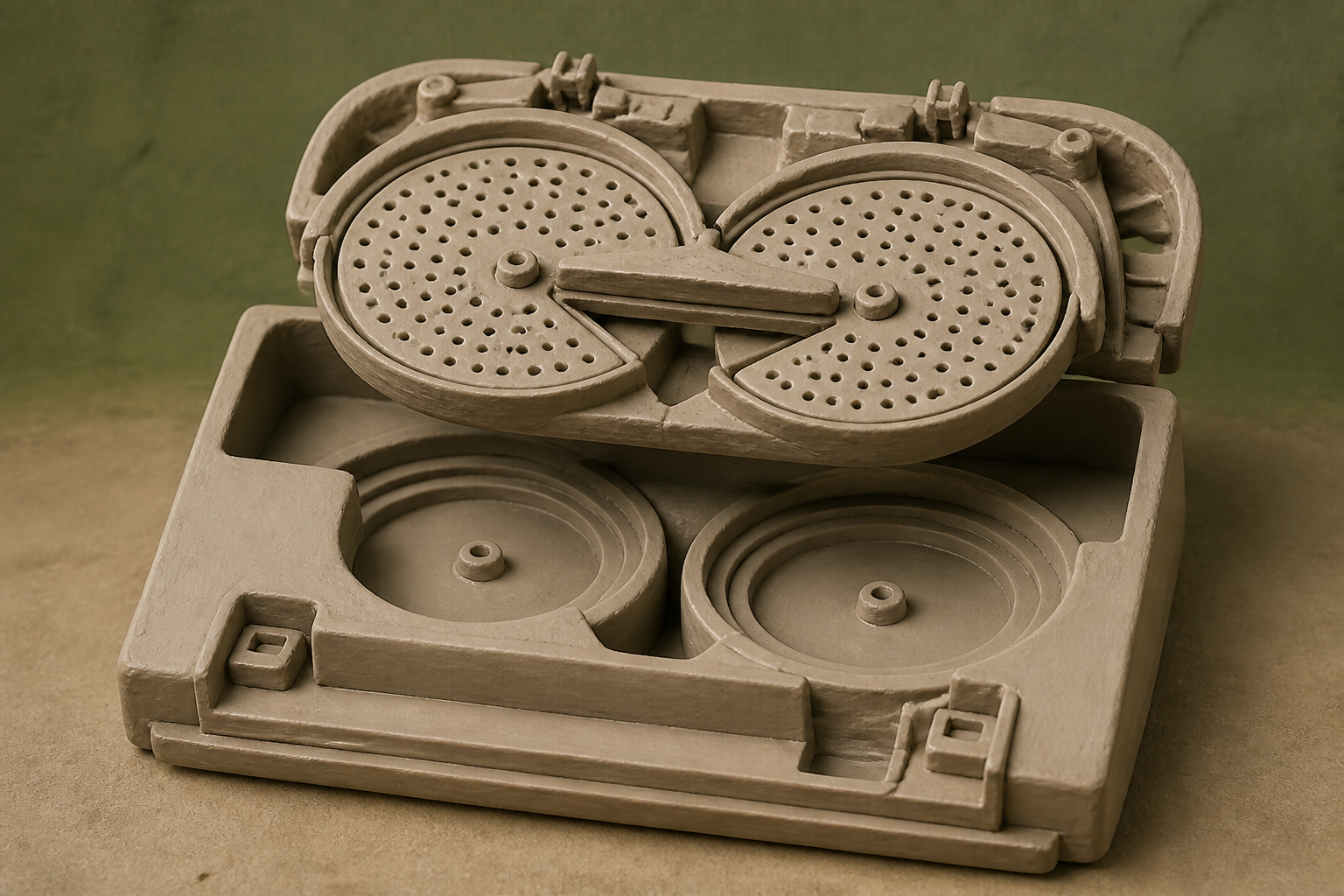
What changes in this design
Without more detail, a reader might expect dirt loosened while a cleaning tool is being cleaned to stay in the cleaning area or need separate handling.
This station includes a water-scraping structure that scrapes dirt off the cleaning member, plus a collection tank that receives the scraped dirt.
It helps explain the station's purpose in everyday terms: cleaning the device's cleaning part and providing a destination for the dirt that comes off it.
The tank after mopping
Between one mopping run and the next, dirty water can sit in a dock's reservoir. One consumer maintenance guide describes black mold or mildew and pink Serratia marcescens film appearing in mop-washing tanks within weeks, then makes the awkward point: owners still need to rinse them by hand.
That is where my patience with set-and-forget language runs out. An owner-focused analysis estimates 15 to 20 minutes of weekly upkeep for an all-in-one dock, including clean-water refills every one or two mop runs, periodic reservoir rinsing, and pad changes. The more I read about these docks, the less convincing the word automatic becomes.
Roomba in Chapter 11
That recurring chore belongs to a market that no longer looks like the one iRobot made famous. In December 2025, the company that built the Roomba category had filed for Chapter 11 and agreed to be acquired by a Shenzhen robotics company after an earlier acquisition attempt collapsed. During the first nine months of that year, global smart-vacuum shipments reached 17.42 million, up 18.7% from the prior year, according to an industry analysis.
The change is partly about price and navigation, but docks matter because they turn a robot into a recurring household system. A market report estimates fully automated machines, including self-emptying and self-washing docks, brought in $9.0 billion in 2025, or 72% of category revenue. For our purposes, the important thing is less the exact forecast than the direction: expensive work has moved from the wheel and brush to the station waiting against the wall.
The station against the wall
Patent fights have followed the hardware into that station. In 2019, iRobot sued a rival manufacturer over self-emptying-dock and navigation patents; a U.S. trade ruling the year before had already blocked imports by several other makers involving related technology. The components may look ordinary, but the right to arrange them has been treated as a serious competitive asset.
That history is why I read a cleaning-station application as more than a tidy product detail. It records a company trying to specify what happens after the mop comes home: where water goes, where loosened dirt goes, and which part of the machine handles the transfer. The patent is evidence of a contest over the forgotten half of floor cleaning, not its whole story.
A tank and a scraper
The application is US20260256334A1, titled "Cleaning Base Station And Cleaning System." Filed on April 23, 2026, by Dreame Innovation Technology (Suzhou) Co., Ltd., it claims priority to a Chinese utility filing dated March 22, 2024. The station combines a base, a cleaning tank, a collection tank, and a water-scraping structure, with the collection tank receiving dirt scraped from the cleaning member.
That is narrow plumbing, but it describes the part of a self-washing dock that marketing often leaves in the background. Nothing in the filing proves a cleaner home or a germ-free tank. The filing leaves questions that I cannot answer from it: how much material the scraper captures, how often someone empties the collection tank, whether residue remains in the water path, and how the parts are cleaned.
Dreame was founded in 2017 with 14 million yuan in angel funding from Xiaomi and its investment partner. The company says an industry tracker ranked it first worldwide in robot-vacuum sales and revenue in the first quarter of 2026, while a separate report puts a pre-IPO valuation that same month at about $9.6 billion. The timing does not prove why this application was filed, but it places a small piece of water-handling engineering inside a consequential commercial moment.
What would have to be true
A better scraper could make the dirty end of the cycle easier, and the filing is evidence that makers are still working at that unglamorous problem. I do not think it earns the larger promise by itself. For a base station to reduce real household work, the collection path would need to catch enough debris before water sits, resist buildup, be easy to reach, and make its own cleaning needs plain.
If we judge these machines by the routine rather than the demonstration, the useful measure is not whether a dock washes a mop once. It is whether the owner cleans less often, spends less on replacements, and faces fewer surprises from a tank out of sight. The patent offers a plausible mechanical move. It does not yet show that the hidden work has gone away.
Sources
Reporting for this piece drew on the published filing and the references below.
- Cleaning Base Station And Cleaning System
- U.S. Patent Application for Cleaning Base Station (Publication #20260256334)
- Dreame ranked No.1 in Global Robot Vacuum Sales & Revenue, according to IDC
- Dreame Technology pursues a Hong Kong IPO at $9.6 billion
- The Rise of Chinese Smart Vacuum Giants...and the Fall (and Sale) of iRobot
- Robotic Vacuum Cleaner Market Size, Statistics Report 2026-2035
- iRobot sues SharkNinja for robot vacuum patent infringement
- Roborock Water Tank Mold: Clean Black & Pink Specks - Bad Smell Tips
- How much maintenance does an all-in-one robot vacuum dock really need?
The record, briefly. US20260256334A1, “Cleaning Base Station And Cleaning System” A cleaning base station cleans a cleaning member of a cleaning device using a base, cleaning tank, collection tank, and water scraping structure, with the collection tank receiving dirt scraped off by the water scraping structure.
More angles on this
- A Dishwasher's First Temperature QuestionAnother reading from the same A47L classification family, domestic washing or cleaning ; suction cleaners in general.
- Two Rolling Brushes, Mirrored: A Cleaning Module That Says Which Way Its Bristles FaceAnother reading from the same A47L classification family, domestic washing or cleaning ; suction cleaners in general.
- CPC A47L: Domestic washing or cleaning ; suction cleaners in generalThe official classification family this record was filed into, published in the USPTO Cooperative Patent Classification scheme.
- CPC B08B: Cleaning in general; prevention of fouling in generalThe official classification family this record was filed into, published in the USPTO Cooperative Patent Classification scheme.
- Who Holds the Temperature Context?Another reading from the neighbouring A47J classification family, kitchen equipment; coffee mills; spice mills; apparatus for making beverages.
Read around this one:Public patent recordUSPTO published figure