Objects
Who Holds the Temperature Context?
A small Swedish brewer's tea patent arrives after precision tea's expensive failure, testing whether cold, repeatable cups can win anyway.

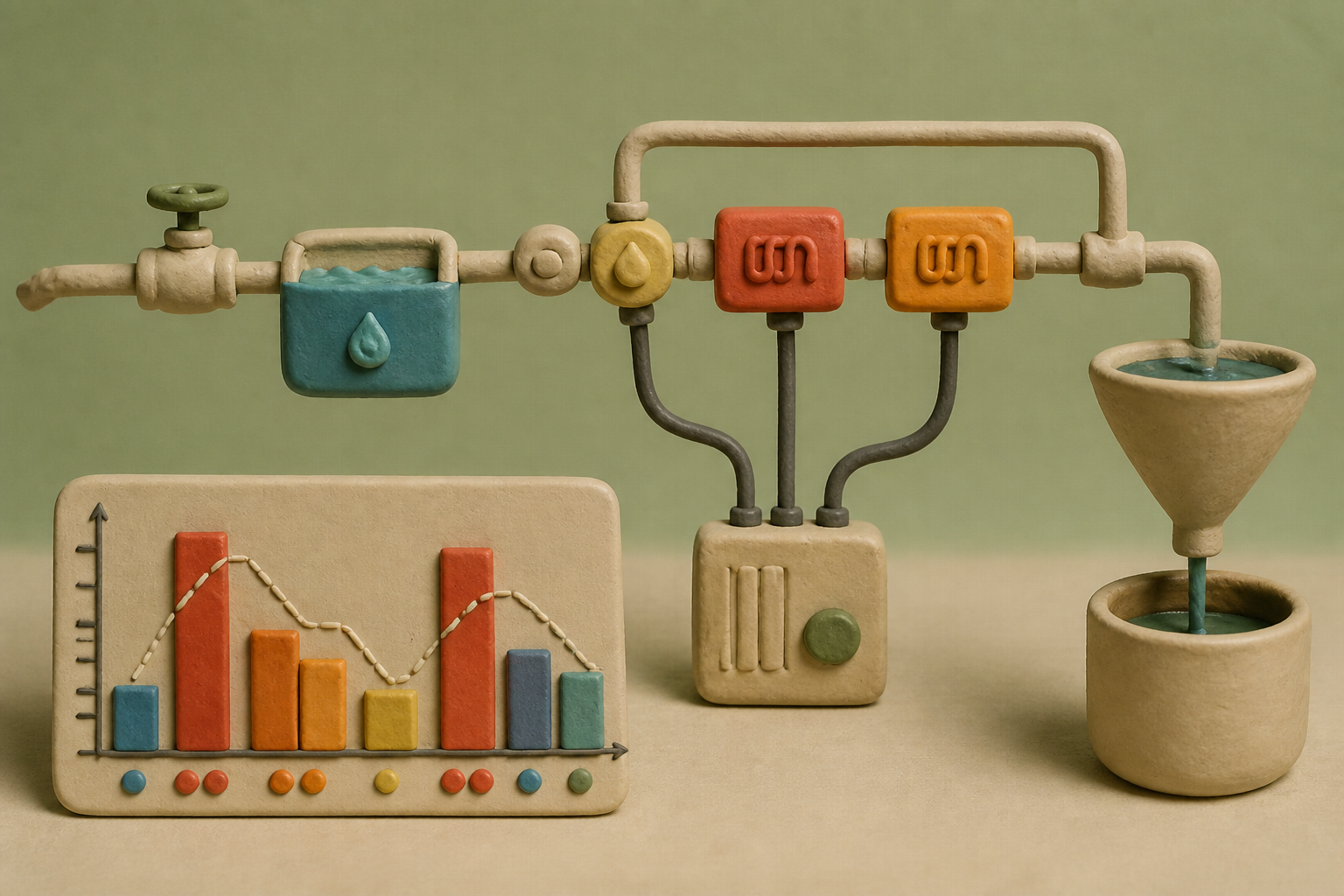
What changes in this design
A reader might picture tea brewing as simply adding hot water, rather than managing several water temperatures to target a final temperature.
This method instead sends hot water, warm water, hot water again, then cold and warm water to the brewing device. The controller controls the water's amount, flow, and timing.
It makes clear that the final temperature matters here, not only the brewing itself. Why tea below 40 degrees C is wanted is not stated.
A $1,000 tea machine
By 2017, the company behind a $1,000-plus tea machine had shut down. Teforia had raised $17.1 million across two rounds from nine investors, then closed after deciding its automated tea did not taste better than tea made in the traditional way. The number that stayed with me was not the price tag but the problem it exposed: extra control over water, time and temperature had not created an obvious reason to buy.
At a smaller scale, a dial-controlled home tea brewer had raised more than $760,000 from about 6,000 crowdfunding backers by February 2020. That is evidence of interest, but not a broad answer to the problem Teforia ran into.
Five water stages
US20260256312A1, Method Of Brewing A Beverage, was published on September 3, 2026, just over three years after its July 11, 2023 filing. Its Swedish applicant, PLAE 2 TECH AB, describes a controller that sends hot water, then warm water, then hot water again, followed by cold and warm water. It controls the amount, flow and timing of those deliveries to produce brewed tea below 40 degrees C.
That sequence is the subject of the method, not proof that cooler tea is automatically tastier or healthier. I cannot tell from a published application whether it will be granted, licensed or used in a product. The public filing page lists no CPC classification. A secondary patent database associates it with A47J31/00, A47J31/41 and A47J31/52, standard coffee- and tea-maker apparatus classes. That is a clue, not a ruling on novelty.
Three brewers in Sweden
PLAE 2 TECH AB is the company behind 3TEMP, whose existing Hipster machines - Puls, Kobra and Wall - already use tankless, multi-phase pulse pours at different temperatures. The company describes the setup as one machine, three extractions, and says it added a cold-brew option in 2019. To my eye, the tea application looks less like a new machine than an attempt to define a tea use for water-delivery techniques already sold for coffee and iced lattes.
Fiscal 2025 registry accounts report 13.671 million SEK in revenue, a 6.721 million SEK loss, equity of minus 2.210 million SEK, and nine employees. Those figures do not explain why it filed, and I will not pretend they do. They place the patent with a small operator for whom protecting a workable extension of existing equipment could matter.
December 3, 2024
On December 3, 2024, Simonelli Group acquired an undisclosed stake in 3TEMP, nearly a year and a half after this application was filed. The Italian espresso-equipment group said the deal would help it expand in filter and drip brewing. The acquisition cannot have caused a filing that came first, and the reporting does not show that it shaped this particular application.
Here I found the more useful comparison: an already shipping foodservice iced-tea brewer uses pre-infusion and pulse brewing, digital temperature control and a cold-brew lockout. That does not decide whether this application's particular method is patentable; that depends on claims and prior art beyond these records. It does show that staged water treatment is already an engineering practice, not a complete answer to the old tea-machine problem.
Below 40 degrees C
Science gives a reason to resist treating the target temperature as an automatic quality upgrade. In a peer-reviewed comparison, green tea brewed hot at 95-100 degrees C for five minutes yielded 10.2 mM GAEq of polyphenols, versus 8.5 mM GAEq from tea steeped at 20-25 degrees C and then refrigerated at 4-6 degrees C for 16 hours. Black teas showed little difference. The study did not test this filing's exact sequence, so it cannot decide what this method produces.
Still, we should not turn a sub-40-degree result into a chemical-superiority claim. It describes a temperature result, not a maximum-extraction result. One market-research estimate puts cold-brew tea at $10.1 billion in 2024 and projects $15.1 billion by 2033, but it is a category forecast, not evidence that any particular brewer will sell.
What the filing is really betting on
The filing is not proof that automated tea has solved the problem that defeated Teforia. It is a bet that a familiar multi-stage water system can deliver tea at a useful cold temperature with repeatable control over flow, amount and timing. That could matter even if it does not produce the most extracted cup.
I read the application as a careful expansion around an existing brewing method, not a breakthrough in tea itself. The wager is modest but real: enough buyers may value controlled, consistently cooled tea to make the specified sequence worth protecting. The evidence so far supports that as a business possibility, not a promise.
Sources
Reporting for this piece drew on the published filing and the references below.
- Method of Brewing a Beverage - Justia Patents
- PLAE 2 TECH AB - Allabolag
- Simonelli Group Acquires Drip Coffee Machine Maker 3Temp - Daily Coffee News
- Brewing Culture - 3TEMP
- What Happened to Teforia, the Ultimate Tea Brewer? - Failory
- Automated Tea Brewing Machine - StartupSelfie
- ITB Iced Tea Brewer - BUNN Commercial
- Comparative Analysis of Hot and Cold Brews from Single-Estate Teas - PMC
- Cold Brew Tea Market Size, Share, Growth 2033 - DataHorizzon Research
The record, briefly. US20260256312A1, “Method Of Brewing A Beverage” A controller supplies hot water, warm water, hot water, then cold and warm water to a brewing device, controlling amounts, flow and timing to obtain brewed tea below 40 degrees C.
More angles on this
- CPC A47J: Kitchen equipment; coffee mills; spice mills; apparatus for making beveragesThe official classification family this record was filed into, published in the USPTO Cooperative Patent Classification scheme.
- Accessory And Drinkware Assemblies: The Choice After ConnectionAnother reading from the neighbouring A47G classification family, household or table equipment.
- A zipper slider whose underside is set at two heights on purposeAnother reading from the wider A44B classification family, buttons, pins, buckles, slide fasteners, or the like.
- The Retractable Drawer Divider That Holds On By Leaning, Not FasteningAnother reading in the same Objects category on this site.
Read around this one:Public patent recordUSPTO published figure