Machines
When Capsule Recognition Needs Another Comparison
Start with Module and Key detail: A machine prepares and dispenses a beverage with an extraction unit, outlet, and capsule-recognition module.

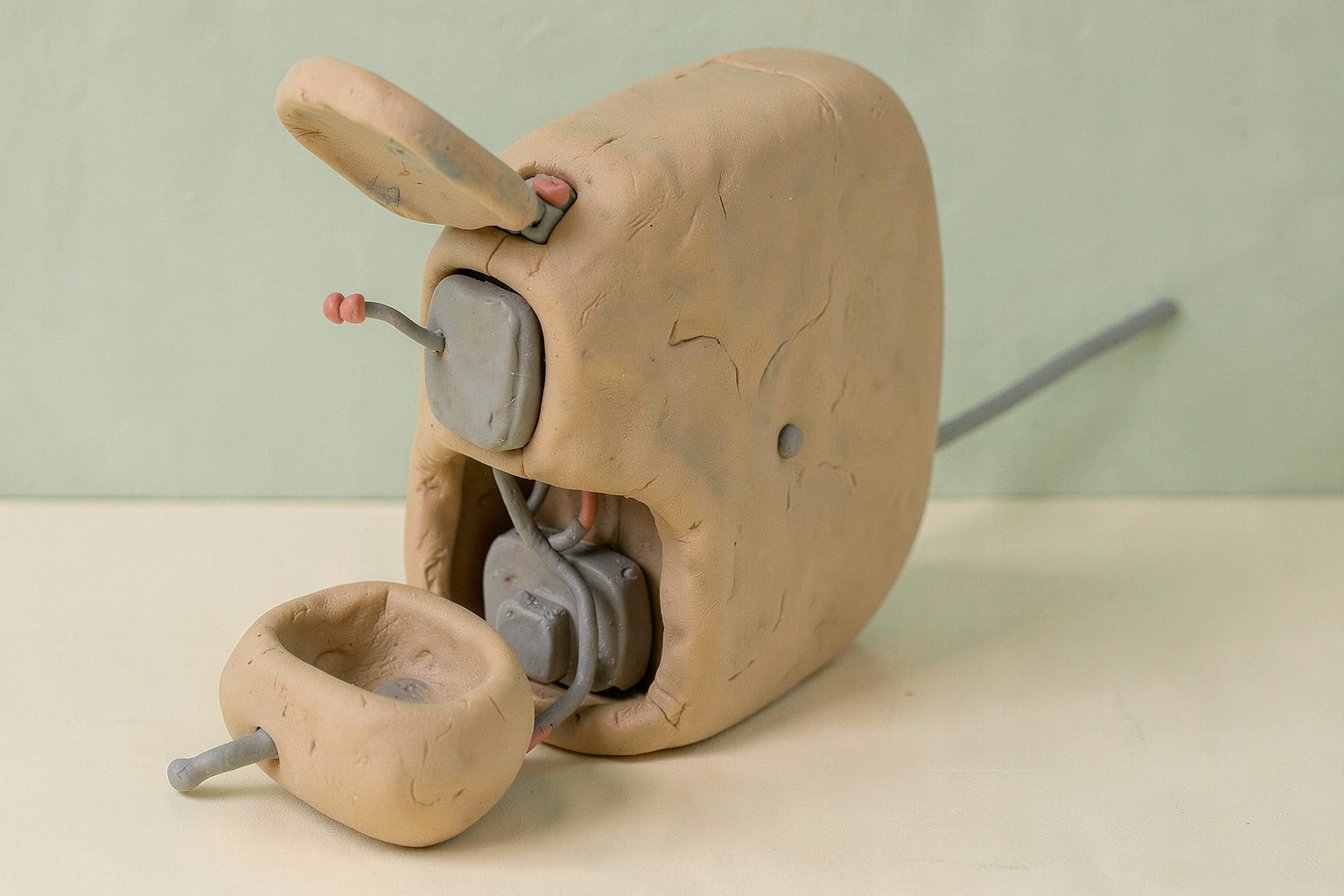
First, the setting
Many people make hot drinks at home, at work, or while traveling, often when they want a familiar taste with little preparation. Small sealed portions of coffee or other ingredients keep counters tidy and make choices easy, but the machine still has to handle whatever someone places inside.
A person lifts a lid, drops a capsule into a countertop drink maker, and starts a brew. Inside, parts close around the capsule as water passes through it; a cup waits beneath the outlet. In a shared kitchen, someone nearby hears the machine work and soon carries away a warm drink.
What changes in this design
A reader might assume capsule recognition rests on one comparison between what a sensor notices and a known reference. How beverage machines ordinarily perform this job is not stated.
Here, a sensor samples a property of the capsule and compares it with reference values to score capsule types. When certainty is insufficient, it selects at least two reference values to distinguish between types.
It shows that uncertainty is handled with additional comparison rather than being left unspecified. What capsule property is sampled, and what level of certainty triggers the added comparison, are not stated.
Capsule Uncertainty in the Frame
A capsule, an extraction unit, and an outlet form the physical detail that opens the published record for US20260262872A1, Beverage Preparation Machine With Capsule Recognition, published September 10, 2026. You can picture the short chain: a beverage machine prepares and dispenses a beverage, while a capsule-recognition module sorts out capsule types. The condition that made me look twice is not a promised result but a stated limit: sometimes recognition has insufficient certainty. That modest condition brings the scene into focus, because the machine is described not only around preparation and dispensing, but around what happens when identification does not settle cleanly.
That uncertainty gives the visible arrangement its consequence before the wider idea arrives. The extraction unit is the component named for extraction, and the outlet is the named point for dispensing; together they keep the beverage task in view while capsule recognition remains part of the same arrangement. The machine has the air of a stage manager checking the right prop before the curtain rises. The image is deliberately small, but it makes a relationship visible: the capsule is not simply near a beverage routine in this description, because its type is something the machine scores. With that physical frame set, the technical words can stay attached to the capsule, extraction unit, and outlet rather than floating free of them.
Sensor Scores and Reference Values
With the physical frame set, the terms should earn their place. A sensor is a component that takes a reading; here, it samples a property of the capsule, meaning a characteristic that is not identified in the facts provided here. Reference values are the comparison points named in the filing, and a score is the result used to sort capsule types. The filing describes the sensor comparing its sampled property with reference values in order to score those types. What I think is worth your attention is the restraint of that arrangement: a reading is made, comparison points provide a basis, and types receive scores. That is narrower than a generalized story about a machine somehow knowing a capsule, and the narrower picture is the one that holds together.
Fallback Comparison Finds the Fit
That restraint makes the stated mechanism easier to see. When certainty is insufficient, the machine selects at least two reference values to distinguish capsule types. A fallback here means the described response when certainty does not suffice, not a promise that every result becomes certain. Instead of ending at a vague lack of certainty, the arrangement turns toward a comparison involving more than one reference value. It is less like a label-maker printing a confident answer, more like a librarian laying two cards beside the same book. The comparison does not identify the sampled property for us, but it does identify a disciplined relation: uncertainty directs the selection of reference values used to distinguish types. That turn from condition to discriminating comparison is the quiet work of alignment.
Once that comparison takes focus, the ordinary mental shortcut becomes easier to question. A reader might flatten the task into a switch: capsule detected or not. This published description stays more particular: types are scored against reference values, and insufficient certainty triggers selection of at least two of them for distinction. The comparison is less like a switch deciding yes or no, more like a small committee keeping two folders open. No larger story needs to be added for the relationship to matter. One relationship becomes visible between the sampled property and reference values, and another between uncertain recognition and a next discriminating step. That raises an everyday systems question: when signs are incomplete, does a design preserve difference long enough to compare it?
That question returns the attention to the pieces you can carry into other design thinking. First, keep the physical task and the identification task in one frame. Here, beverage preparation and dispensing appear with a capsule-recognition module, so the purpose is not lost inside measurement language. Second, make ambiguity legible through the next comparison instead of leaving insufficient certainty as a final mood. Here, the stated next move is selection of at least two reference values specifically to distinguish types. Neither observation predicts anything beyond this patent, but both clarify a useful fit: a system becomes easier to understand when its response matches the uncertainty it names. The final image is therefore the first one: a capsule, an extraction unit, and an outlet, with recognition given room for its quiet alignment.
The record, briefly. US20260262872A1, “Beverage Preparation Machine With Capsule Recognition” A machine prepares and dispenses a beverage with an extraction unit, outlet, and capsule-recognition module. A sensor samples a capsule property and compares it with reference values to score capsule types; when certainty is insufficient, it selects at least two reference values to distinguish types.
More angles on this
- When a Shredder's Boundary Becomes the QuestionAnother reading from the same A47J classification family, kitchen equipment; coffee mills; spice mills; apparatus for making beverages.
- A Cup's Separate-Place ConditionAnother reading from the same A47J classification family, kitchen equipment; coffee mills; spice mills; apparatus for making beverages.
- CPC A47J: Kitchen equipment; coffee mills; spice mills; apparatus for making beveragesThe official classification family this record was filed into, published in the USPTO Cooperative Patent Classification scheme.
- A Chair Rest Begins With a PlaceAnother reading from the neighbouring A47C classification family, chairs; sofas; beds.
- When Soil, Vehicle, and Control Share the Next ChoiceAnother reading from the wider A01B classification family, soil working in agriculture or forestry.
Read around this one:Public patent recordUSPTO published figure