Objects
When Player Traits Become an Arrangement Problem
Player Device plus Communications Interface carry the practical point: A system evaluates player traits using a player device.

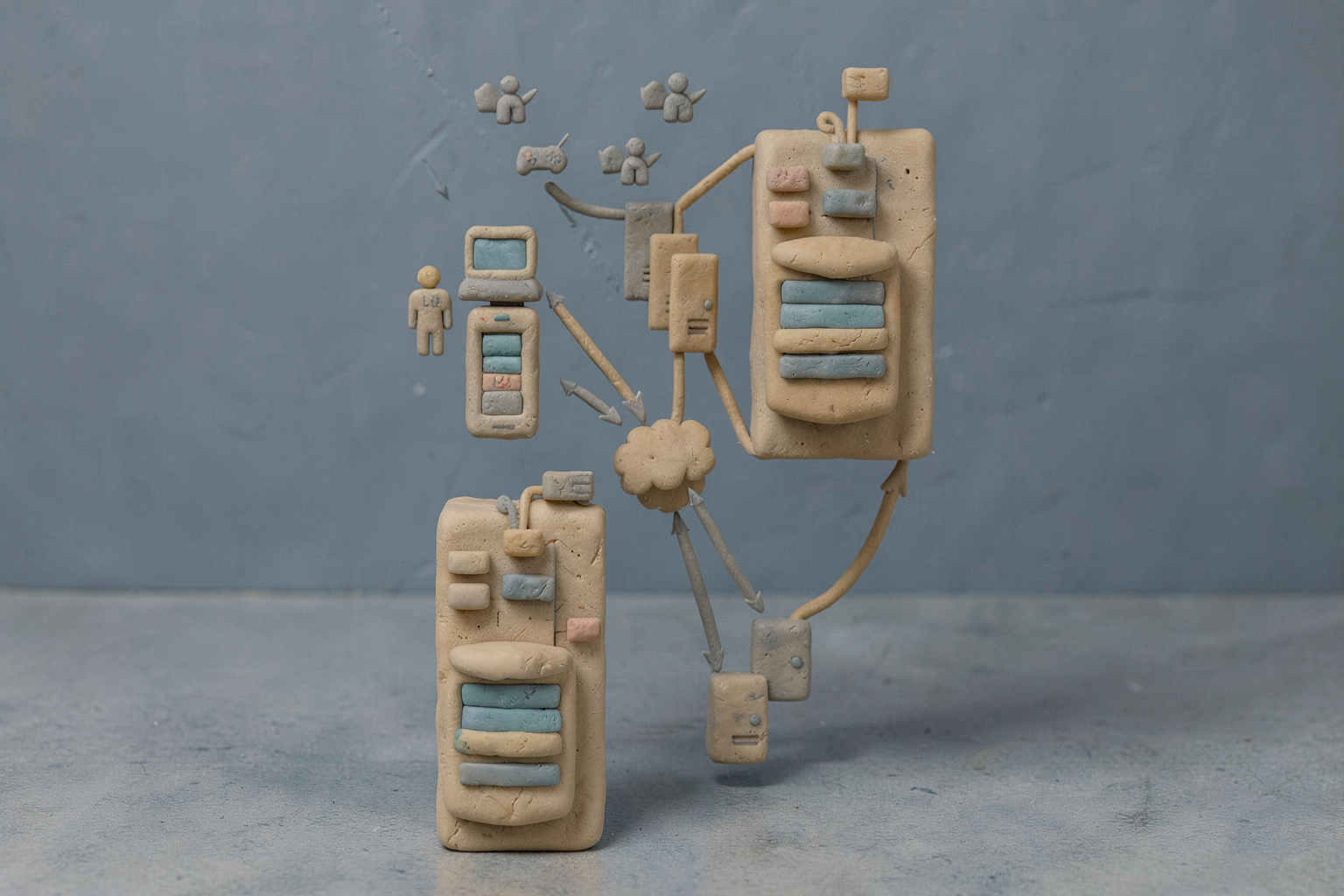
First, the setting
Playing computer games means making choices, reacting to what appears on a screen, and learning how the controls work. People approach play differently: some explore, some plan, and some act quickly. Understanding those habits is part of understanding how people play and what holds their attention.
A player sits with a tablet in their hands, tapping the screen as a game responds. A tool appears alongside the play, and the player pauses to use it before continuing. Their choices become information the software can connect with their saved player profile.
What changes in this design
A reader might otherwise expect player traits to be evaluated by looking at information about a player or by using a computer game on its own.
This record brings together input from the player, an associated profile, a computer game, and a digital tool displayed on the player's device.
It shows that the evaluation is framed as a connected system, rather than only a game or only a profile. What the tool measures or how it reaches an evaluation is not stated.
Preparation Around Player Traits
The arrangement puts a player's device at the meeting point of input, profile, game, and tool. Put more simply, the filing brings something from the player together with materials it can access and a digital item it can display on that device. The obvious headline is evaluation: the published record is titled System And Method Of Evaluating Player Traits, published as US20260263940A1 on September 10, 2026. The more useful question is quieter: what small condition has to be assembled before player traits can even be put before you? That question is worth holding because it prevents the title from doing more work than the facts available here can carry.
That condition looks ordinary until its pieces are named. A player device is the device the filing says is used by the player; player input is information the system receives from that player; and an associated profile is the profile it accesses in connection with that player. Alongside them, the filing names a communications interface, a component for communication, plus a processor and memory, familiar computing terms for handling instructions and retaining information. The associated profile has the air of a librarian's card kept beside the player: something the system accesses, not a conclusion the filing says it reaches. Terms that can sound grand become modest here, and that modesty is precisely what made me look twice.
Profile, Tool, and Burden
Once those terms are set down, the contrast comes into view. An ordinary notion of judging a player's traits can leave a human observer carrying the burden of gathering what matters and keeping it together. This filing places the organizational burden in the arrangement that receives input, accesses a profile, retrieves a game and tool, and displays the tool. The facts available here do not tell you what any trait means or how it is judged. The setup is less like a coach with a clipboard and more like a stage manager lining up the props before anyone speaks. That is a rebuttal to the louder reading, not an upgrade claim: the point of interest is the shift in where preparation is placed.
That burden shift becomes concrete in the mechanism described. The system receives player input, accesses the associated profile, retrieves a computer game and a digital tool, and displays the tool on the player device. Its listed parts include the player device, communications interface, processor, and memory; the available facts do not say how those parts are separately implemented, so they should remain named pieces rather than acquire imagined duties. The digital tool arrives less like a proclamation and more like an instrument set out on the player device. This is why the chain matters: it keeps the surrounding materials in view instead of treating evaluation as if it were a self-operating machine.
Because the mechanism is bounded, its purpose deserves a bounded reading as well. The title calls the subject evaluating player traits, and the described system gives the player device a visible role by displaying the digital tool there. That does not establish what the tool asks, what the profile contains, which traits are involved, or what result follows; those are questions a reader might bring, not answers the available facts provide. The processor and memory sit like a restrained committee, named as parts of the arrangement but not invited to announce conclusions. What seems worth your attention, then, is not a hidden verdict about players but the insistence that evaluation, in this arrangement, accompanies a particular path of access and display.
What the Display Cannot Tell You
That leaves a modest lesson, but it travels well. First, when a system puts a label on a person, it is useful to ask which pieces must be gathered before the label appears; second, when a device displays a tool, it is useful to separate that visible moment from every unshown step you may be tempted to assume. I cannot work out more than that from the published facts, and I do not think the filing needs to promise more to earn a reader's attention. US20260263940A1 matters here as a reminder that an evaluation arrangement can be less like a verdict dropped from above and more like a small stage carefully set before the curtain rises. The condition worth naming is preparation held in the system, not certainty delivered by it.
The record, briefly. US20260263940A1, “System And Method Of Evaluating Player Traits” A system evaluates player traits using a player device, communications interface, processor, and memory that receive player input, access an associated profile, retrieve a computer game and a digital tool, and display the tool on the player device.
More angles on this
- When a Game Character Crosses Servers, Who Supplies the Rest of the Scene?Another reading from the same A63F classification family, card, board, or roulette games.
- A Punching Bag Is Not Yet a PromiseAnother reading from the same A63F classification family, card, board, or roulette games.
- CPC A63F: Card, board, or roulette games; indoor games using small moving playing bodies; video games; games not otherwise provided forThe official classification family this record was filed into, published in the USPTO Cooperative Patent Classification scheme.
- CPC G06F: Electric digital data processingThe official classification family this record was filed into, published in the USPTO Cooperative Patent Classification scheme.
- Golf Scoring Between Screen and FieldAnother reading from the neighbouring A63B classification family, apparatus for physical training, gymnastics, swimming, climbing, or fencing; ball games; training equipment.
Read around this one:Public patent recordUSPTO published figure