Objects
When the Infusion Pump Audits Its Own Mechanic
After a federal court freed hospital technicians to bypass digital locks on medical gear, a new patent shows how manufacturers could shut down repaired devices anyway.

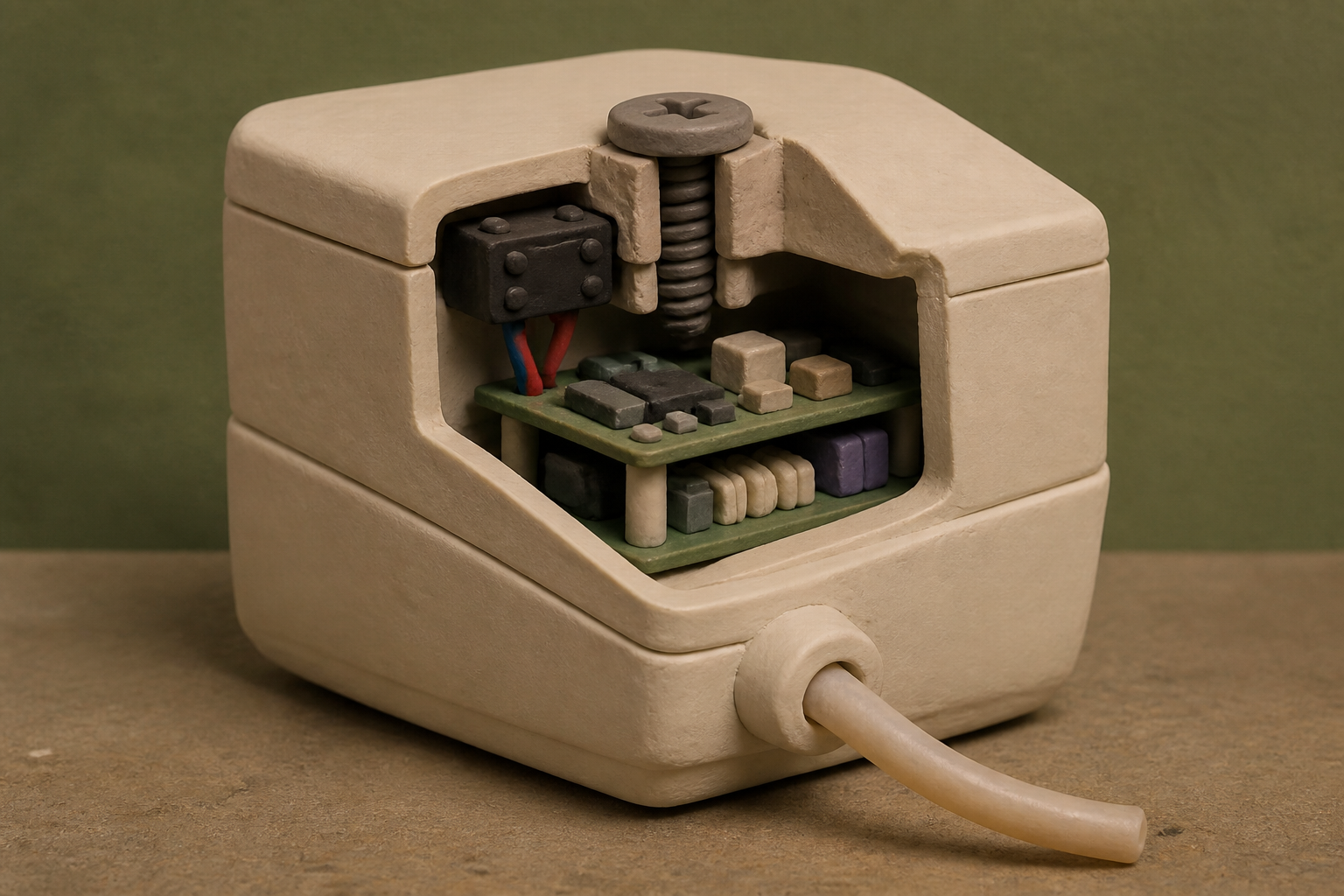
What changes in this design
A reader might assume that medical hardware simply accepts maintenance without questioning who performs the work, or that facilities rely entirely on physical locks and paper logs to track which technicians service their infusion equipment.
This setup connects a safety system directly to the infusion pump to capture data while someone accesses the machine. It analyzes those repair details to spot unauthorized service and actively changes pump operations in response.
Infusion pumps deliver critical patient care, making improper handling a serious concern. Knowing that a device can independently detect unauthorized access and adjust its own behavior shows how patient safety equipment can guard itself against unapproved tampering or servicing.
A legal victory in the hospital basement
On September 1, 2026, the U.S. Court of Appeals for the D.C. Circuit handed hospital biomedical engineers a rare legal victory. The court upheld a federal copyright exemption allowing independent technicians to bypass digital locks on medical equipment so they could service and repair broken hardware. For years, manufacturers had argued that circumvention violated copyright law. The judges disagreed, deciding that unlocking diagnostic software to keep life-saving machines running is fair use.
I spent an afternoon reading through the mechanical disputes that led to that decision, and they sound remarkably grounded in the daily scramble of clinical care. When an infusion pump or dialysis unit stops working during a shift, hospital staff cannot wait weeks for an authorized factory representative to fly in with a proprietary laptop. In-house biomedical technicians need to plug in, run a diagnostic cycle, replace a worn valve, and return the unit to service.
The growing backlog of locked devices
The legal ruling arrived against a backdrop of mounting frustration inside clinical engineering shops. A 2026 survey by a national public interest research group found that 79 percent of biomedical technicians reported being denied access to service documentation for critical equipment, up from 64 percent six years earlier. More than 80 percent said manufacturer repair barriers increased machine downtime, and 70 percent pointed to diagnostic restrictions as a direct cause of delayed patient care.
When we look at the numbers compiled across the country, the friction is rarely about copyright. The Federal Trade Commission concluded in its 2021 report on repair restrictions that manufacturers offer scant evidence of safety problems caused by third-party repairs. Instead, federal regulators found that proprietary software locks, withheld spare parts, and specialized adhesives drive up hospital maintenance budgets while stretching out repair times. During the height of the COVID-19 pandemic, as documented in The Lancet, those bottlenecks left ventilators and dialysis machines sitting idle in storage rooms while intensive care wards searched for spare capacity.
The argument over microscopic tolerances
The medical manufacturing lobby has pushed back hard against every effort to open up servicing. Trade group AdvaMed has argued that modern infusion pumps and monitors operate with sub-0.001-inch mechanical tolerances and demand strict adherence to federal quality system regulations. In their view, an uncalibrated repair by an independent technician invites disaster. To support their position, industry groups pointed to more than 4,300 adverse event reports in federal databases, including 40 deaths and nearly 300 serious injuries, to persuade lawmakers in New York, Minnesota, Colorado, and Oregon to exempt medical gear from state right-to-repair statutes.
That mismatch caught my attention because the legal fight was supposed to be over after the appellate court ruling. If federal judges stripped away the copyright shield that kept service software under lock and key, manufacturers needed a different mechanism to keep third parties from touching their machines.
A digital tripwire inside the infusion pump
That is where a recent patent application from CareFusion comes in. Published under title US20260260742A1 as a "Patient Safety Device Maintenance System," the filing describes a method for turning an infusion pump into its own watchdog. When someone opens the casing or attempts a repair, a safety system coupled to the pump collects diagnostic repair data about the event.
If the software evaluates those signals and decides the repair event is unauthorized, it does not just log a warning. It steps in directly, triggering at least one safety adjustment to how the infusion system operates. That adjustment can alter the pump's performance or restrict fluid delivery entirely. I could not find any evidence in the filing that an in-house hospital technician gets a simple override switch when a quick field repair is needed on an active floor. The pump simply decides it has been compromised and clamps down on itself.
The part worth watching
In our reading of the published record, the shift from legal locks to automated tripwires is what matters most. Winning an exemption in court allows a biomedical engineer to pick a software lock without facing copyright damages. But copyright law cannot stop a device from refusing to pump medication once its internal sensors decide an uncredentialed hand touched its circuits.
What I find striking is how neatly the mechanism reframes commercial exclusivity as an automated clinical safeguard. Infusion systems already face intense scrutiny; CareFusion's parent corporation had to expand a major recall across 15 pump set models in late 2025 because of fluid delivery variances that risked severe harm to vulnerable patients. When calibration errors carry real consequences, calling an automatic lockout a safety feature sounds reasonable on paper. But if every unauthorized maintenance attempt causes a machine to throttle itself, the practical result is a pump that only the factory can wake back up.
Sources
Reporting for this piece drew on the published filing and the references below.
- Patient Safety Device Maintenance System (US20260260742A1)
- Federal Appeals Court Upholds Medical Device Repair Exemption
- FTC Report to Congress Examines Anti-Competitive Repair Restrictions
- Medical Device Repair Restrictions Are Getting Worse
- The 'Right to Repair' is Wrong for Patients
- The medical right to repair: the right to save lives
- BD Provides Update on Voluntary Recall of Certain BD Alaris Pump Infusion Sets
The record, briefly. US20260260742A1, “Patient Safety Device Maintenance System” A method receives repair data from a safety system coupled to an infusion system during a repair event where a user accesses the infusion system. Based on the repair data, the method detects that the repair event is unauthorized and causes at least one safety adjustment to the operation of the infusion system.
More angles on this
- Timing the Molecular Handoff in Preeclampsia DetectionAnother reading from the same G16H classification family, healthcare informatics.
- Tracking Wireless Monitoring With Reduced Data Loss Questions the Default ArrangementAnother reading from the same G16H classification family, healthcare informatics.
- CPC G16H: Healthcare informaticsThe official classification family this record was filed into, published in the USPTO Cooperative Patent Classification scheme.
- CPC A61M: Devices for introducing media into, or onto, the bodyThe official classification family this record was filed into, published in the USPTO Cooperative Patent Classification scheme.
- Targeting the X-Ray Opening Where Recognition Takes OverAnother reading from the neighbouring A61B classification family, diagnosis; surgery; identification.
Read around this one:Public patent recordUSPTO published figure